Automated Shading for Commercial Windows: A Guide
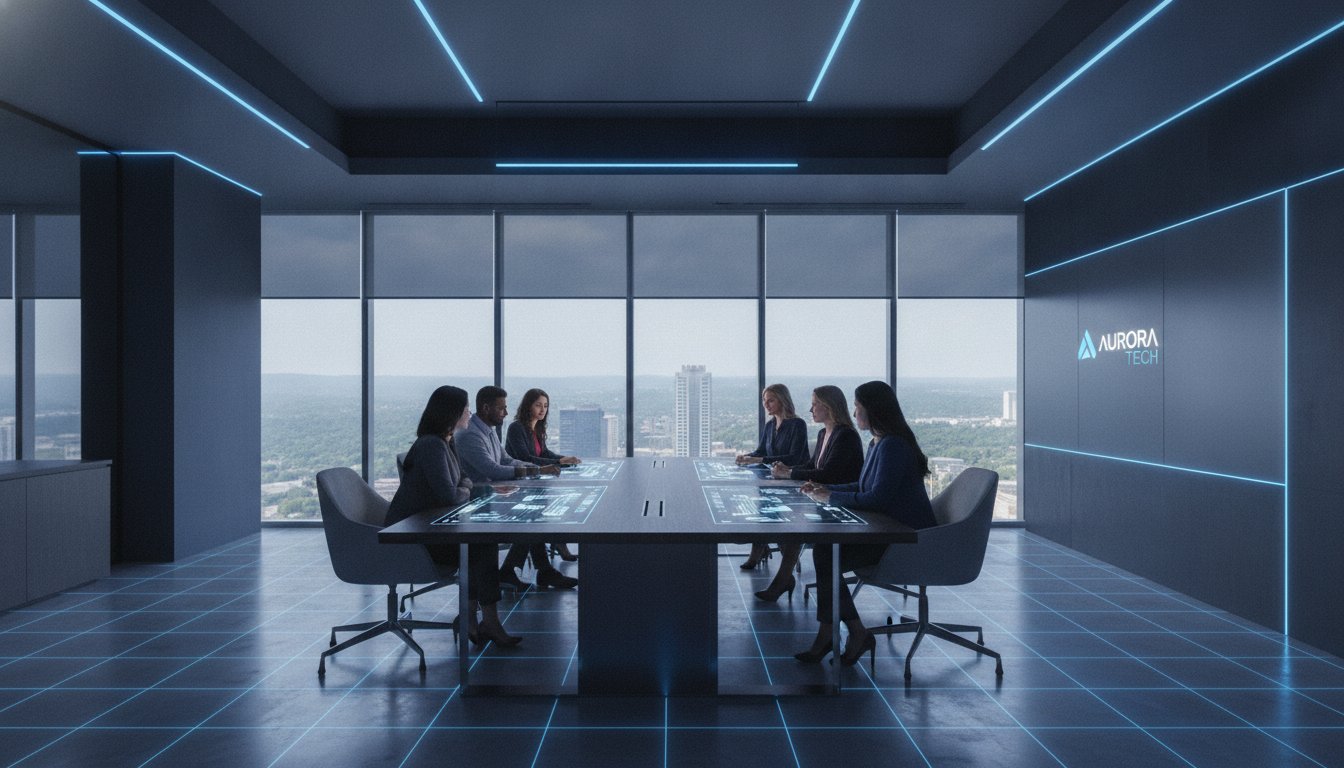
Automated shading is not merely a window treatment; it is a dynamic building skin that functions as a critical component of HVAC and lighting engineering. In the intense Texas sun, a building's facade serves as the first line of defense against thermal gain and visual friction. You've likely seen how inconsistent manual shades ruin a property's architectural profile or how persistent glare forces employees to work in artificial darkness. Implementing automated shading for commercial windows addresses these disruptions by bridging the gap between raw natural light and refined interior comfort.
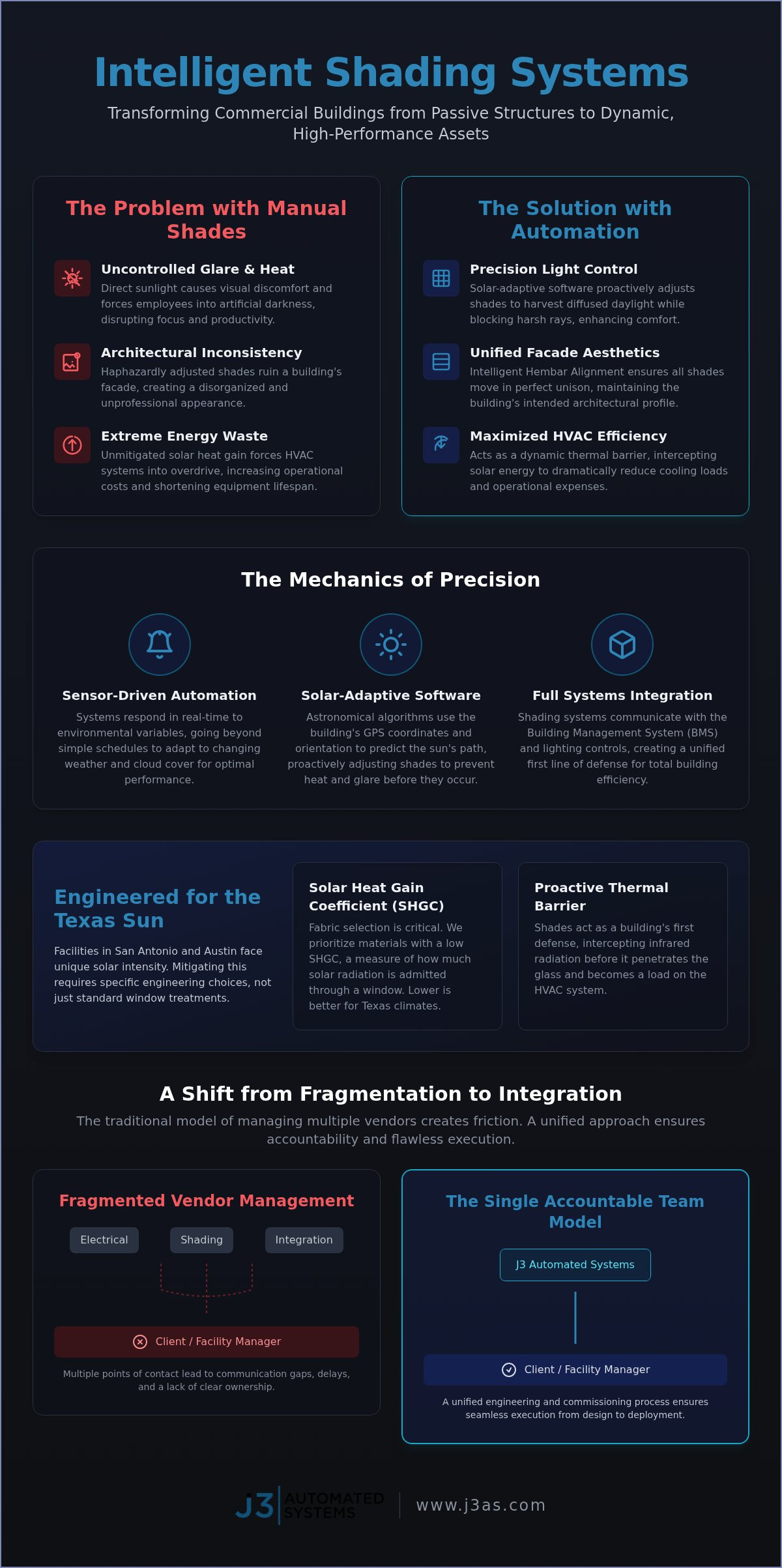
This article reveals how integrated systems transform commercial facilities by optimizing natural light, reducing operational costs, and enhancing occupant well-being. It's a shift from manual fragmentation to a state of intelligent, effortless operation. We'll examine the technical logic behind these systems, the substantial energy savings available through 2026 tax incentives like Section 179D, and the ways precision automation maintains architectural consistency across your entire facade. Discover how a visionary approach to integration can simplify your facility management while creating a more harmonious environment for every occupant.
Key Takeaways
- Shift your perspective from passive window treatments to active, sensor-driven systems that function as a dynamic thermal barrier for the building envelope.
- Learn how solar-adaptive software and whisper-quiet motors optimize natural light, making automated shading for commercial windows a key driver of employee focus and productivity.
- Understand the critical communication between window shades and building management systems to create a unified first line of defense for HVAC efficiency.
- Discover the specific fabric metrics, such as Solar Heat Gain Coefficient (SHGC), required to mitigate the unique solar intensity of the San Antonio and Austin regions.
- Explore the "Single Accountable Team" model that replaces fragmented vendor management with a unified engineering and commissioning process.
Beyond the Blind: The Role of Intelligent Shading in Modern Commercial Architecture
Modern architecture celebrates the transparency of glass, yet this transparency often creates a conflict between aesthetic intent and operational reality. Traditional window treatments are static, reactive, and frequently mismanaged by occupants. In contrast, Dynamic window coverings represent a shift toward the "intelligent facade," where the building exterior adapts to environmental variables in real-time. Automated shading for commercial windows isn't just a decorative addition; it's a sophisticated thermal and visual barrier that integrates directly into the building envelope. By transitioning from passive fabrics to active, sensor-driven systems, facilities can maintain a precise balance between harvesting natural light and protecting the interior climate. This intelligence directly influences property value by ensuring the building remains high-performing and architecturally consistent throughout the day.
The impact of this technology extends deep into the workplace experience. Human biology is tethered to the cycle of natural light, which regulates circadian rhythms and cognitive alertness. When a building's skin manages light effectively, it supports a more productive, focused workforce. We are moving away from the era of "dumb" buildings where shades are left in haphazard positions, ruining the facade’s symmetry and failing to perform their primary engineering task.
The Economic Impact of Solar Heat Gain
Modern office designs frequently utilize expansive glass walls, which act as massive collectors for infrared radiation. This solar heat gain creates a persistent "greenhouse effect," forcing HVAC systems to work at peak capacity even on temperate days. Proactive shading mitigates this burden by intercepting solar energy before it enters the workspace. Reducing the cooling load doesn't just lower monthly utility bills; it extends the operational lifespan of expensive mechanical equipment. When shades respond automatically to the sun’s path, the building achieves a level of thermal stability that manual intervention simply cannot match.
Visual Comfort and the End of Glare
Productivity often falters in the face of "discomfort glare," a common byproduct of unmanaged sunlight hitting digital displays. Employees typically respond by closing manual blinds and leaving them shut for the remainder of the week, effectively severing their connection to the outside world. This creates an unnecessary reliance on artificial lighting and disrupts the natural environment. Automated systems solve this by micro-adjusting throughout the day. They block harsh, direct rays while preserving diffused light and exterior views. Maintaining this visual link to the outdoors has been shown to improve mood and cognitive function, turning the window back into a functional asset rather than a source of distraction.
The Mechanics of Precision: How Automated Systems Optimize Natural Light
Precision in automated shading for commercial windows begins with the invisible logic of solar-adaptive software. Unlike manual systems that rely on human whim, these platforms utilize astronomical algorithms to calculate the sun’s exact position relative to the building’s GPS coordinates and orientation. This allows the system to adjust shade heights proactively throughout the day, ensuring that natural light is harvested without the penalty of heat or glare. This level of control creates a dynamic intelligent facade that preserves the architectural intent of the designer while meeting the rigorous demands of modern energy codes.
The physical execution of this logic requires hardware that matches the software’s sophistication. Intelligent Hembar Alignment ensures that every shade across a wide span moves in perfect synchronization. This maintains a clean, horizontal line across the facade, preventing the jagged, disorganized appearance often seen in buildings with manual treatments. Powering these systems through low-voltage distribution further simplifies the process. It allows for easier installation and future reconfiguration without the need for heavy conduit or specialized electrical contractors at every window.
Sensor-Driven vs. Schedule-Based Control
While basic time-of-day scheduling offers a foundation for automation, it remains a blunt instrument. It cannot account for a sudden Texas thunderstorm or a bright, overcast morning. Dynamic sky-sensor technology solves this by monitoring real-time solar intensity. These sensors allow the system to raise shades during cloudy periods to maximize natural light, then lower them the moment the sun breaks through. This responsiveness is a primary driver behind the significant energy savings identified in studies by the Illinois Institute of Technology, which noted reductions in energy use by up to 25% in high-rise environments. For specialized needs, such as a boardroom presentation or a private consultation, local overrides allow users to reclaim manual control without disrupting the broader system logic.
Quiet Operation and Workplace Acoustics
In professional environments like law firms or medical offices, the sound of automation can be a distraction if not engineered correctly. High-precision, dampened commercial motors operate at decibel levels that are virtually undetectable against the background noise of a typical office. These systems employ soft-start and soft-stop movements, which eliminate the abrupt mechanical clicks and whirs associated with standard motorized shades. By prioritizing acoustic harmony, these precision-engineered shading solutions ensure that the transition from sunlight to shade is as fluid and silent as the movement of the sun itself.
Systems Integration: Linking Shading to BMS and Lighting Controls
True efficiency in a modern facility is found in the invisible dialogue between disparate systems. Automated shading for commercial windows serves as the primary connective tissue between a building's exterior environment and its internal mechanical operations. When shades are treated as a standalone feature, they provide only localized benefits. However, by integrating these systems with commercial building management systems Texas, facility managers can transform their property into a responsive, cohesive organism. This integration allows the building to function as a unified shield, where every component works in concert to preserve interior harmony while minimizing energy expenditure.
One of the most impactful results of this synergy is the strategy known as daylight harvesting. This process utilizes sensors to measure the volume of natural light entering a space and automatically dims electric lighting to compensate. It ensures that the workplace remains perfectly illuminated without wasting power on artificial light when the sun is providing sufficient clarity. Unified dashboards provide facility managers with a single, high-level view of this performance, allowing for real-time adjustments and long-term data analysis across the entire property portfolio.
The Synergy of Shades and HVAC
Shades act as the first line of defense for the building's mechanical heart. By communicating shade position data to the HVAC system, the building can preemptively adjust airflow to compensate for predicted solar gain. This proactive approach is essential for reducing "peak demand" energy charges, which often occur during the hottest parts of the Texas afternoon. High-performance shading fabrics provide a significant boost to the building envelope's efficiency; these materials can effectively double the thermal resistance (R-value) of standard commercial glazing during periods of peak solar exposure. This reduction in heat transfer allows HVAC systems to maintain setpoints with far less mechanical strain.
Unified Control Protocols
Achieving this level of seamlessness requires the use of open communication protocols such as BACnet or IP-based control. These standards allow shading hardware to speak the same language as lighting and climate systems, eliminating the friction of proprietary silos. This technical unity supports a single point of accountability, where one engineering team ensures the entire ecosystem is calibrated for maximum performance. Beyond immediate comfort, the data generated by these integrated systems can inform AI business process automation, helping organizations understand occupancy patterns and operational bottlenecks. This transformation moves the facility from a state of manual effort to a state of intelligent, data-driven operation.
Design Considerations for Texas Facilities: Heat Mitigation and Glare Control
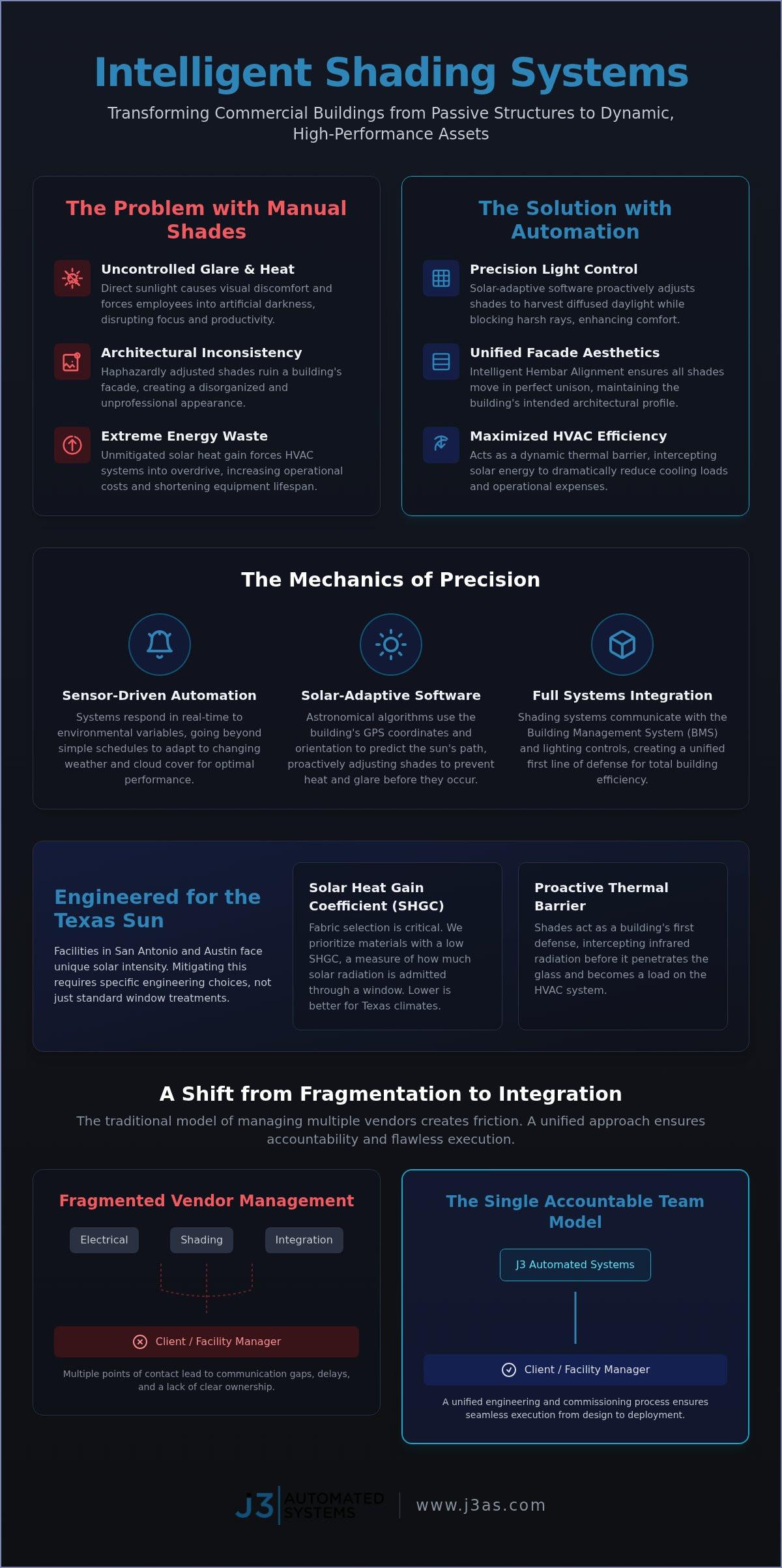
Designing for the Central Texas solar corridor requires more than generic window treatments. In San Antonio and Austin, the sun's intensity and specific seasonal angles create a unique set of engineering challenges. During the long summer months, low-angle afternoon sun penetrates deep into commercial floor plates, causing localized hotspots and intense glare that renders workstations unusable. Automated shading for commercial windows serves as a critical barrier, but its effectiveness depends entirely on selecting materials and hardware rated for this level of exposure. A failure to account for these regional variables often leads to "thermal discomfort," where occupants near the glass perimeter feel the radiating heat despite the HVAC system's best efforts.
Technical precision in fabric selection is the foundation of a high-performing system. Two primary metrics define this performance: the openness factor and the Solar Heat Gain Coefficient (SHGC). The openness factor determines how much light and view-through are preserved, while the SHGC measures the fabric's ability to block solar radiation. In the Texas heat, a lower SHGC is often prioritized to reduce the cooling load. However, balancing these metrics requires a nuanced understanding of how different colors interact with solar energy. You can consult with our engineering team to determine the ideal material specifications for your building's specific orientation.
Choosing the Right Fabric for the Texas Sun
The choice between dark and light fabrics involves a significant trade-off in building science. Darker fabrics excel at glare control and maintaining a clear view of the outside world, as they absorb light rather than reflecting it into the eyes of occupants. Conversely, lighter fabrics are superior at reflecting solar heat away from the building, which is vital for thermal management. To solve this conflict, we often utilize dual-sided fabrics. These materials feature a light-colored exterior to reflect heat and a dark-colored interior to manage glare. For LEED-certified projects, we prioritize PVC-free and sustainable options that meet rigorous indoor air quality standards while providing peak performance.
Hardware Durability in High-Traffic Spaces
Commercial environments demand hardware that can withstand constant operation without failure. This includes the use of side channels and pocket installations to ensure a "zero-gap" light seal, which is essential for conference rooms or spaces requiring total light control. Deploying these systems at scale requires a robust digital backbone. The reliability of thousands of shades depends on enterprise-grade networking to ensure every motor responds instantly to system commands. This level of infrastructure mirrors the high performance residential networking found in luxury estates, where the same principles of stability and speed are applied to complex automation tasks.
When evaluating hardware for your facility, consider this durability checklist:
- Heavy-Duty Extrusions: Ensure tracks and housings are made of architectural-grade aluminum to prevent warping under high heat.
- Serviceable Components: Prioritize systems where motors and electronics can be accessed without dismantling the entire ceiling pocket.
- Precision Motors: Select motors with high torque ratings and quiet operation profiles to handle large-span shades.
- Resilient Communication: Verify that the control protocol is interference-resistant and capable of handling long-distance cable runs.
The J3 Approach: Engineering Frictionless Shading Solutions
The complexity of automated shading for commercial windows often results in a fragmented procurement process where architects, electricians, and software programmers operate in silos. This fragmentation creates friction, leading to systems that are technically operational but fail to deliver a cohesive user experience. J3 eliminates this burden through a Single Accountable Team model. We manage the entire lifecycle of the project, from the initial engineering of the building skin to the final commissioning of the digital control logic. This unified approach ensures that the sophisticated hardware discussed in previous sections performs with the quiet brilliance and reliability expected of a high-tier commercial facility.
As a visionary integrator, J3 bridges the gap between physical infrastructure and bespoke software control. We don't merely install equipment; we engineer a dynamic environment that removes the burden of manual intervention from the occupants. This process is characterized by a high-touch, service-first attitude that prioritizes long-term functionality over the quick fixes common in general contracting. By acting as a deep-thinking partner rather than a mere vendor, we simplify the complexity of multi-system communication into a state of intelligent, effortless operation.
From Roadmap to Commissioning
Every successful installation begins with a rigorous Discovery Phase. During this stage, we map the specific thermal and visual pain points unique to your facility’s layout and occupancy patterns. This roadmap allows us to engineer systems that are inherently future-proof, meeting evolving energy standards while maintaining architectural integrity. For organizations requiring specialized control, our expertise in custom web app development San Antonio allows us to create bespoke digital backbones. These interfaces provide facility managers with intuitive, high-level command over their shading ecosystem, far exceeding the capabilities of off-the-shelf control apps.
Ensuring Long-Term System Reliability
There is a fundamental difference between installing motorized blinds and engineering a comprehensive shading system. The latter requires professional commissioning, a meticulous process where every motor, sensor, and software trigger is calibrated to the building’s specific environment. Without this level of precision, even the most expensive hardware will fail to meet the performance goals of reduced HVAC strain and visual comfort. J3 provides long-term reliability through proactive maintenance and remote monitoring, ensuring that the system continues to operate at peak efficiency as the building ages. Consult with a J3 engineer to design your automated shading roadmap.
Transforming the Building Envelope into an Intelligent Asset
Transitioning from fragmented, manual hardware to a unified, intelligent facade is a fundamental shift in how we approach commercial architecture. By treating automated shading for commercial windows as an extension of the building’s mechanical systems, you unlock a level of operational harmony that standalone treatments cannot achieve. This integration doesn't just lower cooling costs. It removes the daily friction of glare and heat for every occupant, creating a workspace that feels as refined as it looks.
Realizing this vision requires a partner who understands the hidden connections between physical environments and digital intelligence. J3 provides a single accountable team for the design, engineering, and installation of these complex systems. Our expertise in high-heat Texas climate mitigation ensures your facility remains protected against the most extreme solar loads through seamless integration with HVAC and lighting via enterprise-grade networking. We're ready to help you simplify the complex and elevate your property's performance for the long term.
Engineering the Future of Your Facility: Contact J3 Automated Systems
Frequently Asked Questions
What is the ROI of automated shading for commercial buildings?
The return on investment is realized through the immediate reduction of cooling loads and the extension of HVAC equipment lifecycles. By intercepting solar radiation before it enters the workspace, these systems significantly lower peak demand charges during hot afternoons. Beyond utility savings, the improvement in employee focus and the preservation of interior furnishings contribute to the overall economic value of the property.
Can automated shades be integrated into existing building management systems (BMS)?
Integration is a core feature of enterprise-grade systems. Professional integrators use open communication protocols such as BACnet or LonWorks to ensure the shading hardware speaks the same language as your existing climate and lighting controls. This technical unity allows for a truly responsive environment where the building envelope and mechanical heart work in concert to minimize energy waste.
How do automated shades help with LEED certification?
Automated shading contributes to LEED certification by optimizing daylighting and improving thermal performance across the building envelope. Points are typically earned in categories such as Energy and Atmosphere for reducing consumption and Indoor Environmental Quality for enhancing occupant comfort. Using sustainable, PVC-free fabrics further supports your building's environmental credentials and indoor air quality standards while meeting high-performance goals.
What happens to automated shades during a power outage or network failure?
Commercial systems are engineered with resilience in mind. During a power outage, shades typically remain in their last position, though many systems can be integrated with emergency power circuits to move to a pre-defined safe state. In the event of a network failure, local overrides or manual bypasses allow occupants to adjust the shades until the digital backbone is restored, ensuring the facility remains functional.
How quiet are commercial motorized shades in an office environment?
Modern commercial motors are virtually silent. High-quality systems operate at decibel levels that are lower than a typical conversation, often measuring below 40 dBA. The use of dampened housings and precision engineering ensures that the movement of the shades doesn't distract employees or disrupt the professional atmosphere of law firms, medical offices, or open-plan workspaces where acoustic harmony is prioritized.
Are there specific fabrics recommended for the Texas climate?
The Texas climate demands fabrics with a low Solar Heat Gain Coefficient (SHGC). We frequently recommend dual-sided materials that feature a reflective white or silver exterior to bounce heat away from the glass. The interior side is typically a darker hue, which provides superior glare control and preserves the view of the San Antonio or Austin skyline without sacrificing thermal efficiency.
What is the difference between motorized shades and automated shading systems?
Motorization is simply the presence of a motor; it still requires someone to press a button or use a remote. In contrast, automated shading for commercial windows uses astronomical clocks and solar sensors to adjust itself without any human intervention. This shift from manual triggers to intelligent logic ensures the building is always performing at its peak efficiency regardless of occupant behavior.
How do sky sensors differ from simple timers for window control?
Timers follow a rigid schedule based on the clock, which can't account for a sudden thunderstorm or an unusually bright, overcast morning. Sky sensors monitor actual solar intensity in real-time. This allows the system to be truly dynamic, raising the shades to harvest natural light on cloudy days and lowering them the moment the sun breaks through to prevent heat gain and glare.