Commercial Automation Solutions in Austin: Engineering the Unified Workplace
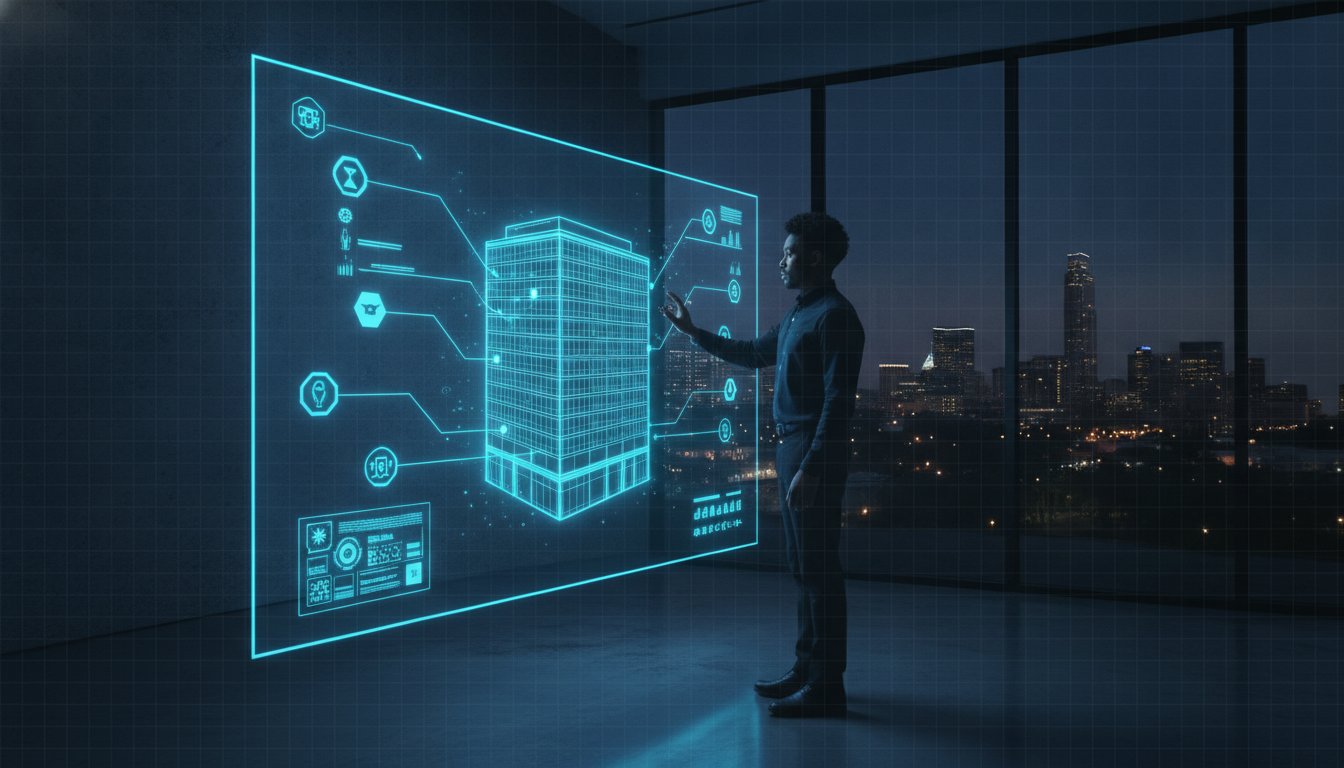
The true measure of a high-performance workplace is the invisibility of its complexity. While many facilities boast advanced hardware, these components often exist as isolated islands of technology that require constant manual intervention to stay aligned. Implementing sophisticated commercial automation solutions in Austin transforms these fragmented systems into a single, cohesive ecosystem. By engineering a unified environment, you eliminate the friction that typically defines modern property management and hybrid work schedules.
You're likely aware that rising operational costs and system silos are no longer just technical hurdles; they're barriers to growth. We'll show you how integrated building systems and AI-driven process automation can reduce overhead and create effortless experiences for every employee and visitor. This article provides a strategic overview of how to future-proof your infrastructure. We'll examine the synthesis of intelligent HVAC, lighting, and custom software that turns a standard office into a responsive, high-performance asset.
Key Takeaways
- Understand why modern enterprises are transitioning from standalone smart devices to fully integrated building ecosystems that act as a single, intelligent entity.
- Learn how to bridge the divide between physical environments and digital processes by synthesizing AV, lighting, and custom AI software into a frictionless workflow.
- Identify the long-term ROI of engineered building management systems, specifically through predictive HVAC controls and automated lighting that lower energy costs.
- Evaluate the strategic advantage of the "integrator" model, ensuring your partner possesses the technical depth to manage both high-end hardware and custom software development.
- Explore a structured roadmap for commercial automation solutions Austin businesses can use to unify security, networking, and internal tools under one accountable framework.
The Evolution of Commercial Automation Solutions in Austin
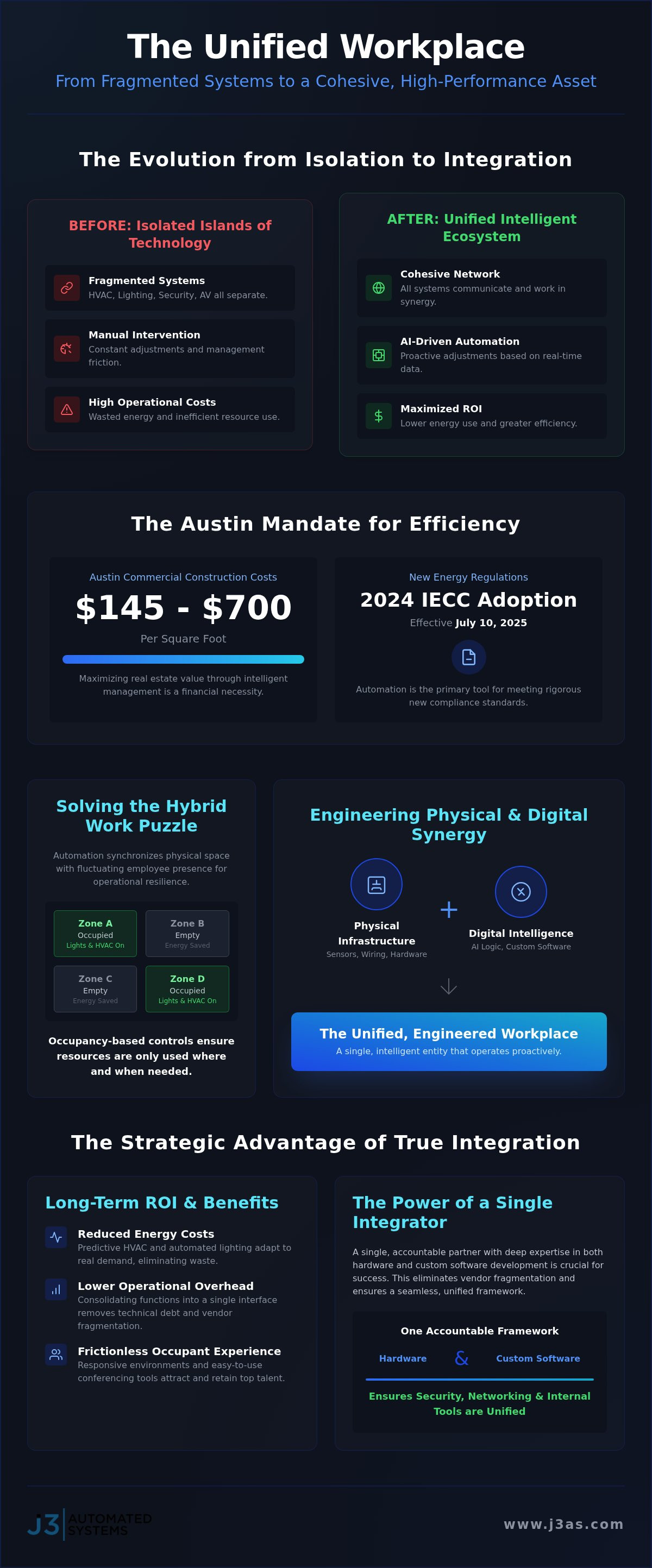
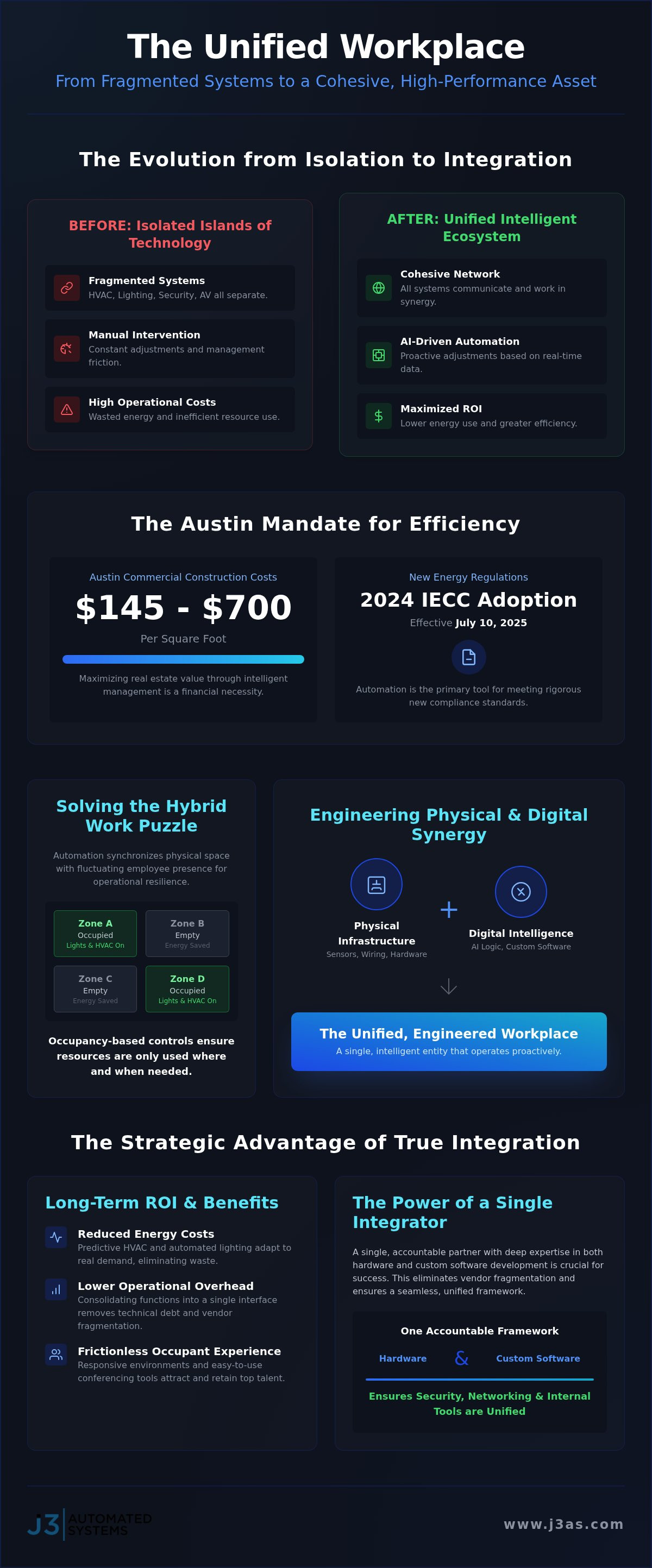
In 2026, Austin's commercial landscape is defined by a relentless drive for efficiency and precision. For high-tech enterprises in Central Texas, the commercial automation solutions Austin providers offer have moved far beyond simple convenience. These systems now represent the backbone of the physical workspace, synthesizing environmental control with digital operations. As construction costs in Austin reach ranges of $145 to $700 per square foot, maximizing every inch of real estate through intelligent management has become a financial necessity rather than a luxury.
Modern professionals expect an environment that responds to their presence. A building that feels stagnant or requires manual adjustment is a liability when competing for top-tier talent in a city dominated by innovation. Simultaneously, the City of Austin's adoption of the 2024 International Energy Conservation Code (IECC) on July 10, 2025, has raised the stakes for compliance. Automation is no longer an optional upgrade; it's the primary tool for meeting these rigorous standards while maintaining a premium occupant experience.
Beyond Smart Devices: The Integrated Ecosystem
Consumer-grade gadgets often promise simplicity but deliver fragmentation. An enterprise-grade engineered system is fundamentally different. While a smart bulb is a standalone product, Building automation systems are cohesive networks where every sensor, controller, and interface communicates. Selecting the right commercial automation solutions Austin businesses need involves moving past the gadget phase and into the engineering phase. This integration eliminates the technical debt that accumulates when facility managers must juggle a dozen different apps to monitor lighting, HVAC, and security. By consolidating these functions into a single pane of glass, operators gain a holistic view of building health, allowing for proactive adjustments rather than reactive repairs.
The Impact of the Hybrid Work Model
The hybrid schedule has introduced a new layer of complexity to facility management. Spaces that sit empty for three days a week shouldn't consume energy as if they're fully occupied. Modern automation uses occupancy-based environmental controls to adjust lighting and HVAC in real-time, ensuring resources are only deployed where people are actually working. This frictionless technology supports the return to office by removing the small annoyances of the workday, such as searching for an available room or struggling with conferencing equipment. Hybrid workplace automation is a strategic framework that synchronizes physical space with fluctuating employee presence to ensure operational resilience.
Engineering the Unified Workplace: Physical and Digital Synergy
The most effective commercial automation solutions Austin provides are those that bridge the gap between physical infrastructure and digital logic. When low-voltage wiring and AI software are treated as separate disciplines, friction is inevitable. An engineered workplace requires a single, accountable team capable of handling both the physical installation of sensors and the custom code that interprets their data. This holistic approach ensures that your building doesn't just have "smart" features but operates as a unified entity. By consolidating these responsibilities, you eliminate the vendor fragmentation that often leads to technical debt and operational delays.
AI-Driven Business Process Integration
Integrating AI business process automation into your facility management allows for a level of precision that manual scheduling cannot match. AI tools can analyze real-time occupancy data to predict when specific zones will be used, allowing the building to reduce HVAC energy use by pre-cooling or dimming lights based on actual demand rather than static timers. This synthesis of digital intelligence and physical response transforms the workplace into a proactive partner in your operations. It removes the burden of administrative oversight from your facility managers, letting the system manage the nuances of environmental comfort automatically.
Custom Dashboards and Internal Tools
A truly unified workplace provides clear visibility into its own performance. Bespoke digital interfaces allow stakeholders to visualize facility data, turning complex metrics into actionable insights. By investing in custom web app development in San Antonio and Austin, businesses can create internal tools that mirror their specific workflows. These interfaces rely on resilient networking to maintain constant connectivity between sensors and the dashboard. When your digital backbone is as strong as your physical one, communication flows without interruption.
This level of synchronization is what defines a high-performance environment. Custom software development acts as the connective tissue, ensuring that every hardware upgrade contributes to a larger, more efficient business strategy. When your systems talk to each other without manual intervention, you create a seamless experience for every employee. If you're ready to see how these systems can work together, you can consult with our integration specialists to map out your facility's digital future.
Maximizing Operational ROI with Building Management Systems (BMS)
ROI in a commercial environment is often viewed through a narrow lens of immediate energy savings. However, true financial value stems from a holistic approach to commercial building management systems in Texas. These platforms serve as a predictive engine for the entire facility, identifying minor inefficiencies before they become catastrophic failures. The scale of this transformation is reflected in the recent $80 million federal investment in smart building technologies, proving that even at the highest levels of infrastructure, intelligent controls are recognized as essential assets. For local enterprises, the commercial automation solutions Austin engineers provide will extend the lifespan of mechanical systems by utilizing automated maintenance alerts, ensuring that expensive HVAC and electrical components operate within their optimal parameters.
Intelligent HVAC and Climate Control
Climate control represents the largest operational expense for most Central Texas buildings. Zonal control ensures that resources aren't wasted on empty conference rooms or vacant floors during the fluctuating schedules of a hybrid work week. By integrating air quality sensors, the system doesn't just manage temperature; it optimizes CO2 levels and ventilation to support employee cognitive performance. There's a direct, measurable correlation between the implementation of climate automation and a substantial reduction in monthly energy expenditure. This precision allows facilities to maintain a premium environment without the burden of unnecessary overhead.
Automated Lighting and Shading
Lighting is more than a utility; it's a critical tool for both productivity and efficiency. Daylight harvesting uses automated shades to mitigate solar heat gain, a vital factor during Austin's intense summer months. Integrating Lutron and Ketra systems allows for circadian rhythm support, adjusting color temperature to match the natural progression of the day to keep teams focused. This attention to detail isn't just about comfort. It helps businesses meet the rigorous requirements of local building certification programs, such as the Austin Energy Green Building (AEGB) standards, which reward sustainable, high-tech environments.
A robust BMS also integrates commercial security system design in Texas to mitigate liability and risk. When access control, surveillance, and environmental sensors share a common language, the facility becomes an intelligent, self-protecting environment. This synergy provides a comprehensive return on investment that off-the-shelf components simply can't match. By choosing commercial automation solutions Austin businesses can rely on for the long term, you're investing in a property that actively works to reduce its own operational costs.
Selecting an Austin Commercial Automation Partner
The success of a facility’s transformation depends entirely on the partner you select to lead the integration. Many businesses fall into the trap of the multiple-vendor approach, hiring separate contractors for security, HVAC, and AV. This fragmentation creates an environment where systems don't talk to each other, leading to operational friction and finger-pointing during technical failures. Choosing a partner that provides comprehensive commercial automation solutions Austin enterprises can rely on means moving toward an "integrator" model. This approach ensures a single point of accountability, where every component is designed to function as part of a unified ecosystem from the initial design phase through long-term commissioning.
Engineering vs. Installation
Precision begins at the blueprint stage. A design-first engineering philosophy prevents the costly mid-project changes that often plague commercial construction. This methodology applies the same rigorous logic found in high-performance residential networking to large-scale commercial spaces. It treats the network as the invisible backbone of the entire estate, ensuring that high-bandwidth data flows as reliably as electricity. You must verify that your partner can handle both "code and copper," meaning they possess the technical depth to manage physical low-voltage wiring and the custom software development required for AI integration. Comprehensive documentation is the hallmark of professional engineering, ensuring your facility team understands every connection and protocol within the building.
Scalability and Future-Proofing
Technology evolves at a pace that can quickly render static systems obsolete. Avoid proprietary "dead-end" systems that lock you into a single manufacturer's ecosystem and make future upgrades difficult or prohibitively expensive. A visionary partner prioritizes open standards and flexible architecture, ensuring that your infrastructure can integrate with upcoming advancements in AI and the Internet of Things (IoT). J3 remains committed to open protocols, allowing your facility to grow alongside your business without requiring a full system overhaul every few years. This flexibility is essential for maintaining a competitive edge in Austin's fast-moving market.
Before signing a commercial automation contract, consider asking these specific questions to evaluate technical depth:
- Does the team handle both physical installation and custom software development in-house?
- What is the long-term plan for system commissioning and local support after the project ends?
- How does the proposed system align with current cybersecurity standards?
Selecting the right partner is a long-term investment in your building's intelligence and your team's productivity. If you're looking for a partner that values precision and architectural integrity, reach out to our engineering team to discuss your project requirements.
The J3 Roadmap: Tailored Automation for Austin Enterprises
Engineering a high-performance environment requires a transition from reactive purchasing to proactive design. The commercial automation solutions Austin businesses receive through the J3 roadmap are rooted in a methodical, four-stage lifecycle: Discovery, Mapping, Engineering, and Implementation. This structured approach ensures that every component, from cinema-grade AV to AI-driven building management, is consolidated into a single, accountable strategy. By acting as a visionary integrator, we remove the burden of managing multiple vendors, allowing you to focus on your core operations while we handle the technical complexity of your facility.
Our "White-Glove" service standard is built on the premise that a technology upgrade should never be a source of stress. We manage the entire implementation with a focus on precision and discretion, minimizing disruption to your Austin operations. This commitment to premium service means we handle the hidden connections between systems, ensuring that lighting, climate, and security work in absolute harmony. We take responsibility for the entire narrative of your building's transformation, moving from a state of fragmentation to one of intelligent, effortless operation.
Discovery and Process Mapping
The process begins by identifying the specific friction points that hinder your daily productivity. We look beyond the surface to understand how your facility currently consumes energy and how your team interacts with the space. During this phase, we define clear KPIs for operational efficiency, ensuring that the technology aligns with your long-term business goals. Given that the City of Austin's permitting process for typical commercial projects can take between 6 to 12 weeks, this early mapping phase is essential for navigating regulatory timelines without delaying your operational objectives. We create a custom technology roadmap that anticipates these local variables, providing a realistic and reliable path to completion.
Commissioning and Tuning
True engineering excellence is revealed in the final 10% of a project. Commissioning is the critical phase where we tune the system to ensure it meets the precise performance standards established during the design stage. This isn't a "set and forget" installation; it's a meticulous calibration of sensors, software, and hardware to ensure peak efficiency. We provide comprehensive training to your team, empowering them to leverage the full intelligence of their new integrated environment. J3 remains an accountable partner long after the physical installation is complete, providing ongoing support and system tuning to ensure your infrastructure remains resilient as technology evolves. If you are ready to begin your facility's transformation, contact our engineering team to start the discovery process.
Architecting the Future of Your Facility
The transition from siloed hardware to a unified workplace represents a fundamental shift in how modern business is conducted. By synthesizing intelligent building systems with custom digital workflows, you remove the operational friction that limits growth. True efficiency isn't found in a single device but in the seamless coordination of HVAC, lighting, and AI-driven processes. Implementing the right commercial automation solutions Austin enterprises need requires a partner who understands both the physical infrastructure and the software logic that drives it.
J3 provides a single accountable team for both your physical and digital systems, leveraging Texas-based engineering and custom AI expertise to deliver a frictionless experience. We move beyond simple installation to provide deep-thinking partnership and long-term system tuning. This approach ensures your technology remains a high-performance asset rather than a growing liability. Request a tailored automation roadmap for your Austin business to begin your journey toward a truly intelligent workplace. Your facility has the potential to work as hard as you do; it's time to unlock its full capability.
Frequently Asked Questions
What are the main benefits of commercial automation for Austin businesses?
Commercial automation solutions Austin enterprises implement provide a triad of benefits: reduced operational overhead, frictionless employee experiences, and resilient infrastructure. By unifying disparate systems, businesses eliminate the manual burden of facility management. This integration allows for precise control over energy consumption and security; it ensures that high end properties maintain a premium atmosphere while actively lowering long term costs through engineered efficiency.
How much can a building management system (BMS) save on energy costs?
Buildings that implement a Building Automation System typically see a 15% to 30% reduction in energy costs within the first year of operation. These savings are achieved through predictive HVAC controls and daylight harvesting techniques that adjust to actual occupancy. By optimizing resources based on real time data rather than static schedules, the system ensures that utilities are only consumed when and where they are truly needed.
Can commercial automation integrate with my existing HVAC and security systems?
Integration with legacy systems is possible through the use of open protocol architectures like BACnet and Modbus. These standards allow equipment from different manufacturers to communicate within a single ecosystem, preventing the need for a total hardware overhaul. Our engineering team specializes in bridging the gap between existing mechanical components and modern digital controls, ensuring a cohesive and unified monitoring experience across your entire facility.
What is the difference between building automation and business process automation?
Building automation focuses on the physical environment, managing hardware like HVAC, lighting, and access control to optimize facility performance. In contrast, business process automation involves digital workflows and AI tools that streamline administrative tasks and data management. While distinct, a truly unified workplace synthesizes these two disciplines. This allows digital data insights to trigger physical building adjustments for maximum operational efficiency and comfort.
How long does a typical commercial automation installation take in Austin?
The timeline for a commercial automation project varies based on the scope of work and complexity of integration. However, businesses should account for the City of Austin's permitting process, which typically requires 6 to 12 weeks for commercial projects. Once permits are secured, the engineering and implementation phases move according to a structured roadmap designed to minimize disruption to your daily operations and ensure architectural precision.
Is AI integration necessary for a modern office automation system?
While basic automation handles scheduled tasks, AI integration is essential for creating a truly proactive and responsive environment. AI tools analyze occupancy patterns and environmental data to make predictive adjustments that static systems cannot achieve. This level of intelligence transforms the office from a passive space into an active partner that anticipates the needs of your workforce. It ensures long term scalability and a distinct competitive advantage.
Does J3 Automated Systems provide ongoing support after installation?
J3 remains an accountable partner through a dedicated commissioning and support phase that extends far beyond the physical installation. We provide ongoing system tuning to ensure that your integrated environment maintains peak performance as your business evolves. Our white glove service standard includes comprehensive team training and technical stewardship, ensuring that your investment continues to deliver architectural precision and operational harmony for years to come.