Commercial Smart Building Solutions: Engineering Intelligent Efficiency in 2026
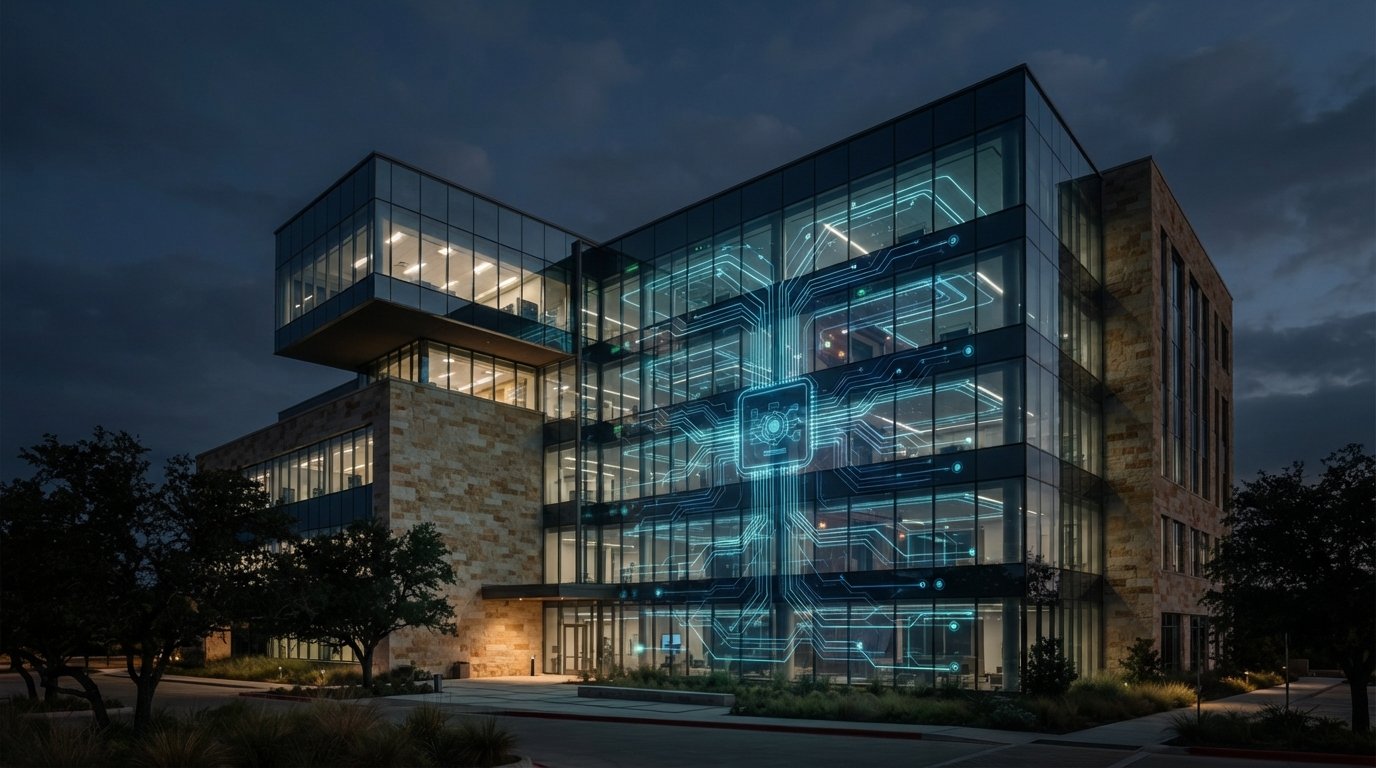
What if your facility's greatest financial liability isn't the cost of power itself, but the friction between the systems meant to manage it? In the demanding Texas climate, most property owners accept rising operational expenses as an unavoidable tax on doing business. You've likely struggled with siloed hardware and non-communicating HVAC units that produce plenty of alerts but very little actionable intelligence. It's a common burden, yet it's one that limits the true potential of your real estate portfolio.
This article reveals how integrated commercial smart building solutions and AI-driven automation transform fragmented properties into high-performance, cost-efficient assets. You'll discover how to unify your facility technology under a single point of accountability while future-proofing your infrastructure for the next generation of custom software. We'll examine the critical shift toward year-round load flexibility in the ERCOT market and how engineering a cohesive digital nervous system can reduce HVAC energy consumption by as much as 35 percent. By moving beyond static hardware, you can achieve a state of intelligent, effortless operation that protects your bottom line.
Key Takeaways
- Understand why true efficiency requires moving beyond isolated devices toward integrated commercial smart building solutions that unify physical hardware with core business logic.
- Explore how intelligent HVAC and automated lighting systems mitigate the financial impact of the Texas climate while enhancing the architectural experience of your property.
- Quantify the return on investment by analyzing direct utility reductions and the long-term savings generated through predictive, data-driven maintenance.
- Discover the methodical roadmap to implementation, starting with strategic infrastructure mapping and concluding with the precision commissioning of a bespoke system.
- Learn how a harmonized approach that combines physical automation with custom AI software removes the burden of fragmented facility management.
The Shift Toward Unified Commercial Smart Building Solutions
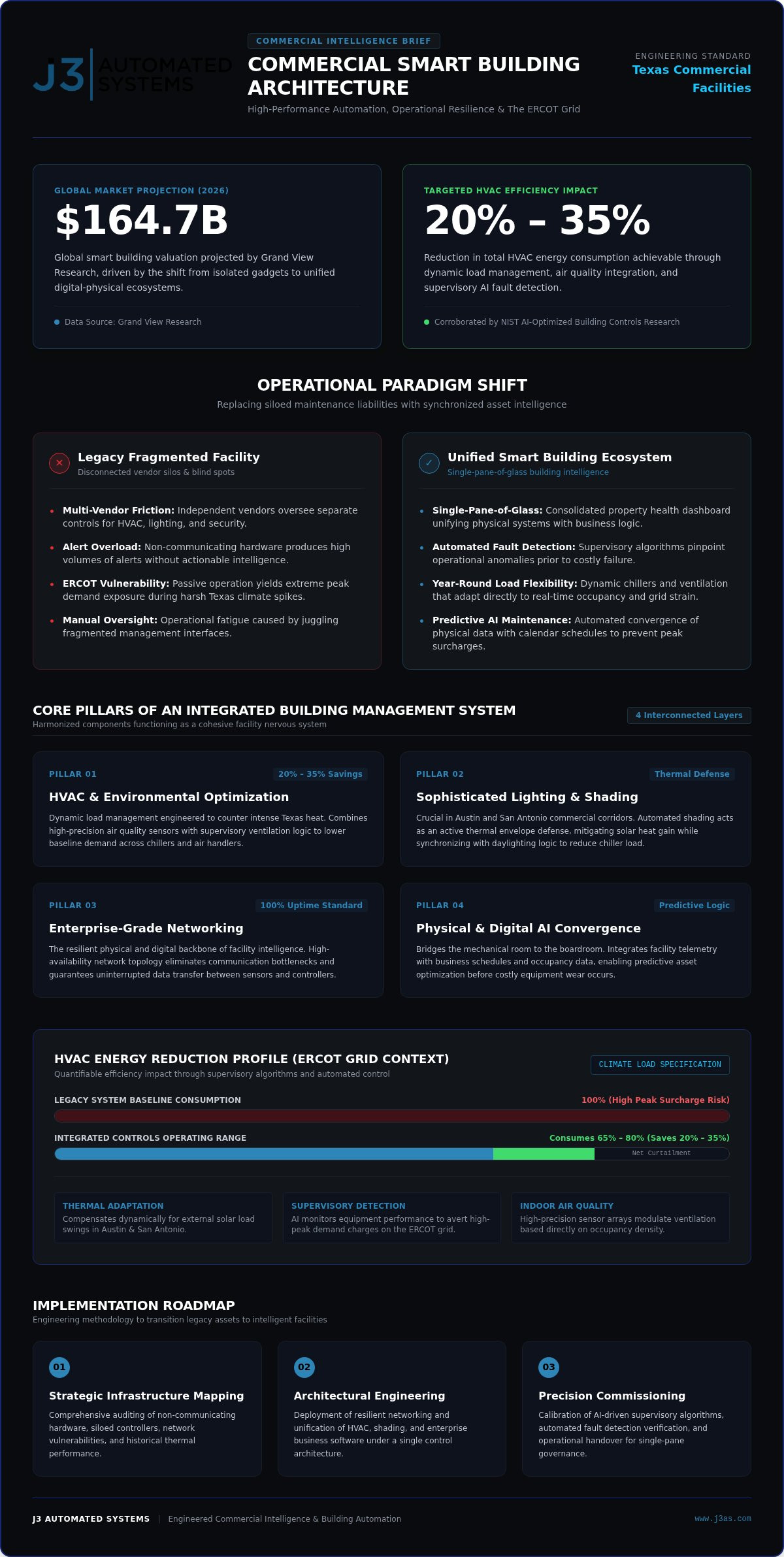
The modern commercial environment is undergoing a fundamental transformation. In 2026, the global smart building market is projected to reach $164.7 billion according to Grand View Research, yet the true value isn't found in the hardware alone. A high-performance property is defined by a cohesive ecosystem where physical hardware and business logic converge. This evolution marks the end of the era of fragmented gadgets and the rise of sophisticated commercial smart building solutions that function as a unified nervous system. When your lighting, climate control, and security operate in total harmony, the building stops being a passive shell and starts becoming an active contributor to your operational success.
Fragmentation is the primary enemy of efficiency. When systems are siloed, they create blind spots that lead to wasted energy and unnecessary maintenance cycles. High-performance, resilient networking serves as the invisible backbone of this intelligence, ensuring that data flows without interruption between every sensor and controller. Without this robust foundation, even the most advanced building automation systems fail to deliver their promised value. True intelligence requires a holistic architecture that eliminates the friction of manual oversight and replaces it with automated precision.
From Siloed Systems to Intelligent Ecosystems
Legacy facilities often suffer from a patchwork problem. One vendor manages the HVAC, another handles the lighting, and a separate provider oversees security. This creates data silos that force facility managers to juggle multiple interfaces, leading to operational fatigue and missed opportunities for optimization. The transition to single-pane-of-glass management allows for a comprehensive view of the entire property's health. Integrated automation is the strategic removal of technological burden.
The Convergence of Physical and Digital Automation
Engineering a high-performance building requires bridging the gap between the mechanical room and the boardroom. It's not enough for your chiller to run efficiently; it must also understand the business schedule and real-time occupancy data. By integrating commercial smart building solutions with custom business software, AI can predict facility needs before they manifest as costly repairs or high-peak demand charges. This convergence ensures that your physical environment remains perfectly aligned with your organizational goals, moving the conversation from simple maintenance to strategic asset management.
Core Pillars of an Integrated Building Management System (BMS)
A truly intelligent facility is more than the sum of its parts. It's a harmonized environment where four core pillars work in concert to eliminate waste and enhance the occupant experience. While many providers focus on isolated hardware, effective commercial smart building solutions prioritize the interplay between these systems to ensure long-term functionality. This orchestration requires enterprise-grade networking that guarantees 100% uptime, providing the resilient foundation necessary for critical building functions and real-time data transmission.
HVAC and Environmental Optimization
Managing the intense Texas heat requires more than powerful chillers. It demands dynamic load management that adjusts in real-time to occupancy density and outdoor thermal conditions. By integrating high-precision air quality sensors with ventilation logic, facilities can maintain a healthier workplace while optimizing energy spend. This approach is supported by NIST research on AI-optimized building controls, which demonstrates how supervisory algorithms can drastically reduce consumption through automated fault detection. For a deeper dive into these technical requirements, see our engineering guide on Commercial Building Management Systems in Texas. Implementing these integrated controls can lead to a 20% to 35% reduction in overall HVAC energy consumption, a vital metric for properties operating within the ERCOT grid.
Sophisticated Lighting and Shading
In Austin and San Antonio, automated shading is a critical component of the building's thermal envelope. By modulating natural light based on the sun's position, these systems significantly reduce the cooling load on HVAC units during peak afternoon hours. When paired with Lutron architectural controls, lighting becomes a tool for both aesthetics and productivity. Circadian lighting protocols mimic natural daylight cycles to support employee wellness, ensuring the indoor environment remains vibrant and focused. This level of precision transforms lighting from a utility into a strategic asset that balances visual comfort with aggressive energy efficiency goals.
Next-Generation Commercial Security
Modern protection goes beyond simple recording. It involves AI-driven surveillance and access control systems that identify potential threats before they escalate. By unifying these physical security layers with your broader building management strategy, you create a proactive defense posture that protects both personnel and physical assets. Our specialized approach to Commercial Security System Design in Texas ensures that your facility remains safe without compromising the fluidity of daily operations. If you're ready to simplify your facility management through expert integration, consider how a bespoke automation partner can unify these pillars into a single, efficient platform.
Calculating the ROI of Smart Building Technology in Texas
Investing in a building's intelligence is a capital allocation strategy that extends far beyond simple energy savings. For property owners in San Antonio and Austin, the financial return on commercial smart building solutions is found in the removal of operational friction and the mitigation of grid-related risks. While lower utility bills provide the most immediate data points, the comprehensive ROI includes extended asset longevity, reduced administrative burden, and the preservation of property value in a competitive market. It's a shift from reactive spending to proactive asset management.
Energy Efficiency in the San Antonio and Austin Climate
The Texas climate presents unique financial challenges, particularly regarding demand charges. In the ERCOT market, Four Coincident Peak (4CP) demand charges account for 5% to 15% of a Texas commercial facility’s total electric spend; these can represent up to 50% of monthly delivery charges for large loads. Integrated automation allows for precise, automated load shedding during these critical windows without compromising occupant comfort. According to an ACEEE commercial smart building study, the integration of these systems provides a measurable pathway to aggressive cost containment. Commercial buildings implementing integrated HVAC and automated occupancy controls achieve an average 20% to 35% reduction in overall HVAC energy consumption. Smart shading further compounds these savings by reducing solar heat gain during peak summer hours, preventing the cooling system from overworking during the most expensive times of the day.
Operational Longevity and Asset Protection
Predictive hardware analytics transform how facilities approach maintenance. Instead of waiting for a chiller or air handling unit to fail, real-time monitoring identifies performance drift that signals an impending breakdown. This intelligence extends the lifecycle of expensive mechanical equipment and prevents the catastrophic costs of emergency repairs. A resilient network also protects the bottom line by ensuring that critical building functions remain online, avoiding the business downtime that often accompanies system failures. Many insurance providers now recognize the value of integrated security and life-safety systems, offering reduced premiums for properties that demonstrate this level of technical oversight.
The final layer of ROI is found in administrative efficiency. By integrating physical building management with custom business tools, commercial smart building solutions automate the repetitive tasks that surround facility management. This includes everything from energy reporting to maintenance scheduling, allowing your team to focus on high-level strategy rather than manual troubleshooting. The result is a high-performance asset that operates with quiet brilliance and consistent financial precision.
The Roadmap to Implementation: Mapping, Engineering, and Commissioning
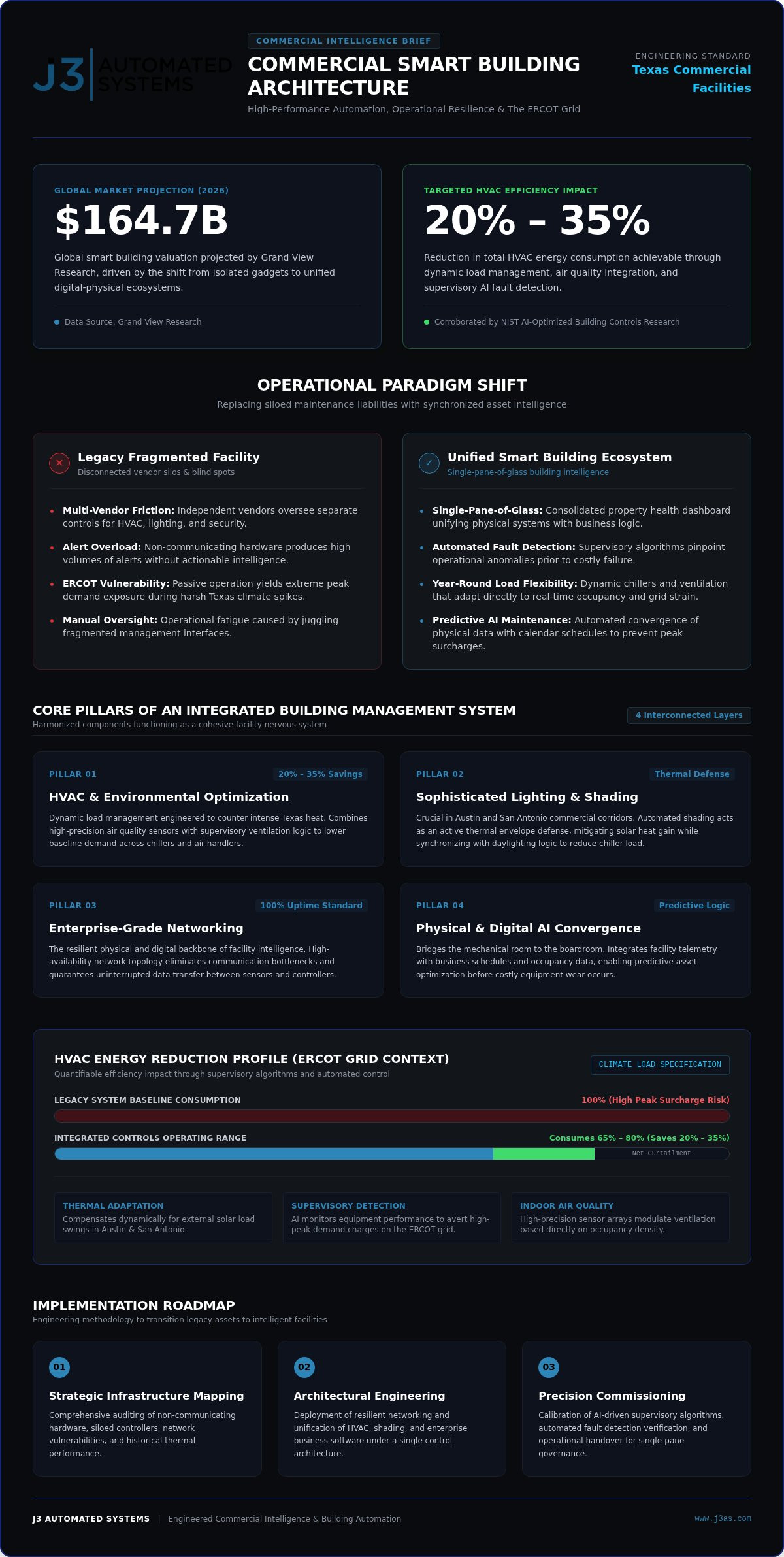
Realizing the full potential of commercial smart building solutions requires a methodical transition from conceptual goals to operational reality. This process is not a simple hardware installation; it's a sophisticated engineering journey that ensures every digital and physical component aligns with your property's specific needs. A successful implementation removes the burden of fragmented systems and replaces it with a harmonized environment that's built for long-term resilience. By following a structured roadmap, you ensure that your investment delivers the precise efficiency and intelligence promised during the design phase.
The Discovery and Design Phase
Generic, off-the-shelf products often fail in complex commercial environments because they lack the flexibility to account for unique architectural nuances and legacy hardware. Effective integration begins with a deep discovery process. We map your facility's internal workflows to identify specific opportunities where automation can create the most value. This strategic mapping often reveals paths for AI Business Process Automation, allowing your building's physical systems to communicate directly with your administrative software. This design phase creates a bespoke blueprint that treats the building as a single, unified asset rather than a collection of isolated devices.
Once the mapping is complete, bespoke engineering defines the infrastructure required for seamless operation. This includes the meticulous planning of low-voltage wiring and high-performance networking that serves as the system's nervous system. Every sensor, controller, and interface is positioned with precision to ensure data flows without interruption. This level of planning eliminates the friction typically found in patchwork systems, providing a stable foundation for both current needs and future technology upgrades.
Professional Commissioning and Long-Term Support
There's a fundamental difference between a system that's merely installed and one that's fully commissioned. Commissioning is the rigorous process of testing, tuning, and validating that every component performs exactly as designed in the real world. It involves balancing HVAC loads, calibrating lighting sensors, and stress-testing the network to ensure 100% uptime. This phase is critical for achieving the aggressive energy savings and operational goals established at the project's outset. It's the final step that transforms a collection of hardware into a high-performance intelligent ecosystem.
True intelligence also requires an empowered facility team. Part of the commissioning process involves training your staff to leverage the full power of the building's management interface. By providing a single point of accountability for engineering, installation, and ongoing support, we simplify the complexity of modern facility management. This white-glove approach ensures that your system remains optimized as your business evolves. If you're ready to engineer a more efficient future for your property, contact our team of visionary integrators to begin your discovery process.
Engineering Harmony: The J3 Approach to Commercial Intelligence
True intelligence in a facility isn't achieved by purchasing the right equipment; it's engineered through the purposeful integration of diverse systems. J3 Automated Systems operates as a visionary integrator, a "Master of Complexity" who simplifies the operational landscape for premier Texas properties. While many providers function as mere hardware vendors, our approach to commercial smart building solutions focuses on the hidden connections between physical automation and digital business logic. We replace the friction of fragmented tools with a state of intelligent, effortless operation. This is a higher standard of asset management.
The J3 commitment centers on long-term functionality and absolute transparency. We don't just install systems; we steward your digital and physical transformation. By combining physical building controls with custom software development, we ensure your infrastructure is future-proofed against the shifting demands of the Texas market. This holistic perspective is what separates a simple smart building from a truly intelligent asset. It's about precision. It's about harmony.
Bespoke Solutions for San Antonio and Austin Businesses
Our work in San Antonio and Austin is defined by a commitment to technical authority and high-touch service. We understand that a building's physical environment must reflect the sophistication of the business within it. This requires more than just low-voltage wiring and resilient networking; it demands a digital backbone capable of visualizing complex facility data. Through Custom Web App Development in San Antonio, we provide the tools needed to bridge the mechanical room and the boardroom. These bespoke applications allow property owners to interact with their assets through a single, polished interface, turning raw sensor data into actionable intelligence.
Your Partner in Digital and Physical Transformation
Moving from fragmented tools to a unified operational roadmap requires a partner who values precision over quick fixes. J3 delivers a white-glove experience that manages every layer of your facility's technology, from the initial mapping to the final tuning of AI-driven workflows. Our approach delivers superior long-term ROI by ensuring every system works in concert to support your organizational goals. We provide the clarity you need to manage complex environments with confidence.
- Engineering a unified operational roadmap that aligns with your specific business objectives.
- Integrating AI into your administrative workflows to automate the tasks that surround building management.
- Providing a single point of accountability for the entire lifecycle of your facility technology.
We invite you to move beyond the burden of siloed systems and discover the calm reliability of a harmonized environment. Contact us today to schedule a discovery session and begin engineering a higher standard of commercial smart building solutions for your property. Let's build something intelligent together.
Advancing Toward a Unified Facility Strategy
The transition from fragmented building management to a cohesive, intelligent ecosystem is no longer a luxury for premier Texas properties; it's a strategic necessity. By engineering commercial smart building solutions that unify physical hardware with AI-driven business logic, you eliminate the friction that historically plagued facility operations. This shift ensures that your infrastructure doesn't just house your business but actively supports your financial and operational objectives. You've seen how precise commissioning and integrated climate controls protect your bottom line while enhancing the architectural experience of your property.
Success in this complex landscape requires a partner who values long-term functionality over quick fixes. J3 Automated Systems provides the visionary integration needed to simplify your facility's digital and physical transformation. Our team offers accountable engineering and white-glove commissioning for San Antonio and Austin's most demanding environments, ensuring every system performs with absolute precision. If you're ready to remove the burden of siloed technology and embrace a harmonized future, we invite you to Schedule a Discovery Session with J3 Automated Systems. Your path to effortless, intelligent operation begins with a single, expert conversation.
Frequently Asked Questions
What are the primary benefits of commercial smart building solutions?
Primary benefits of commercial smart building solutions include significant reductions in utility expenses, lowered maintenance overhead, and the removal of operational friction. By unifying siloed systems like HVAC and lighting, property owners gain a single point of accountability for all facility technology. This integration creates a high-performance asset that supports both environmental comfort and long-term financial stability, allowing managers to focus on high-level strategy rather than manual troubleshooting.
Can building management systems be retrofitted into older commercial buildings in Texas?
Retrofitting is entirely feasible for older commercial properties in San Antonio and Austin. Modern engineering allows us to implement sophisticated controls using a combination of new low-voltage wiring and robust wireless communication protocols. This approach bypasses the need for invasive structural changes while delivering the same level of intelligence found in new construction. We focus on bridging the gap between legacy mechanical equipment and modern digital management platforms for seamless operation.
How much can a business save on energy costs with smart building automation?
Commercial facilities in the Texas market typically achieve a 20% to 35% reduction in HVAC energy consumption through integrated automation. These savings are driven by intelligent occupancy sensing, automated load shedding, and precise demand charge mitigation during ERCOT peak windows. By optimizing when and how your building consumes power, you protect your bottom line from rising utility rates and expensive transmission multipliers without sacrificing the comfort of your occupants.
What is the difference between a smart building and a building management system (BMS)?
A Building Management System (BMS) is the foundational hardware and software that controls mechanical and electrical equipment. In contrast, a smart building represents the entire ecosystem where that BMS is integrated with business logic, AI, and user experience tools. While a BMS manages the mechanical operation of equipment, commercial smart building solutions manage the organizational purpose, aligning facility performance with specific operational goals and digital business workflows.
How does AI integration improve commercial facility management?
AI integration transforms facility management from a reactive chore into a predictive strategy. By analyzing real-time data from sensors, AI identifies performance drift in mechanical systems before a failure occurs, allowing for proactive maintenance. It also automates repetitive administrative tasks, such as energy reporting and maintenance scheduling. This convergence of physical automation and digital business tools removes the burden from your staff and ensures consistent, optimized performance for the long term.
What role does networking play in a commercial smart building solution?
Networking serves as the critical nervous system of any intelligent facility. It ensures that data flows without interruption between sensors, controllers, and the management interface. For a high-performance building, enterprise-grade networking provides the 100% uptime necessary for life-safety systems, security surveillance, and real-time energy optimization. Without a resilient network backbone, the most advanced automation hardware remains isolated and incapable of delivering its full operational value or actionable data.
Are smart building systems secure from cyber threats?
Security is a core component of our engineering process, utilizing modern standards like BACnet/SC to protect building data. We implement enterprise-grade encryption and segmented network architectures to prevent lateral cyber intrusions. By moving away from legacy, unencrypted protocols and adopting TLS 1.3 standards, we ensure that your building's intelligence doesn't become a liability. Constant monitoring and robust commissioning further harden the system against evolving digital threats in the modern commercial landscape.
How long does the implementation of a full smart building solution typically take?
Implementation timelines vary based on the project's scale, though the process follows a steady, methodical rhythm. A typical roadmap involves a discovery and mapping phase, followed by bespoke engineering and physical installation. The final commissioning and tuning phase is vital for ensuring the system performs as designed. While a full transformation may take several months, we use a phased approach to minimize business disruption, ensuring each layer of intelligence is validated before moving forward.