Cost of a Whole Home Automation System: 2026 Buying Guide
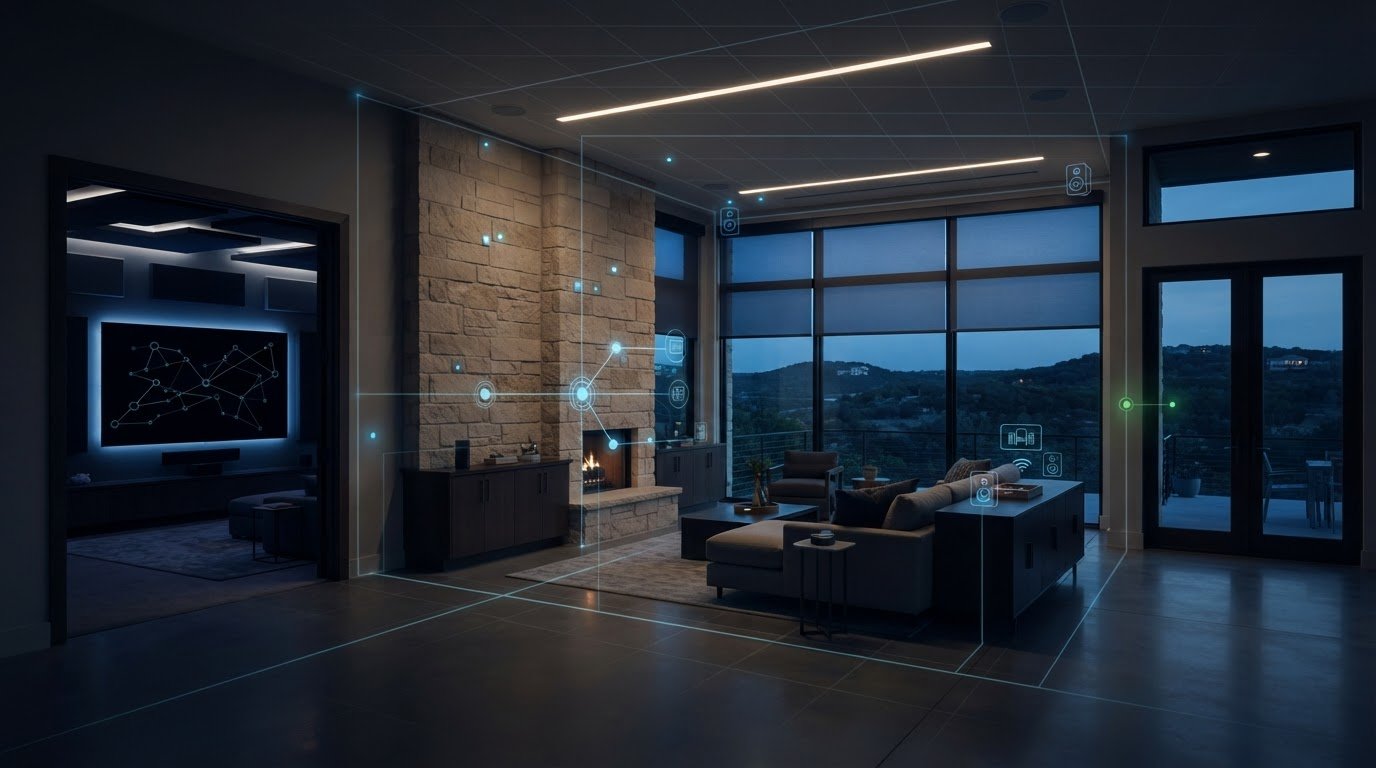
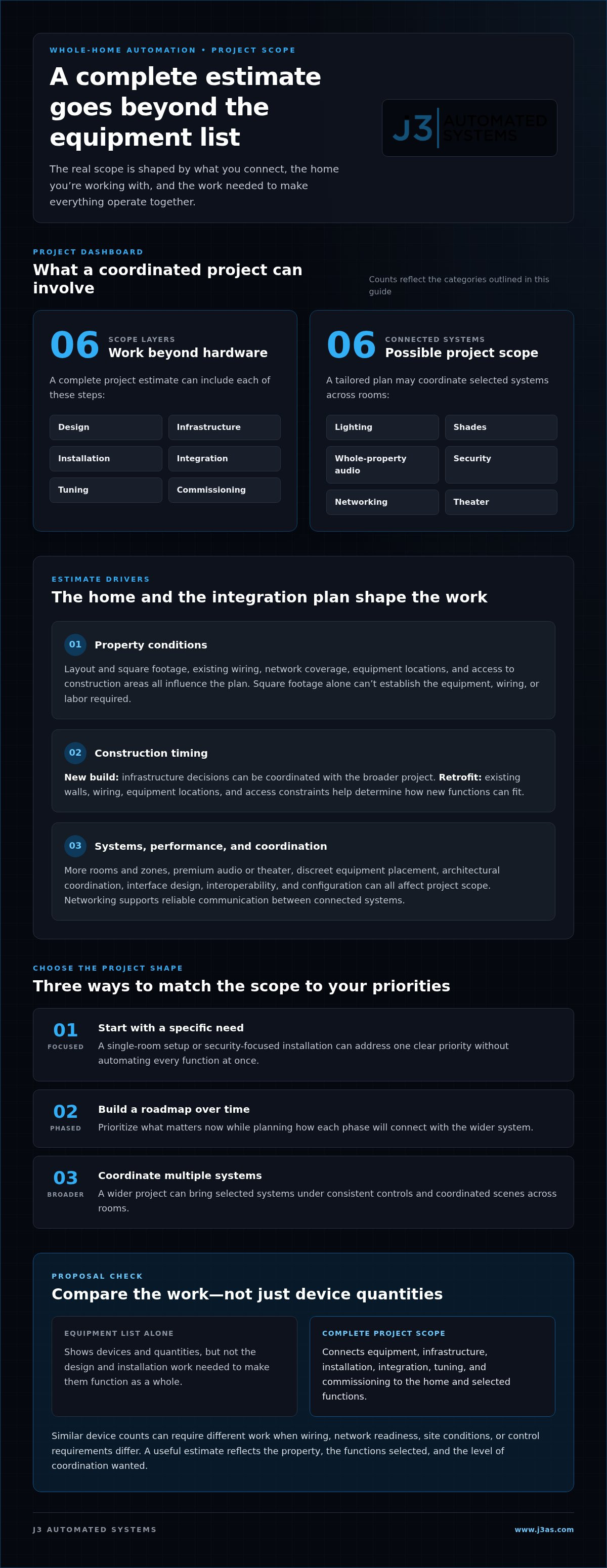
The cost of a whole home automation system depends less on how many devices you buy than on how well the systems are designed to work together. Published prices can offer a starting point, but they rarely account for a home’s size, construction, wiring, or the level of integration you want. An equipment list alone won’t show whether lighting, shades, audio, security, networking, and theater will operate as one coherent experience.
Before committing, ask for a proposal that spells out both the equipment and the work involved. This guide explains what affects project scope, how to compare partial offers with complete design and installation, and why infrastructure, engineering, tuning, and commissioning matter. You’ll also find practical ways to prioritize systems and prepare details that help a proposal reflect your home and goals. J3 Automated Systems designs and installs tailored automation projects for homes in San Antonio, New Braunfels, Seguin, Bandera, Boerne, Austin, San Marcos, and other Texas communities.
Key Takeaways
- The cost of a whole home automation system depends on the systems being coordinated, the home’s conditions, and the work required to make everything operate together.
- Compare proposals by their complete scope, including infrastructure, integration, tuning, and commissioning, not equipment alone.
- Choose a focused installation, a phased roadmap, or a broader project by ranking your priorities and considering how each phase will connect.
- Prepare a clearer budget by documenting your home, identifying essential functions, and mapping the systems you want to integrate.
- J3 coordinates lighting, shades, audio, security, networking, and theater through a tailored roadmap and one accountable project team.
What does the cost of a whole-home automation system include?
A whole-home automation system coordinates selected technologies so they operate as parts of a considered plan. It is more than a group of connected devices: controls, rooms, and functions should work together in ways that suit the home. A useful estimate of the cost of whole home automation system therefore covers more than equipment. It accounts for the work to design, install, integrate, tune, and commission the selected systems.
Scope varies with your goals and the property. A single-room setup or security-focused installation addresses a specific need. A home-wide project may coordinate several systems across rooms, with shared controls and planned interactions. Neither approach is automatically right for every homeowner. Decide based on the functions you value, the property’s infrastructure, and how closely you want the systems to work together.
Which systems can a whole-home automation project connect?
A tailored project can bring together automated lighting and shades, whole-property audio, security, resilient networking, and theater. For example, lighting, shades, and audio can be planned together so a selected scene feels consistent in a living area. You can prioritize specific systems instead of automating every function at once. A dedicated screening room has its own design considerations; explore the cinema-grade home theater design guide for more on theater scope. For a broader overview of the field’s applications and technologies, see Home automation.
Why is a device count not a reliable cost estimate?
A device count describes part of an equipment list, but it doesn’t show what it takes to make the system function as a whole. Two homes with similar device counts may require different design and installation work because their wiring, network readiness, site conditions, and control requirements differ. A new build also offers different planning opportunities from a retrofit, where existing conditions shape how systems can be integrated.
Equipment cost covers the devices; complete project cost covers the design, infrastructure, installation, integration, tuning, and commissioning needed to make them work together. Compare proposals by the work and systems included, not just hardware quantities. An estimate becomes useful when it reflects the home, selected functions, and desired level of coordination.
Which factors shape the cost of a whole-home automation system?
The cost of whole home automation system depends on more than the number of devices. The scope, property conditions, infrastructure, equipment selection, installation labor, integration, and commissioning all affect the work involved. The number of rooms and zones matters, too. Controlling lighting in a few areas is a different design task from coordinating multiple rooms, audio zones, shades, security, and theater around household routines.
Performance expectations also shape the scope. Premium audio or theater, discreet equipment placement, and integration with the home’s architecture may require additional design coordination and careful installation. Tuning and commissioning complete the process by configuring the system and refining its operation after installation.
How do home size, construction, and infrastructure affect the estimate?
Square footage alone can’t establish how much equipment, wiring, or labor a project needs. The layout, existing wiring, network coverage, equipment locations, and access to construction areas all influence the plan. A smaller home with complex requirements may call for different work than a larger property with suitable infrastructure already in place.
Construction timing changes the planning context. In a new build, infrastructure decisions can be coordinated with the broader project. A retrofit must account for existing walls, wiring, and equipment locations, then determine how new functions can fit those conditions. Share renovation plans and known access constraints when defining the project scope.
How do system choices and integration affect project scope?
Adding one function has a different scope from coordinating lighting, shades, audio, security, and theater. Each system has its own control needs. Integration requires decisions about how people will operate the home and how the systems should interact. Interface design, interoperability, and configuration all affect the work.
Networking is foundational because connected systems need reliable communication to support coordinated operation. Review high-performance residential networking to understand how the network supports connected systems. A tailored estimate should explain how equipment, installation, integration, and commissioning fit together. For a project-specific roadmap, explore J3’s residential automation approach.
Is whole-home automation worth it, or should you automate in phases?
A coordinated system isn’t automatically the right choice for every home. If one function addresses a clear need, a focused installation may be the most practical starting point. Broader integration can make sense when you want several systems to use consistent controls and coordinated scenes. Choose an approach by identifying what you want the home to do, how much coordination matters, and whether you want to address those priorities now or over time.
Assess value by the experience you want: simpler daily control, fewer disconnected interfaces, dependable operation, and systems that complement one another. These are project goals, not a promise of guaranteed savings. They can help you decide whether the scope and resulting cost of whole home automation system fit your priorities.
When does a focused or phased automation project make sense?
A focused project can address an immediate priority, such as managing lighting and shades in key rooms, improving audio in selected spaces, or coordinating security functions. A phased approach builds from that starting point. A roadmap can account for functions you may add later and guide infrastructure and design decisions, without assuming every future system will integrate in the same way.
Phasing keeps the initial scope centered on what matters most, while a larger project can coordinate more functions at once. Later stages may require revisiting parts of the installation. Planning the overall direction early can help limit avoidable rework and support a more consistent control experience.
When is a more integrated system the better fit?
A broader project may suit a home where several systems need to respond together. For instance, a homeowner might want lighting, shades, and audio to follow a consistent scene across living areas, while keeping theater and security controls accessible through a coherent interface. Multi-room sound brings its own coordination considerations; see whole-property audio system planning for more on designing audio across the home.
Coordinating design, installation, and commissioning as one project lets the plan account for how systems relate from the outset. That doesn’t mean automating everything. It means selecting the systems that support your daily routines and defining how you want them to work together.
To compare approaches, list your immediate priorities, the functions you might add later, and the interactions you want between them. Explore J3’s residential automation approach to see how a tailored roadmap can bring those priorities into a coordinated plan.
How can you plan a realistic whole-home automation budget?
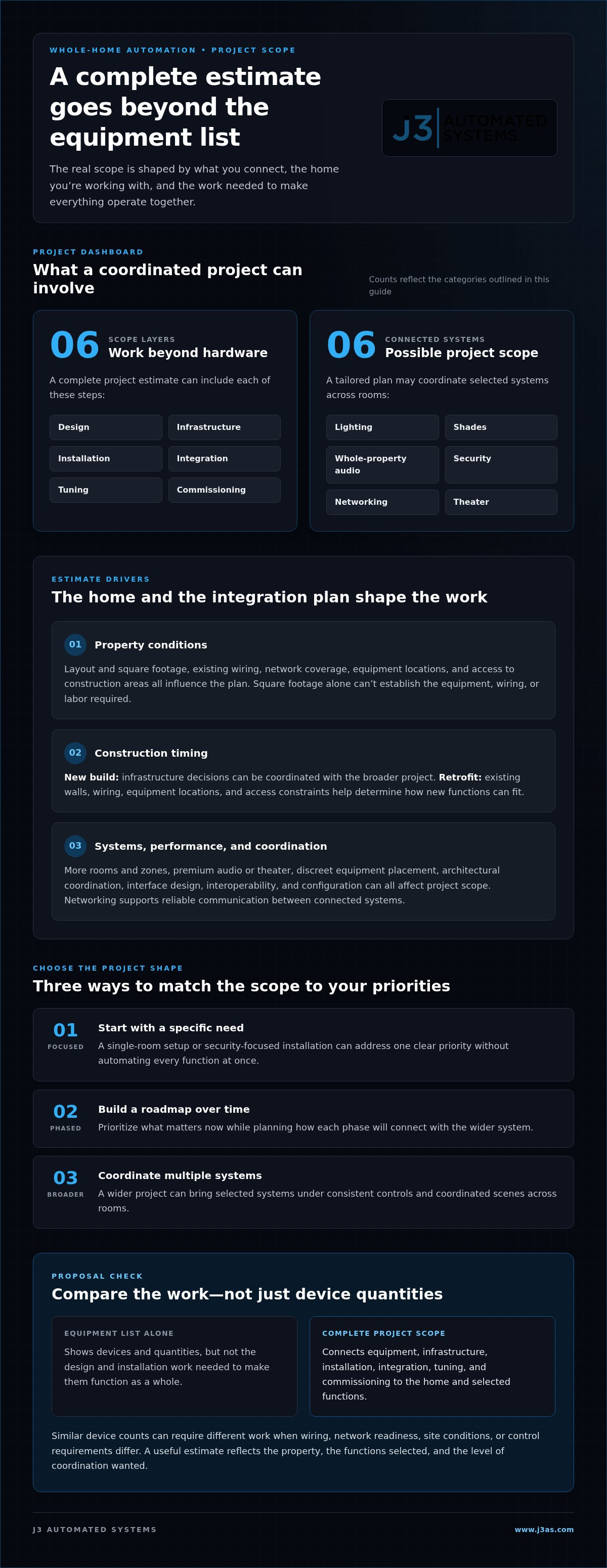
Start with the experience you want, not a shopping list. Define essential functions, document the property, map the systems you want to connect, identify infrastructure needs, and review the complete project scope. This sequence keeps optional enhancements in perspective and makes the cost of whole home automation system easier to assess as a tailored project rather than a generic device estimate.
What information should you prepare before requesting a proposal?
Prepare a brief that captures how your household uses the home and what you want automation to improve. Include current technology and any construction or renovation plans. For a home in San Antonio, New Braunfels, Seguin, Bandera, Boerne, Austin, or San Marcos, property-specific details are more useful than assumptions based on a typical floor plan.
- List priority functions, such as automated lighting and shades, audio, security, networking, or theater.
- Note rooms and zones, household routines, and how you want each system to respond.
- Describe existing wiring, network equipment, and known equipment locations.
- Share construction timing and access constraints that could affect installation.
Separate essentials from enhancements. For example, identify the rooms that need coordinated lighting now and whether you want to plan for audio or theater later. This gives the design process a clear starting point without closing off future possibilities.
How do you compare automation proposals fairly?
Compare what each proposal delivers, not just the quantity of equipment. Look for clear scope across design, hardware, installation, integration, and commissioning. Then compare the intended user experience: which rooms and functions are included, how they’re controlled, and what coordination is planned between systems.
- Design: Are project planning and system responsibilities described?
- Equipment: Are included components and system boundaries clear?
- Installation: Does the scope explain the work required at the property?
- Integration: Does it define how the selected systems will work together?
- Commissioning: Are configuration and final tuning included?
Clarify any gaps in the scope before comparing totals. An estimate for a project in San Antonio or elsewhere in Texas should reflect the actual home, its infrastructure, and your priorities, not an assumed universal package. J3 Automated Systems develops tailored residential automation roadmaps and coordinates design through commissioning. Plan your residential automation project.
How does J3 plan and deliver whole-home automation in Texas?
J3 Automated Systems approaches residential automation as a connected project, not a collection of unrelated installations. A tailored roadmap starts with the home and the homeowner’s priorities, then guides engineering, hardware procurement, installation, tuning, and commissioning. This process shapes the cost of whole home automation system around the selected scope and the work needed to deliver it.
One accountable team can coordinate automated lighting and shades, whole-property audio, security, resilient networking, and cinema-grade theater. Recommendations are guided by the property, desired functions, and how closely the systems should work together. A project can address several systems at once or establish a plan for future phases.
What happens from project discovery through commissioning?
Work begins by understanding how the household uses the home, which functions matter most, and what the property can support. J3 maps the systems and their relationships before engineering the solution and making equipment decisions. This early coordination helps define control points, system boundaries, and installation requirements.
After planning and hardware procurement, the team installs the selected systems, configures their controls, and tunes their operation. Commissioning checks that the system functions as intended and aligns with the homeowner’s routines. For example, a planned scene might coordinate lighting and shades with audio in a shared living space, while keeping theater controls specific to the screening room.
How does an integrated plan support long-term usability?
Clear system boundaries and deliberate control logic can make daily operation more consistent. Rather than leaving household members to navigate disconnected controls for each function, the plan considers how selected systems should be accessed and interact. Engineering, installation, tuning, and commissioning all contribute to the finished experience.
A documented roadmap also gives future work a reference point. If you later add another room or system, the project can be considered in relation to the original priorities and infrastructure rather than treated as an isolated addition. This supports a coherent direction without assuming every future technology or system will be compatible.
For a tailored residential automation project in San Antonio, New Braunfels, Seguin, Bandera, Boerne, Austin, San Marcos, or another Texas community, discuss your home automation project with J3. Share the property details, priorities, and scope you have in mind to start planning a connected system for your home.
Build a Home Automation Plan Around Your Priorities
The cost of whole home automation system depends on the property, the functions you choose, and the level of coordination you want. A useful project budget covers the complete scope, not just equipment. A clear roadmap can also help you decide what to implement now and what to plan for later.
Before moving forward, define your essential functions, document the property and existing infrastructure, and compare proposals by design, equipment, installation, integration, tuning, and commissioning. These details make it easier to see what each project includes and whether it supports the experience you want at home.
J3 Automated Systems brings residential design, installation, tuning, and commissioning together through one accountable team. Recommendations are tailored to your home and priorities, with service in San Antonio, New Braunfels, Seguin, Bandera, Boerne, Austin, San Marcos, and communities throughout Texas. Plan a tailored whole-home automation project with J3 to take the next step toward a more connected home.
Frequently Asked Questions
How much does a whole-home automation system cost?
There’s no single price because the cost of whole home automation system depends on the property, selected functions, infrastructure, equipment, and level of integration. A focused installation has a different scope from a project coordinating lighting, shades, audio, security, networking, and theater. For a useful estimate, define the rooms and functions you want, then compare proposals that explain design, equipment, installation, integration, tuning, and commissioning.
What is included in a whole-home automation system?
A whole-home automation project can include design, equipment procurement, installation, integration, tuning, and commissioning. Selected systems may include automated lighting and shades, whole-property audio, security, resilient networking, or cinema-grade theater. Scope depends on your priorities and property. A coordinated system connects chosen functions through considered controls; it doesn’t require automating every room or household function.
Does home size determine the cost of home automation?
Home size is one factor, but square footage alone can’t determine project scope. Room layout, the number of controlled zones, existing wiring, network coverage, equipment locations, and access conditions also shape the work. A smaller home with several systems to coordinate may need a different design from a larger home with simpler requirements. Assess the property and intended functions together for a meaningful estimate.
Is whole-home automation more expensive to install in an existing home?
Existing-home projects involve different planning and installation considerations from new construction, but there isn’t a universal retrofit premium. Existing wiring, equipment locations, network readiness, and access to installation areas influence the approach. During construction, infrastructure decisions can be coordinated with the build. In an existing home, the design must work with current conditions. A property assessment helps define the specific scope.
Can I install whole-home automation in phases?
Yes. You can begin with the functions that matter most, such as lighting and shades, audio, or security, then plan future phases around your priorities. A roadmap helps each stage follow a coherent direction, though it shouldn’t assume universal compatibility among future systems. Consider how staging affects infrastructure, controls, and installation work so you can balance immediate needs with future flexibility.
Does a whole-home automation system require professional installation?
Not every connected device requires professional installation. Simple wireless devices may suit a do-it-yourself approach, while hardwired controls, complex networking, and multi-system integration call for more planning and technical coordination. Professional design and installation can help align equipment, controls, and infrastructure; tuning and commissioning then verify that selected systems operate as intended. The right level of support depends on your project’s complexity.
What should I include when requesting a home automation estimate in San Antonio?
Include your priority functions, household routines, rooms and zones, current wiring and network setup, construction plans, timing, and known access constraints. Note whether you’re considering lighting and shades, audio, security, networking, or theater, and distinguish essentials from optional features. For projects in San Antonio, New Braunfels, Seguin, Bandera, Boerne, Austin, or San Marcos, property-specific details help shape a useful project proposal.