Energy Efficient Building Controls: The Definitive Guide for Texas Properties in 2026
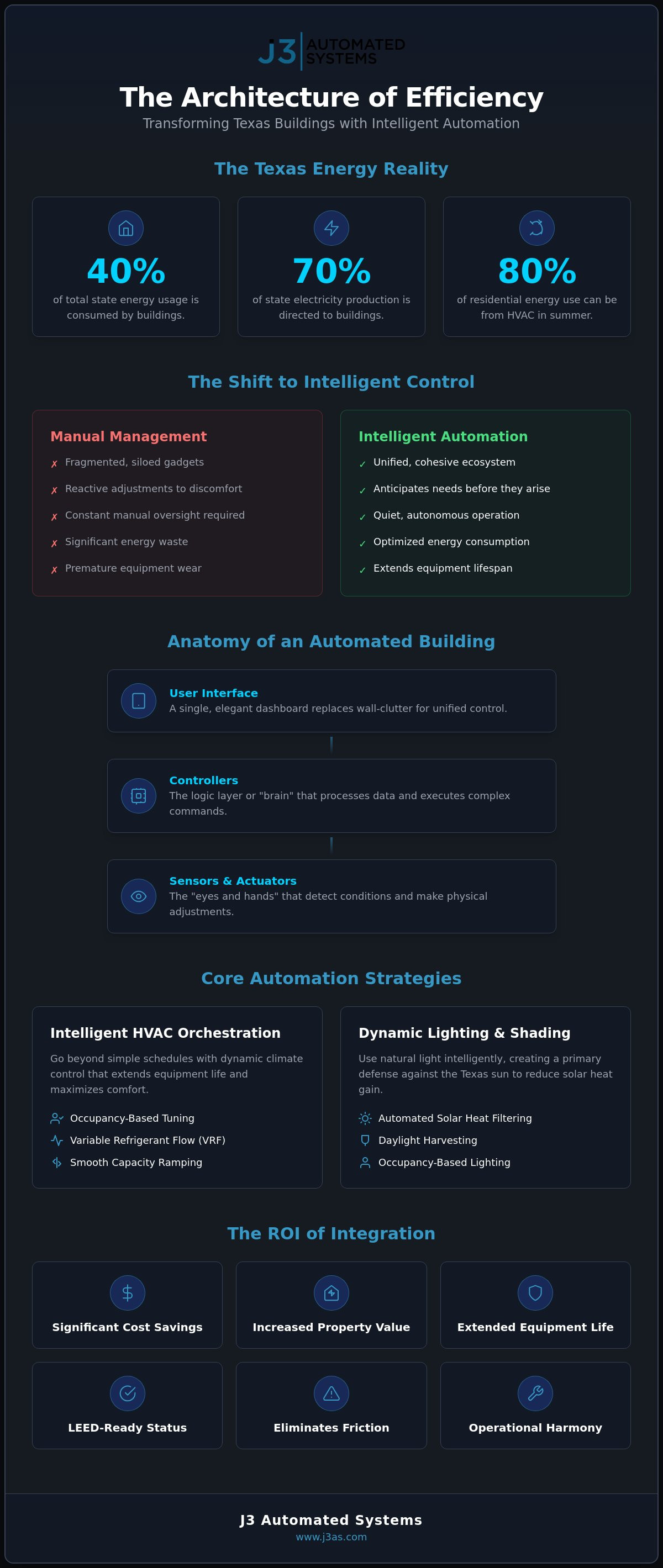
Buildings account for 40% of total energy usage in Texas and a staggering 70% of its electricity production. Most property owners accept that managing a facility means enduring the friction of fragmented systems and the constant manual oversight of HVAC and lighting. You've likely felt the weight of rising utility costs during a brutal San Antonio or Austin summer, wondering if there's a more precise way to maintain comfort without the operational burden. It's a common frustration, but it's one that modern engineering can solve.
Investing in sophisticated energy efficient building controls allows you to replace this operational noise with a state of quiet, automated brilliance. This guide reveals how integrated building automation systems transform energy waste into operational harmony and significant cost savings. We'll walk through the 2026 landscape, covering everything from the expanded Section 179D tax deductions to the latest ASHRAE standards. You'll discover how to increase property value and achieve LEED-ready status through technology that's as seamless as it is sustainable.
Key Takeaways
- Understand how energy efficient building controls act as a central nervous system for your property, moving beyond simple scheduling to intelligent, sensor-driven automation.
- Master the orchestration of HVAC performance through dynamic occupancy-based cooling and the seamless integration of variable refrigerant flow systems.
- Discover how automated lighting and shades serve as a primary defense against the Texas sun, filtering solar heat while maintaining architectural aesthetics.
- Identify why fragmented gadgets often lead to system abandonment and how a single, engineered roadmap eliminates operational friction.
- Gain insight into a professional engineering process that aligns high-end technology with specific commercial or residential objectives.
The Architecture of Efficiency: Defining Modern Building Controls
Efficiency is more than a metric; it's an engineering byproduct of harmony. In the context of a high-performance Texas property, energy efficient building controls serve as the central nervous system of the structure. While a traditional building relies on isolated, manual inputs to manage comfort, a modern automated property operates with a unified intelligence. It moves beyond the limitations of a simple thermostat, which only reacts after a room becomes uncomfortable, to a system that anticipates needs before they arise. This shift bridges the gap between physical environments and digital processes, ensuring that your property remains in a state of effortless operation.
The distinction between manual management and Building automation systems (BAS) is profound. Manual systems represent a reactive era where adjustments are made in response to discomfort. In contrast, intelligent automation platforms utilize real-time data to maintain an ideal environment. By 2026, the industry standard has shifted toward total interoperability. This means your HVAC, lighting, and security systems no longer operate in silos; they communicate through open protocols like BACnet to ensure every watt of energy serves a specific, calculated purpose. It's the difference between a collection of independent gadgets and a single, cohesive ecosystem.
The Core Components of an Intelligent System
A truly sophisticated system relies on three distinct layers. Sensors and actuators act as the eyes and hands of the building, detecting occupancy and adjusting dampers or valves with surgical precision. Above them, the controllers serve as the logic layer, where engineering meets daily operation to process complex sequences. This layer requires meticulous planning and craftsmanship to ensure that the logic is both robust and flexible. Finally, the user interface replaces wall-clutter with an elegant, unified digital dashboard. This transition from fragmented gadgets to a single engineered roadmap eliminates the friction that typically leads to system abandonment.
Why Building Controls Matter in the Texas Climate
For properties in San Antonio and Austin, managing extreme thermal loads is a constant challenge. Buildings account for 40% of the state's total energy usage; during peak summer months, inefficient systems can lead to staggering utility bills. Energy efficient building controls mitigate these costs by managing peak-demand pricing through load shedding and intelligent cooling. Beyond immediate savings, these systems ensure the longevity of your mechanical equipment. By balancing the load across your HVAC infrastructure, the system prevents the premature wear that often plagues overtaxed, manually-managed units. It's a strategic approach that values precision and long-term functionality over quick fixes.
Intelligent HVAC and Climate Orchestration
In the high-stakes environment of a Texas summer, HVAC systems often account for 80% of residential energy consumption. Simply setting a schedule is no longer sufficient for sophisticated property management. Real orchestration requires energy efficient building controls that treat the HVAC system as a dynamic, responsive entity rather than a static utility. By integrating variable refrigerant flow (VRF) systems with central automation, properties achieve a level of precision that traditional forced-air units cannot match. This integration allows for simultaneous heating and cooling in different zones, moving energy exactly where it's needed rather than wasting it on unoccupied spaces.
Professional engineering prioritizes the reduction of mechanical friction through smoother, automated staging. Rather than the harsh "on-off" cycles that strain compressors and shorten equipment life, an intelligent system ramps capacity up and down based on real-time demand. This methodical approach extends the life of expensive infrastructure while maintaining a consistent thermal profile. It's a shift from reactive cooling to a state of perpetual environmental harmony.
Occupancy-Based Climate Tuning
The "set and forget" mentality is a common fallacy that leads to significant energy waste in large properties. True efficiency relies on PIR sensors and geofencing to detect human presence with absolute certainty. When a room is empty, the system automatically adjusts the setpoint, eliminating the cost of cooling an unoccupied space. This level of detail is vital for large-scale estates and open-plan commercial offices where usage patterns are fluid. Utilizing smart technology for energy savings allows property owners to maintain luxury without the burden of manual oversight or "app fatigue."
Predictive Cooling and Grid Resilience
Predictive cooling is the proactive adjustment of indoor temperatures based on upcoming thermal loads. By analyzing local Texas weather forecasts and solar gain data, the system pre-cools a building during off-peak hours when electricity is cheaper and the grid is less stressed. This foresight is essential for properties in Austin and San Antonio, where grid reliability remains a primary concern for owners. When paired with resilient networking and backup power, these energy efficient building controls ensure your environment remains stable even when external infrastructure falters.
In Central Texas, comfort is as much about moisture management as it is about temperature. High-end automation platforms manage humidity levels independently, protecting architectural finishes and ensuring a crisp, premium atmosphere. For those seeking a bespoke approach to these technical complexities, consulting with a specialized systems integrator can transform a standard mechanical layout into a high-performance asset.
Lighting and Shading: The Dynamic Energy Filter
While HVAC systems manage the internal climate, lighting and shading serve as a property’s primary defense against the relentless Texas solar load. In modern architectural designs featuring floor-to-ceiling glass, windows often become the weakest link in the thermal envelope. Without a sophisticated intervention, solar gain forces HVAC units to work at maximum capacity, leading to excessive wear and inflated utility costs. Integrating energy efficient building controls into the building's facade transforms static glass into a dynamic filter that proactively manages light and heat.
Automated Shading as Thermal Insulation
The engineering logic behind automated shading is simple yet powerful: it blocks thermal energy before it ever enters the glass envelope. This is far more efficient than trying to cool air that has already been heated by the sun. High-performance systems utilize astronomical clocks to track the position of the Texas sun with mathematical precision, adjusting shade height throughout the day to maximize natural light while minimizing heat gain. Selecting high-performance fabrics is a critical part of this process. These materials must provide high solar reflectance while maintaining the aesthetic integrity of luxury interiors, ensuring that efficiency never comes at the cost of style.
High-Performance Lighting Control Systems
Artificial lighting is another area where precision yields significant dividends. While basic LED upgrades can reduce energy consumption by 70% to 90% according to industry data, the true potential is realized through advanced control. The efficiency of modern dimming is often underestimated; even a 10% reduction in light output results in measurable energy savings and extends the life of the fixtures. Systems like Ketra and Lutron allow for architectural beauty to be achieved through engineering precision. By utilizing daylight harvesting, the system automatically dims interior lights when natural sunlight is sufficient, maintaining a consistent lux level without manual input. This seamless integration is why automated lighting and shade control is considered a core pillar of luxury efficiency.
Beyond simple on-off states, circadian lighting represents a fusion of wellness and operational intelligence. These energy efficient building controls shift the color temperature of interior lights to mirror the natural progression of the day. This creates a state of environmental harmony that supports human health while ensuring that no fixture draws more power than necessary. It's a holistic approach that treats the building not just as a shelter, but as a living, breathing environment that responds to both external conditions and internal needs.
The ROI of Integration: Why Siloed Systems Fail
Many property owners fall into the trap of incremental upgrades, purchasing a smart thermostat here and an automated shade there, hoping for a cumulative effect. However, a collection of disparate gadgets rarely equates to a high-performance building. Without a unified strategy, energy efficient building controls become a source of operational friction rather than a tool for savings. This fragmentation often leads to "app fatigue," where the burden of managing multiple, disconnected interfaces results in system abandonment. When technology becomes a chore, users stop engaging with it, and energy waste inevitably returns.
True integration replaces this chaos with a single, engineered roadmap. It allows for unified data auditing, which is essential for compliance with local regulations like Austin's ECAD ordinance. When your systems speak the same language, you gain an accurate, holistic view of your property’s performance. This transparency is the foundation of effective energy management, allowing you to identify waste that siloed systems would otherwise hide behind separate service contracts and conflicting reports.
The Friction of Fragmentation
Fragmentation creates more than just an interface problem; it creates operational conflict. Consider a scenario where an HVAC system works to cool a room while the automated shades remain open, allowing solar heat to pour in. Because these devices don't communicate, they actively fight each other. This conflict wastes energy and accelerates mechanical wear on your most expensive infrastructure. Furthermore, every unmanaged IoT device introduced to a property represents a potential security vulnerability. A unified system closes these gaps, ensuring that your property is as secure as it is efficient.
Calculating the True Value of an Integrated BMS
The return on investment for an integrated building management system (BMS) extends far beyond the monthly utility bill. It includes significant operational savings through reduced labor and streamlined maintenance. Managing separate service contracts for HVAC, lighting, and networking is both expensive and time-consuming. By contrast, a single accountable team handles the design, installation, and long-term tuning of the entire ecosystem. This "white-glove" approach ensures that every component is optimized for performance.
In the competitive Texas real estate market, tech-forward, efficient properties command a premium. LEED-ready technology is no longer a luxury; it's a baseline requirement for high-end commercial and residential assets. To move beyond fragmented gadgets and implement a professional-grade solution, partner with our engineering team to design a bespoke automation roadmap that eliminates friction and maximizes value.
Implementing Intelligent Controls in Texas Properties
The path to operational harmony begins with a structured, logical progression. Implementing energy efficient building controls is not a mere equipment installation; it's a comprehensive engineering project that demands a holistic perspective. We start with a discovery and mapping phase that aligns high-end technology with your specific lifestyle or business goals. This rigorous planning ensures that the final system isn't just functional, but purposeful, removing the burden of manual management from the property owner.
Engineering and procurement for custom-built solutions require an integrator who sees the hidden connections between different systems. In 2026, this means moving beyond off-the-shelf components to a state of intelligent, effortless operation. Every sensor, controller, and interface is selected for its precision and long-term functionality. This methodical approach ensures that the digital processes governing your property are as robust as the physical environment they manage.
From Discovery to Commissioning
A thorough site audit serves as the essential prerequisite for any successful energy-efficient upgrade. We examine the structural envelope and mechanical systems to identify hidden inefficiencies that software alone cannot fix. During the installation phase, we prioritize low-voltage wiring as the resilient backbone of the property. This infrastructure provides the high-speed data pathways required for seamless communication between disparate devices.
The project doesn't end when the hardware is mounted. The first 90 days of operation represent a critical window for commissioning and post-installation tuning. During this time, we analyze real-time usage data to refine sequences and adjust setpoints. This iterative process ensures the system performs as designed under the actual thermal loads of a Texas summer, transforming a new installation into a finely tuned asset.
Bespoke Software and AI Integration
By 2026, the standard for building management has moved toward custom web apps that allow owners to visualize energy data across multiple Texas locations from a single, elegant interface. This level of transparency is vital for accurate energy auditing and reporting, especially for commercial properties meeting strict local codes. These bespoke tools replace wall-clutter and app fatigue with a unified digital dashboard that commands respect through its simplicity and power.
AI integration has further evolved to automate repetitive administrative tasks related to facility management. Intelligent algorithms now monitor for equipment anomalies and manage demand response events without human intervention. We specialize in building custom AI business process automation to deliver this level of operational excellence. This visionary approach ensures your property remains a leader in technical innovation, combining intellectual rigor with a high-touch, service-first attitude.
Architecting a Future of Operational Harmony
Moving from the burden of manual oversight to the clarity of intelligent automation is a strategic evolution for any high-performance property. By implementing energy efficient building controls, you replace the noise of fragmented systems with a single, engineered ecosystem that anticipates thermal loads and adapts to real-time occupancy. This transformation ensures your environment remains in a state of perpetual balance, even under the extreme demands of the Texas climate. It's a shift from reactive management to a state of effortless, predictable operation.
Achieving this level of precision requires a partner who values craftsmanship and long-term functionality. Our single accountable team provides expert engineering and installation for high-end residential and commercial integration across San Antonio, Austin, and Boerne. We bridge the gap between architectural beauty and technical rigor to deliver a refined, white-glove experience from discovery to tuning. Begin your automation roadmap with J3 Automated Systems to see how a unified vision can simplify your world. Your property is ready to operate with effortless brilliance.
Frequently Asked Questions
What are the most effective energy efficient building controls for Texas heat?
Dynamic occupancy-based cooling and automated solar shading represent the most effective interventions for the Texas climate. These systems work in tandem to block thermal gain before it enters the glass envelope and adjust HVAC output based on real-time presence. By reducing the load on compressors during peak afternoon hours, these controls maintain comfort while protecting mechanical infrastructure from the strain of extreme heat.
How much can I actually save on my commercial utility bill with a BMS?
Commercial properties often see a reduction in energy costs between 25% and 50% through the implementation of a comprehensive building management system. These savings are achieved by eliminating the waste of cooling unoccupied spaces and optimizing mechanical sequences. Additionally, the expanded Section 179D federal tax deduction provides significant financial incentives for projects that achieve at least a 25% reduction in energy costs compared to reference standards.
Can I integrate building controls into an existing luxury home or office?
Yes, professional integrators can implement sophisticated controls into existing structures through a combination of wireless protocols and strategic low-voltage retrofitting. The discovery phase identifies the most non-invasive path to bring intelligent orchestration to your property. This ensures that even historic or established architectural designs benefit from modern efficiency without compromising the aesthetic integrity of the interior finishes.
What is the difference between a smart thermostat and a building management system?
A smart thermostat is a standalone device that manages a single HVAC zone, whereas a building management system (BMS) is a unified logic layer that orchestrates HVAC, lighting, and shading as a single ecosystem. While a thermostat reacts to local temperature changes, a BMS utilizes energy efficient building controls to perform predictive cooling and load shedding. This holistic approach eliminates the friction of fragmented gadgets that cannot communicate.
How does automated shading contribute to energy efficiency?
Automated shading acts as a dynamic thermal filter by blocking solar radiation before it penetrates the building's glass envelope. By tracking the sun’s position with astronomical clocks, the system prevents heat gain that would otherwise force the HVAC system into high-capacity operation. This proactive defense is particularly vital for Texas properties with extensive floor-to-ceiling glass, where solar gain is the primary driver of cooling costs.
Are integrated building controls secure from cyber threats?
Security is a core pillar of a professionally engineered automation roadmap. High-performance systems utilize encrypted communication protocols and segmented networks to isolate building operations from external vulnerabilities. Unlike disparate IoT gadgets that often lack robust protection, an integrated system is managed by a single accountable team that prioritizes resilient networking and ongoing security auditing to protect your property’s digital infrastructure.
Do I need a special network to support high-performance building automation?
A resilient, dedicated low-voltage network is the essential backbone for energy efficient building controls. High-performance automation requires a stable data environment to ensure that sensors, controllers, and actuators communicate without latency or interruption. We design and install professional-grade networking infrastructure that is separate from your standard internet traffic, ensuring that your building’s critical operations remain fluid and secure at all times.
What is the expected ROI for an intelligent lighting control system?
The return on investment for intelligent lighting includes both direct energy savings and long-term operational benefits. By utilizing daylight harvesting and high-precision dimming, properties can reduce lighting-related electricity consumption by as much as 90%. Beyond the utility bill, these systems extend the life of fixtures and reduce maintenance labor. In the Texas market, these tech-forward integrations also contribute to increased property value and LEED-ready status.