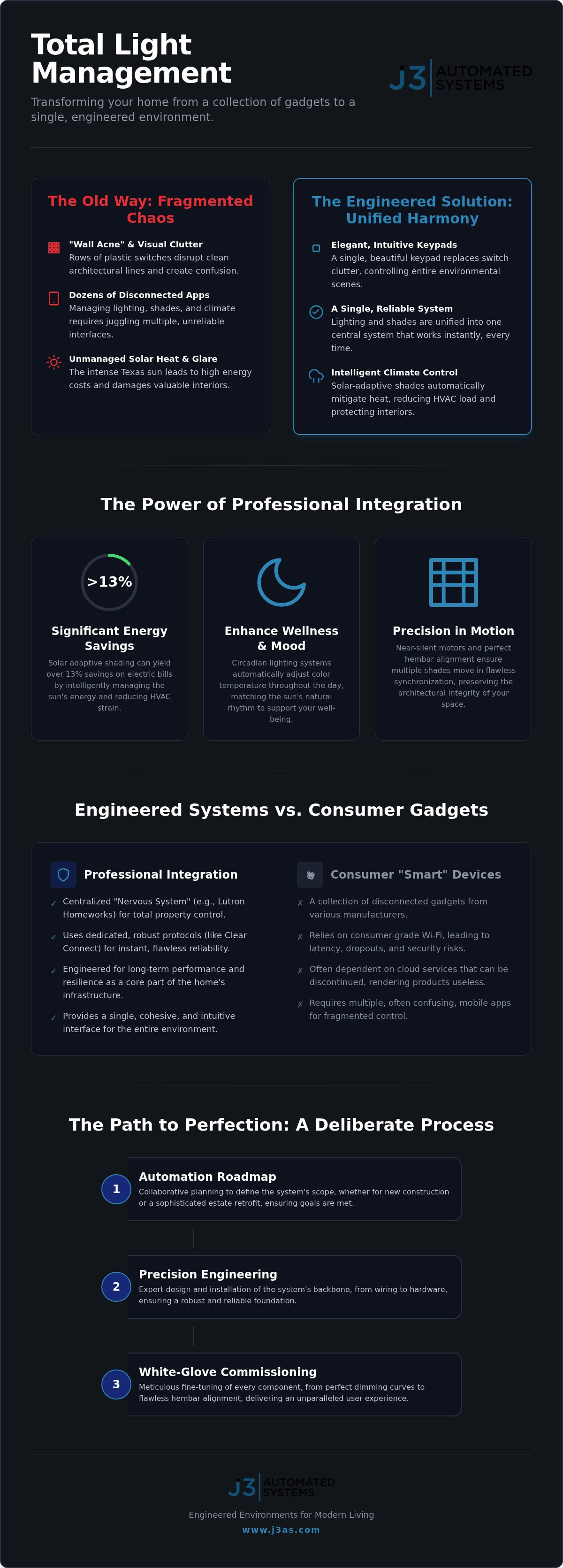
Engineering the Atmosphere: A Comprehensive Guide to Automated Lighting and Shade Control
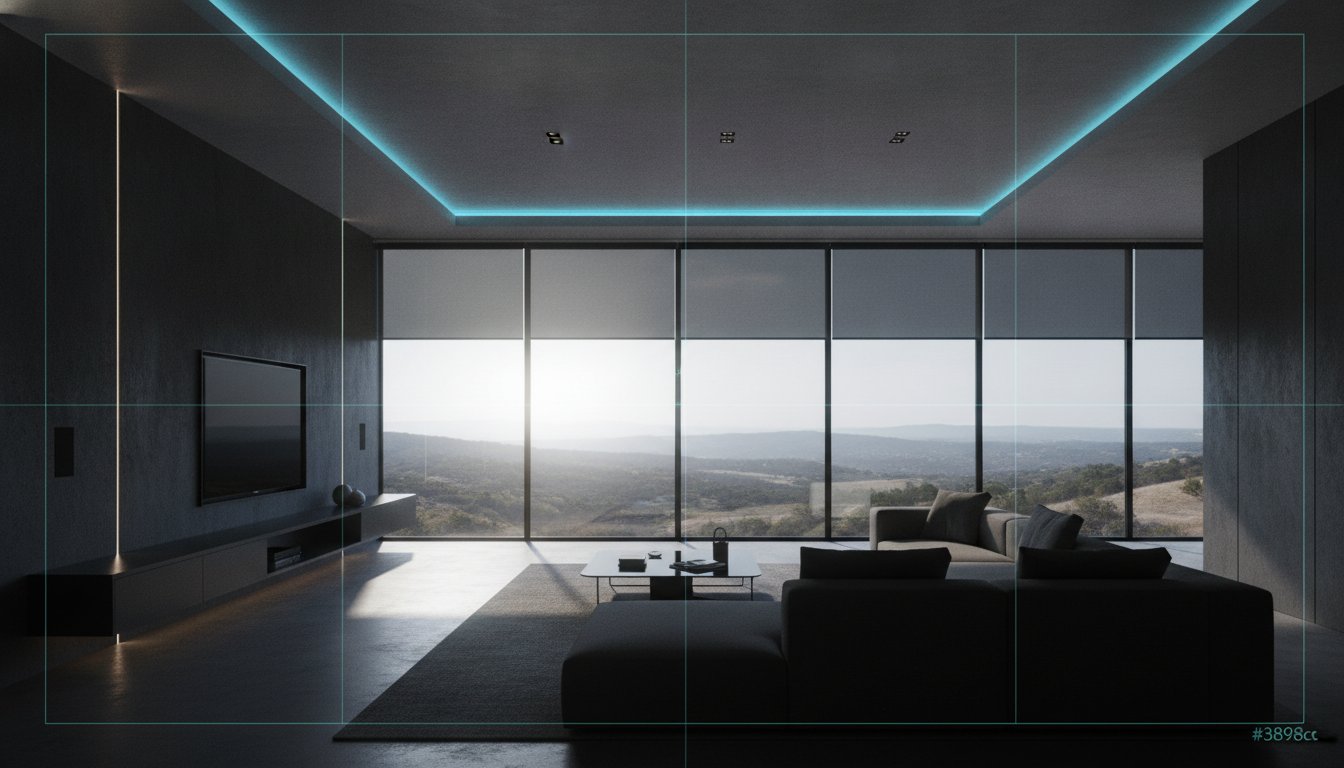
Why should a home designed for architectural excellence be compromised by a chaotic landscape of wall switches and a dozen disconnected mobile apps? You likely recognize that true luxury isn't found in the number of gadgets you own, but in the effortless harmony of your environment. Managing the relentless Texas sun while trying to set the perfect evening mood often feels like a full-time job, resulting in visual clutter and unnecessary heat gain that disrupts your peace. It's time to move beyond fragmented hardware toward a sophisticated, engineered solution.
This guide explores how to master your environment through professional automated lighting and shade control, transforming light from a simple utility into an invisible architectural element. By integrating these systems into a single, intuitive interface, you'll discover how to enhance wellness through circadian rhythms and protect your estate with intelligent security protocols. We will examine the technical precision required to manage solar heat and the design philosophy that turns complex technology into a frictionless, elegant experience for the modern homeowner.
Key Takeaways
- Understand the principle of Total Light Management, where natural and electric light are orchestrated as a single, unified architectural system.
- Discover how professional automated lighting and shade control utilizes platforms like Lutron Homeworks to replace visual clutter with intuitive, high-performance interfaces.
- Learn how solar adaptive shading mitigates the intense Texas sun, protecting your interiors and significantly reducing HVAC energy consumption.
- Identify the essential engineering requirements for a successful automation roadmap, whether you are managing new construction or a sophisticated estate retrofit.
- Recognize the importance of white-glove commissioning to ensure precise hembar alignment and perfect dimming curves across your entire property.
The Synergy of Automated Lighting and Shade Control
Architecture is defined by the interaction between structure and light. A sophisticated automated lighting and shade control system serves as the invisible architecture of a high-performance property, functioning as a unified environmental management system. It moves beyond the simple act of turning on a lamp; it orchestrates the balance between natural solar energy and electric illumination. This concept, known as "Total Light Management," treats every light source as part of a single, cohesive ecosystem. When automated lighting and shade control works in unison, the technology effectively disappears. The hardware recedes into the background, allowing the beauty of the estate to take center stage without the distraction of manual intervention. This lack of visual noise is what transforms a house into a curated sanctuary.
Why Integration Trumps Standalone Smart Bulbs
The transition from basic smart home products to a professional integration is marked by the elimination of "Wall Acne." This term describes the cluttered rows of plastic switches that often mar otherwise pristine interior designs. In a unified system, these are replaced by single, elegant keypads that control entire environments with one touch. Reliability is the primary differentiator here. While consumer-grade Wi-Fi bulbs often suffer from latency and connectivity drops, professional systems use dedicated protocols like Clear Connect to ensure every command is executed instantly. These robust foundations are frequently tied into larger building automation systems (BAS), providing a centralized backbone that supports the long-term functionality of the estate. It's the difference between a collection of gadgets and a resilient piece of engineering.
The Emotional Impact of Engineered Environments
Light has a profound influence on human biology and mood. Through engineered scenes like "Morning," "Entertain," or "Relax," a home can shift its personality to match the resident's needs. A well-programmed system removes the friction of daily life by automating these transitions. For instance, shades might track the sun's position to prevent glare while maintaining a connection to the outdoors. This creates a feeling of calm reliability, where the environment feels supportive rather than demanding. By balancing the need for privacy with the desire for natural views, automated shades ensure that the home remains a sanctuary. The result is a frictionless experience where the atmosphere is always precisely as it should be, regardless of the time of day or the intensity of the Texas sun. These automated adjustments happen with such quiet precision that you eventually stop noticing the technology and simply enjoy the comfort it provides.
The Engineering Behind Intelligent Illumination
Achieving a truly responsive environment requires a central nervous system capable of managing thousands of variables in real time. Lutron Homeworks stands as the premier operating system for high-end estates, providing the processing power necessary to unify complex lighting arrays and motorized window treatments. Unlike consumer-grade apps that rely on simple timers, this enterprise-grade backbone utilizes sophisticated logic to coordinate every light source on a property. It integrates occupancy and daylight sensors to drive hands-free operation, ensuring that lights activate only when needed and dim gracefully as natural light floods a room. This level of automated lighting and shade control transforms a house from a static structure into a living, breathing entity that anticipates the needs of its inhabitants.
Precision is the hallmark of professional engineering, particularly regarding motorized shading. High-performance motors operate with near-silent movement, while advanced hembar alignment ensures that multiple shades on a single wall move in perfect synchronization. This technical rigor extends to energy management. A recent Smart Shade Pilot Program demonstrated that automated adjustments can yield over 13% savings on electric bills, proving that precision engineering is as much about efficiency as it is about aesthetics. When these systems are designed correctly, they mitigate the thermal load on the building's envelope before the HVAC system even has to respond.
Circadian Lighting and Wellness
The shift from static light to dynamic, full-spectrum digital illumination is best exemplified by Ketra technology. By matching the sun's natural color temperature throughout the day, Ketra supports the body's internal clock, or circadian rhythm. In regions like San Antonio, where the intensity of the sun can be overwhelming, these systems bring the cooling blue tones of morning and the warm, restorative ambers of sunset indoors. Integrating these schedules with automated lighting and shade control ensures that your indoor environment remains biologically optimized, promoting better sleep patterns and heightened productivity. If you're curious how these systems might fit into your specific floor plan, a professional design consultation can help map out a wellness-focused strategy.
Hidden Technology: Shading for Large-Scale Architecture
Modern Texas architecture often features expansive floor-to-ceiling glass and complex corner windows that present unique engineering challenges. Solving these requires specialized pocket designs and recessed tracks that allow shades to disappear completely into the ceiling when not in use. Fabric selection is equally critical; it involves balancing transparency to preserve views with high-performance UV protection to prevent interior fading. By utilizing dual-roller systems, homeowners can switch between sheer fabrics for glare control and blackout materials for total privacy. This meticulous approach to hardware integration ensures that the technology serves the architecture without ever obstructing its lines.
How to Plan Your Automation Roadmap: A Step-by-Step Guide
Planning an automated lighting and shade control system is a process of translation. It begins by converting abstract lifestyle goals into a technical blueprint. Whether the priority is energy efficiency, architectural aesthetics, or daily convenience, the roadmap must account for the specific physical constraints of the property. New construction offers the luxury of a blank slate, whereas retrofitting an established Texas estate requires a more surgical approach to integration. Identifying how you intend to use each space throughout the day allows for the creation of a total light management system that responds to your presence without requiring constant manual adjustment.
Selecting the right hardware architecture is the next critical step. Wired systems offer the highest level of reliability for large-scale estates, while wireless architectures provide flexibility for historic properties where pulling new cables is prohibitive. The choice of interface also dictates the daily experience. High-end estates often utilize a blend of custom-engraved keypads for tactile control and fully autonomous sensors that adjust environments based on occupancy and ambient light levels. This ensures that the technology remains a servant to the resident, providing a frictionless experience that feels intuitive from day one.
The Discovery Phase: Mapping Your Lifestyle
A successful installation begins with a rigorous room-by-room audit of light usage and solar exposure. We categorize spaces into "High-Traffic" zones, like kitchens and galleries, and "Sanctuary" zones, such as primary suites and private libraries. This differentiation allows for specialized programming that prioritizes visibility in one area and restorative calm in another. The Discovery Phase serves as the essential foundation of system longevity, ensuring that the final engineering aligns perfectly with the unique rhythms of your household.
Wiring and Infrastructure Requirements
The stability of any automation system depends entirely on its underlying infrastructure. We prioritize high performance residential networking as the system's backbone to ensure zero-latency communication between devices. During the "studs-out" phase of construction, planning for low-voltage power runs is vital for powering motorized shades and intelligent keypads. Future-proofing is equally essential; installing extra conduit during the initial build saves thousands in potential upgrade costs as technology evolves. This methodical approach to infrastructure guarantees a resilient system that performs flawlessly for decades.
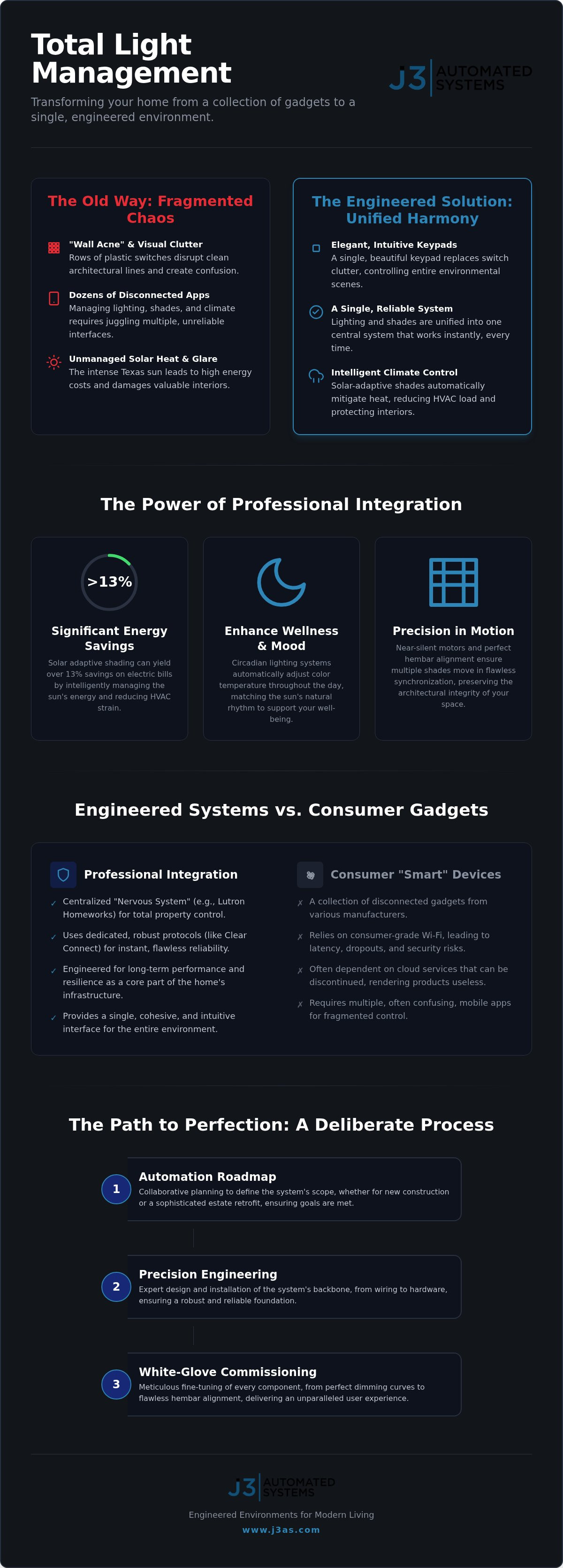
Optimizing for the Texas Climate: Heat Mitigation and Efficiency
The Texas climate demands more than standard window treatments; it requires a proactive thermal defense strategy. An engineered automated lighting and shade control system utilizes "Solar Adaptive Shading" to respond to the sun's real-time position. By leveraging an astronomical clock and local sensors, the system calculates the exact angle of solar ingress and adjusts the shades accordingly. This isn't merely about convenience. It's about maintaining the building's thermal envelope. In high-exposure environments, these automated adjustments can reduce cooling costs by as much as 30%, significantly lowering the strain on your HVAC system during the peak of summer. Integrating these residential controls with commercial building management systems Texas allows for total energy oversight, ensuring that every subsystem works in harmony to maintain efficiency.
Beyond temperature control, intelligent automation serves as a critical guardian for your interior investments. The same technology that manages heat also provides sophisticated UV blocking. Harsh sunlight can cause irreparable fading to expensive art collections, custom millwork, and high-end flooring. By programming shades to deploy during high-intensity periods, you preserve the integrity of your estate's interior design without needing to manually track the sun's movement. This level of protection is essential for maintaining the long-term value and architectural beauty of a luxury property.
Thermal Management in San Antonio and Austin Estates
West-facing windows in San Antonio and Austin estates bear the brunt of the intense afternoon sun, often creating localized "hot spots" that disrupt the home's climate balance. We address this through dual-roller systems that utilize both "Blackout" and "Sheer" layers. This configuration provides the flexibility to block 100% of solar gain when necessary or use high-performance sheer fabrics that mitigate heat while preserving your view. This strategic approach to fabric selection and motorization ensures a high ROI, as the system pays for itself through reduced energy consumption and the prevention of UV damage. To see how these thermal strategies can be applied to your property, speak with an integration consultant about a custom environmental audit.
Intelligent Security Integration
A sophisticated environment is also a secure one. By integrating lighting with commercial security system design Texas, your estate can utilize an "Away" mode that simulates occupancy. Rather than using static timers, the system varies light and shade patterns to mimic the natural rhythms of a lived-in home, providing a powerful deterrent to intruders. In the event of an alarm trigger, the system can automatically raise all shades and illuminate exterior paths, facilitating a safe exit or providing clear visibility for first responders. For properties in Boerne and New Braunfels, strategic exterior illumination serves as both an aesthetic enhancement and a primary layer of intelligent protection.
The J3 Advantage: White-Glove Implementation
The excellence of an automated lighting and shade control system is determined not by the hardware installed, but by the precision of its commissioning. J3 operates under a "Single Accountable Team" philosophy, meaning we manage every phase of the project from initial engineering to final programming. This approach eliminates the friction often found when multiple contractors attempt to integrate disparate systems. By maintaining a single point of responsibility, we ensure that the original design intent is preserved throughout the installation process. This continuity is what transforms a complex technical requirement into a reliable, high-performance asset for your estate.
Professional tuning is the final, essential step in our white-glove service. We meticulously calibrate every light dimming curve to ensure transitions are smooth, flicker-free, and biologically supportive. Lesser systems often suffer from abrupt jumps in light levels or inconsistent color rendering; our commissioning process eliminates these technical flaws. We view your system as a long-term investment in your property's value and livability. As technology evolves, we provide a structured roadmap for future updates, ensuring your environment remains at the forefront of innovation without requiring a complete infrastructure overhaul.
Bespoke Design for Modern Estates
A truly integrated home is one where the technology remains invisible until needed. We collaborate closely with architects and interior designers during the earliest planning stages to conceal hardware within the building's structure. This includes custom-engraved keypads and finish-matching to ensure that controls complement, rather than disrupt, high-end Texas interiors. This attention to detail is particularly vital when integrating lighting into a cinema grade home theater design, where light leakage and control latency can compromise the immersive experience. We ensure that every architectural detail and technical component works in perfect alignment.
Taking the Next Step
Engineering a sophisticated environment requires a partner who understands the unique demands of luxury properties. We invite you to a discovery session where we can map the potential of your property and identify the specific strategies that will enhance your lifestyle. Our team brings deep local expertise to home automation austin, providing the intellectual rigor and service-first attitude necessary for high-tier projects. Whether you are in the early stages of a new build or looking to modernize an existing estate, we are here to simplify the complexity of modern technology. To begin your journey toward a more harmonious home, Schedule a Consultation with J3 Automated Systems today.
Master Your Environment through Intelligent Design
True architectural excellence is found in the moments where technology becomes invisible. By orchestrating natural and artificial light as a single, unified system, you transform your estate into a sanctuary that responds to your biological needs and the external environment. We've explored how a total light management strategy mitigates the intense Texas heat while preserving the aesthetic integrity of your interior spaces. This level of environmental control is not merely a convenience; it's a fundamental enhancement of your property's long-term value and livability.
As a Lutron Diamond Dealer with deep roots in San Antonio and Austin, J3 Automated Systems provides the technical rigor and white-glove service required to execute these complex integrations. Our end-to-end engineering and installation process ensures that your automated lighting and shade control system performs with absolute reliability from day one. We replace the friction of manual adjustments with a state of intelligent, effortless operation. Take the first step toward a more harmonious home and Request a Bespoke Automation Roadmap today. Your vision for a perfectly balanced atmosphere is within reach.
Frequently Asked Questions
Can automated lighting and shades be installed in an existing home without tearing down walls?
Yes, wireless technology allows for sophisticated retrofitting of automated lighting and shade control without invasive construction. Lutron's Clear Connect protocol enables devices to communicate through existing walls, replacing standard switches with intelligent dimmers. This approach preserves the architectural integrity of established Texas estates while introducing modern functionality without the need for extensive drywall repair or complex rewiring projects.
What is the difference between Lutron Caseta, RadioRA 3, and Homeworks?
These systems represent a progression from entry-level convenience to enterprise-grade environmental management. Caseta serves smaller spaces with basic control, whereas RadioRA 3 provides a mid-tier solution for entire homes. Homeworks is the premier architectural platform, offering the highest level of customization, centralized processing, and seamless integration with Ketra lighting and high-performance shading for the most demanding residential environments.
How much does a professional lighting and shade control system cost to install?
Professional system costs vary significantly based on the scale of the property, the complexity of the engineering, and the specific hardware selected. Rather than viewing this as a retail purchase, it's best understood as a long-term investment in the property's infrastructure and efficiency. A detailed consultation is required to assess your specific floor plan and performance requirements accurately.
Do automated shades require a lot of maintenance or battery changes?
Modern automated shades are engineered for high-cycle reliability and minimal maintenance. Wired solutions eliminate battery concerns entirely, while battery-powered options utilize high-efficiency motors that typically require changes only every three to five years depending on usage. These systems are designed to operate with quiet, frictionless precision for decades, requiring only occasional dusting of the fabrics to maintain their appearance.
Can I control my lighting and shades through my phone or voice assistants like Alexa?
Yes, professional integration allows for effortless control via mobile applications, voice assistants, and dedicated touchscreens. While voice commands offer convenience for quick adjustments, the primary benefit of automated lighting and shade control lies in its autonomous operation. The system utilizes sensors and astronomical clocks to manage your environment efficiently without requiring any manual input from the homeowner.
What happens to my smart lighting and shades if the power or internet goes out?
Professional systems utilize local processing, ensuring that your programmed scenes and schedules continue to function even if the internet connection is lost. In the event of a power outage, the system will resume its programmed state once power is restored. For critical applications, we often integrate these systems with backup power solutions to ensure continuous operation and peace of mind.
Is circadian lighting actually beneficial for health, or is it just a trend?
Circadian lighting is rooted in human biology, specifically the regulation of melatonin and cortisol through color temperature. By matching the sun's natural rhythm, these systems support better sleep quality and daytime alertness. This isn't a passing trend but a fundamental shift toward wellness-oriented architecture that prioritizes the physiological needs of residents through scientifically backed illumination strategies.
Will automated shades fit in my custom-shaped or extra-large windows?
Engineered shading solutions are specifically designed to accommodate expansive floor-to-ceiling glass and complex architectural shapes. We utilize specialized brackets and heavy-duty motors to manage extra-large spans without compromising on hembar alignment or silent operation. Custom-shaped windows, including arches and angles, can be addressed through bespoke engineering to ensure a perfect fit for any architectural challenge.