Integrated Building Automation and Security Systems: The 2026 Engineering Guide
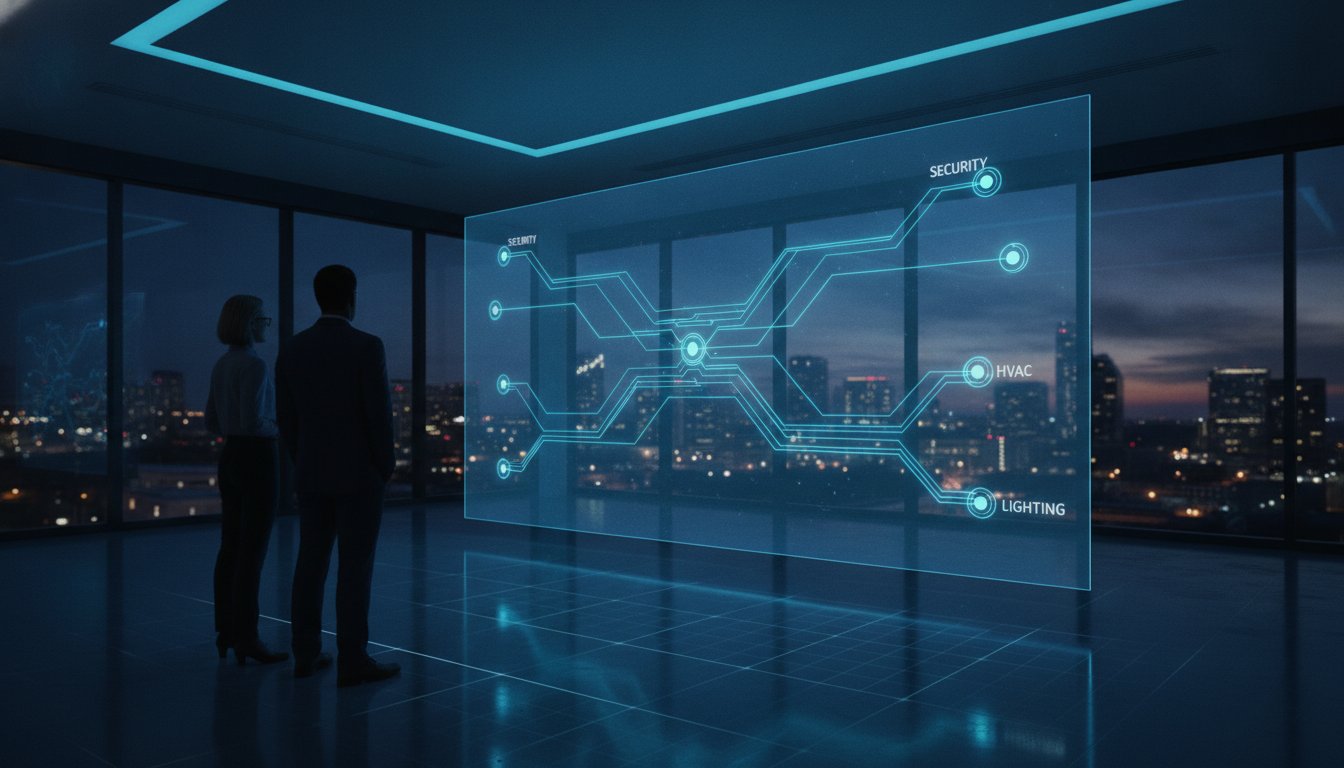
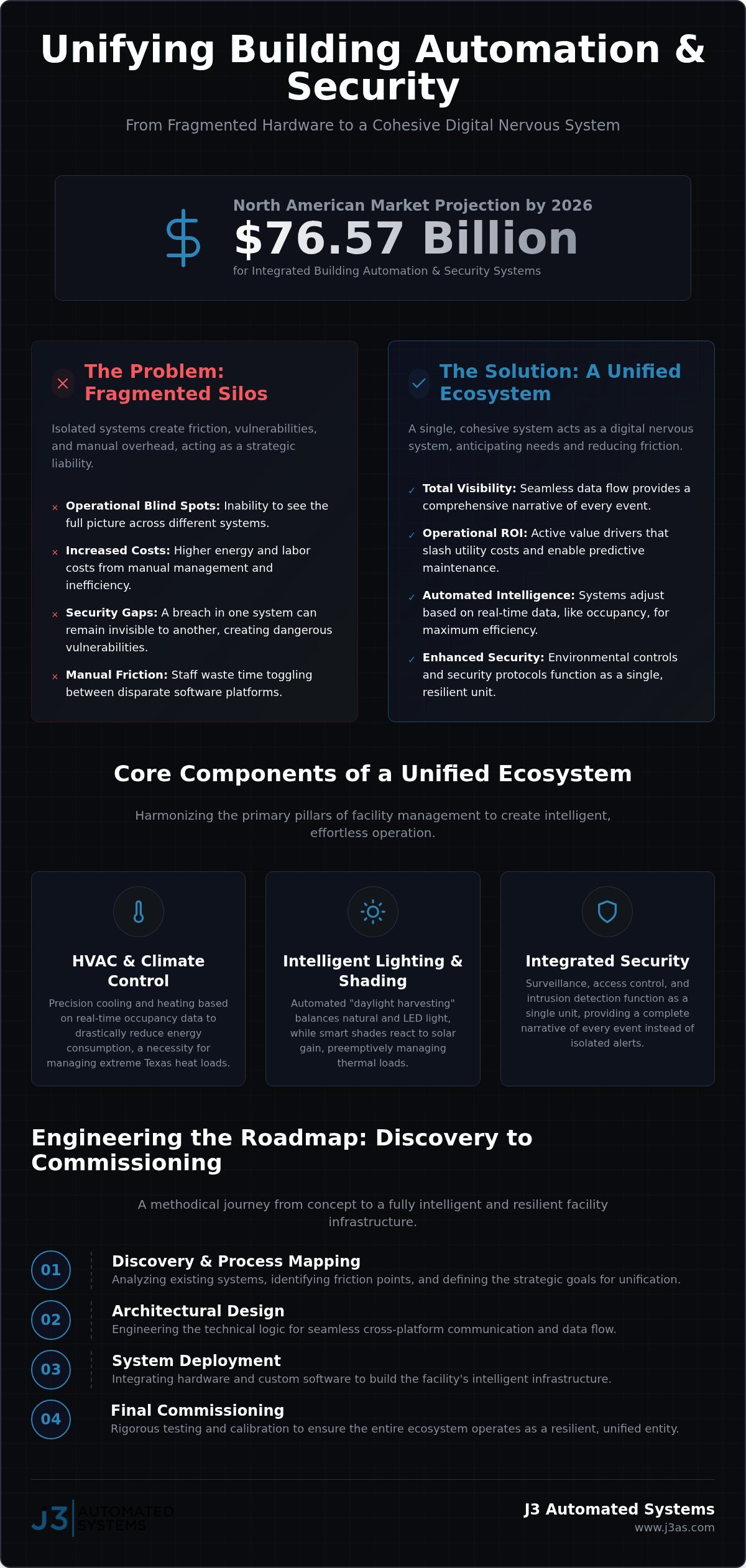
A facility that operates as a collection of isolated hardware is no longer just a management headache; it's a strategic liability in an era where digital and physical safety are one and the same. You've likely felt the friction of managing a property where the HVAC doesn't communicate with access control, forcing your team to bridge the gaps with manual effort while energy costs and security vulnerabilities climb. This fragmentation creates blind spots that no amount of oversight can fully close. By the end of 2026, the North American market for integrated building automation and security systems is projected to reach $76.57 billion, reflecting a global shift toward unified, intelligent engineering.
We'll show you how to transform these disparate technologies into a single, cohesive ecosystem that removes the burden of manual management and significantly reduces operational friction. This guide explores the transition toward edge control, the latest NIST CSF 2.0 compliance standards, and the architectural logic required to build a facility that's as resilient as it's efficient. We'll move from the conceptual why to the technical how, providing a roadmap for a more intelligent, effortless operation.
Key Takeaways
- Discover how integrated building automation and security systems transform fragmented hardware into a unified digital nervous system to eliminate operational blind spots.
- Identify the tangible ROI of a synchronized ecosystem, where automated climate and lighting controls work in tandem to slash utility and labor costs.
- Learn the critical technical differences between restrictive, off-the-shelf solutions and bespoke engineering designed for seamless cross-platform communication.
- Understand the methodical roadmap for successful deployment, moving from initial process mapping to the final commissioning of your facility’s intelligent infrastructure.
- Explore the strategic value of a single point of accountability that bridges the gap between physical space automation and custom AI software development.
The Evolution of Integrated Building Automation and Security Systems
The concept of a "smart building" has matured from a collection of novelty gadgets into a sophisticated, unified digital ecosystem. Historically, facilities relied on isolated "smart" devices that performed specific tasks in a vacuum. Today, true integrated building automation and security systems act as a digital nervous system, where every sensor and controller communicates through a centralized intelligence layer. This evolution has moved us away from basic Building Automation Systems (BAS) toward holistic environments that anticipate needs rather than just reacting to commands.
In 2026, the industry has shifted toward AI-driven predictive maintenance and occupancy-based logic. It's no longer enough for a system to turn off lights at 6:00 PM; it must understand whether a room is actually empty and adjust the thermal load accordingly. Fragmented systems create operational friction, forcing managers to toggle between disparate software platforms. This siloed approach doesn't just waste time; it creates dangerous security gaps where a breach in one system remains invisible to another. Engineering a unified solution ensures that data flows seamlessly between environmental controls and security protocols.
The Core Components of a Unified Ecosystem
A unified ecosystem harmonizes the primary pillars of facility management to create a state of intelligent, effortless operation. This orchestration typically focuses on three critical areas:
- HVAC and Climate Control: These systems are the primary energy consumers in any commercial property. Integration allows for precision cooling based on real-time occupancy data.
- Intelligent Lighting and Automated Shading: Moving beyond simple timers, these systems adjust for "daylight harvesting," balancing natural light with LED output for environmental harmony.
- Integrated Security: Surveillance, access control, and intrusion detection function as a single unit. Instead of separate alerts, an integrated system provides a comprehensive narrative of every event.
Why Texas Facilities Require Integrated Engineering
For properties in the San Antonio and Austin corridors, integration isn't a luxury; it's a functional necessity. Managing extreme Texas heat loads requires more than just a powerful AC unit. It demands smart HVAC logic that works with automated shades to preemptively cool spaces before the sun hits its peak. High-profile commercial properties in this region also face unique security requirements that demand more than off-the-shelf cameras. By deploying integrated building automation and security systems, owners can ensure that energy efficiency doesn't come at the cost of safety. Resilient networking serves as the backbone here, ensuring that automation and security protocols remain online even during peak demand or local outages.
The Operational ROI: Efficiency, Security, and Intelligence
Investing in integrated building automation and security systems isn't merely an upgrade in hardware; it's a strategic move to reclaim operational capital. When these systems function as a unified entity, they transition from passive expenses into active value drivers. This intelligence reduces the burden on facility teams by replacing manual oversight with automated precision. Beyond daily savings, this approach facilitates predictive maintenance, allowing engineers to address component wear before it results in a system failure. Many facilities further optimize these savings by integrating solar solutions from Azimuth Renewable Energy to capitalize on renewable incentives. This longevity ensures that your initial investment remains protected over a decadelong lifecycle.
Traditional climate control often operates on rigid schedules, cooling empty boardrooms or lighting vacant corridors. By harvesting data from security sensors, an integrated system triggers "eco-modes" in unoccupied zones instantly. This isn't just about turning off lights; it's about adjusting the thermal load based on real-time human presence. During a Texas summer, this intelligence becomes even more vital. Automated shading reacts to solar gain, lowering heat loads before the HVAC system has to compensate. To manage this complex data, many facilities utilize custom web app development in San Antonio to visualize real-time energy performance and adjust logic on the fly. This level of granularity ensures that every watt spent contributes directly to occupant comfort.
Enhanced Security Response Protocols
True security isn't just about recording events; it's about the speed of the response. Fragmented systems require a human operator to verify an alarm and then manually initiate a lockdown or alert authorities. An integrated architecture automates these protocols, linking surveillance analytics directly to access control and lighting. For example, a detected intrusion can immediately trigger high-intensity lighting in the affected zone while locking down sensitive entry points. Because these systems are interconnected, maintaining robust Cybersecurity for Operational Technology is paramount to prevent digital interference with physical safety. Professional commercial security system design in Texas ensures these automated responses are both reliable and resilient.
By unifying these layers, you eliminate the friction of managing multiple vendors and platforms. If you're ready to move beyond fragmented hardware, consulting with a master integrator can help you map out a unified path to efficiency and long-term security.
Building Automation vs. Security Silos: A Technical Comparison
Off-the-shelf solutions often present a facade of intelligence that crumbles under operational pressure. When facility technologies exist in silos, managers are forced to perform manual data entry across multiple disconnected platforms. This fragmentation doesn't just create administrative bloat; it introduces significant latency in response times. In a siloed environment, an intrusion alert might trigger on one screen while the lighting and HVAC systems remain unaware, wasting precious seconds that could be used for automated deterrence. Integrated engineering replaces this patchwork approach with a unified digital nervous system where every component acknowledges the state of the others.
Maintaining multiple standalone systems also increases the attack surface of a facility. Each unpatched gateway or legacy controller represents a potential entry point for digital threats. Adhering to the NIST Security and Privacy Controls requires a level of visibility that isolated hardware simply cannot provide. Custom-engineered integrations solve this by centralizing the security architecture. This allows for global firmware management and real-time monitoring, ensuring that the digital perimeter is as secure as the physical one.
Hardware Interoperability and Protocols
Achieving true synergy requires a deep understanding of communication protocols like BACnet, Modbus, and LonWorks. These aren't just technical acronyms; they're the languages that allow disparate hardware layers to speak to one another. Modern building management relies increasingly on API-first security hardware, which facilitates seamless data exchange between physical sensors and digital dashboards. For large-scale properties, this level of communication demands high-performance residential networking to serve as the invisible backbone. This ensures that high-bandwidth surveillance data and low-latency automation commands never compete for resources, maintaining system stability during critical events.
Unified User Interfaces and Control
The ultimate goal of integrated building automation and security systems is the elimination of "app fatigue." Instead of managing an estate or commercial facility through a dozen different mobile applications, stakeholders interact with a single pane of glass. This unified interface allows for sophisticated permission structures. A security officer might see real-time camera feeds and access logs, while a facility engineer focuses on thermal loads and energy consumption. For the owner, a simplified mobile view provides total control over the property from anywhere in the world. This approach ensures that complexity remains hidden behind a polished, intuitive experience that simplifies rather than complicates the user's life.
Engineering the Roadmap: Discovery to Commissioning
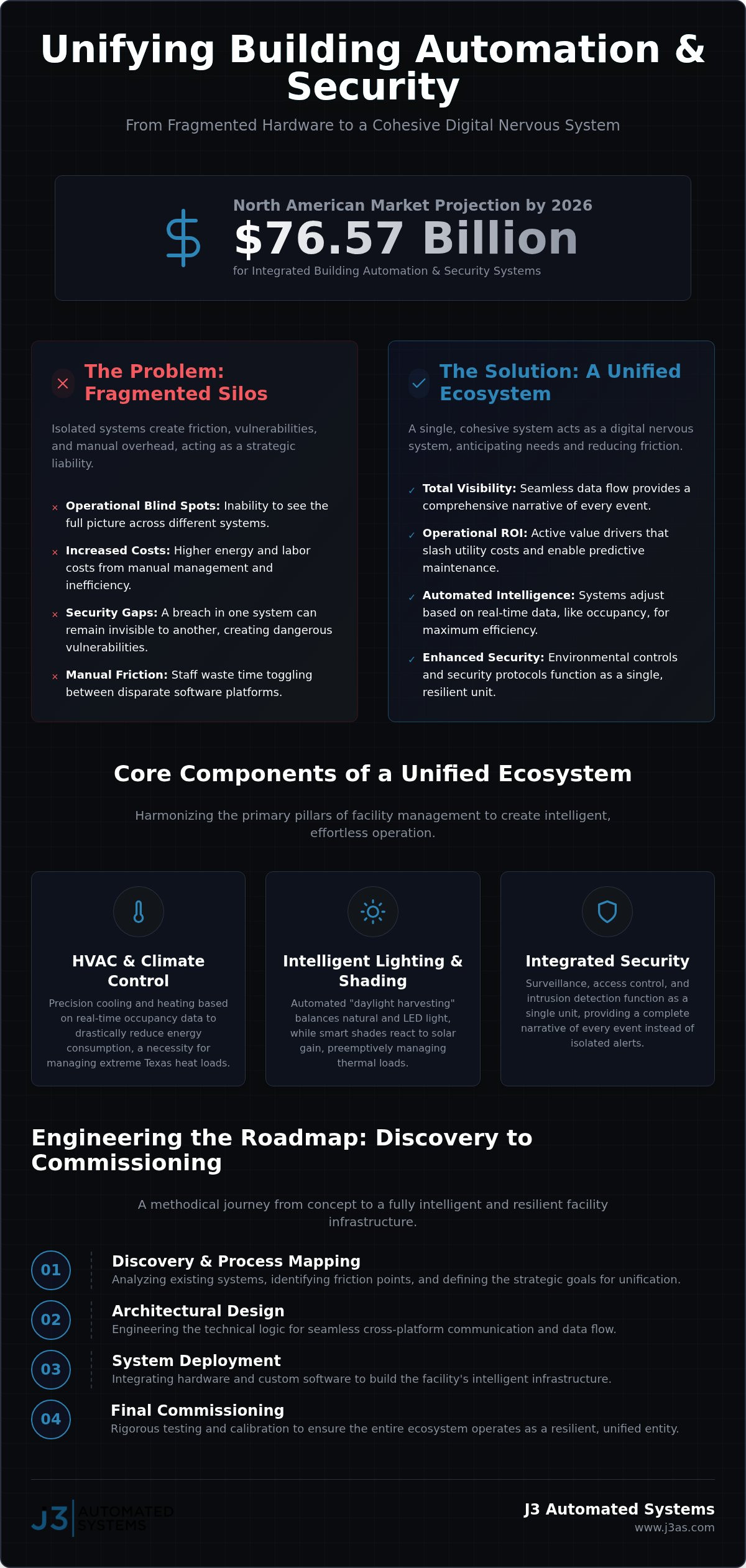
Successful deployment of integrated building automation and security systems requires a move away from the "install and leave" vendor model. It demands an architectural approach that treats the facility as a living organism. This journey begins with a meticulous discovery phase to identify where manual processes currently create friction. We then move into bespoke engineering, where software layers are designed to bridge the gap between physical sensors and operational goals. This ensures the technology serves the mission of the building, rather than the other way around. This holistic methodology is shared by leading custom home builders durham region, who prioritize the integration of technology and structural design from the earliest phases of a project.
Once the digital blueprint is finalized, the focus shifts to the physical layer. Precision installation of low-voltage wiring provides the high-bandwidth infrastructure necessary for resilient performance. This is followed by a rigorous commissioning phase where the system is fine-tuned to ensure every automated trigger performs exactly as intended. Post-deployment, the focus transitions to ongoing support and AI-driven optimization, ensuring the facility remains efficient as usage patterns evolve over time. This lifecycle approach guarantees that your investment remains a high-performing asset for years to come.
Identifying operational bottlenecks is the first step in creating a frictionless environment. We map every data flow, from how a security badge swipe affects the HVAC settings to how surveillance footage integrates with internal management tools. By leveraging AI business process automation, we can pinpoint hidden opportunities for efficiency that standard audits often miss. This analytical rigor ensures the final system isn't just "smart," but strategically aligned with your specific business objectives. It's about removing the burden of complexity from your team.
Commissioning for Long-Term Resilience
A system is only as good as its performance under pressure. Commissioning involves stress-testing the integration under various failure scenarios to ensure that security protocols remain absolute even if a network node fails. We also prioritize the human element, training facility staff on the unified management platform to ensure they can navigate the system with confidence. This phase guarantees that the architecture is both stable and scalable, ready to accommodate future technology updates without requiring a total overhaul. If you're ready to move from fragmented hardware to a unified ecosystem, request an engineering discovery session to begin your roadmap today.
J3 Automated Systems: The Single Point of Accountability
Choosing a partner for integrated building automation and security systems often reveals a frustrating industry reality: the fragmented vendor model. Most property owners find themselves refereeing between security contractors, HVAC technicians, and network engineers, none of whom take responsibility for the final, unified outcome. J3 Automated Systems rejects this inefficiency. We provide a single point of accountability, owning the entire project lifecycle from the initial engineering discovery to the final commissioning of your facility's digital nervous system. This approach ensures that no detail is lost in the gaps between trades.
Our unique capability lies in the intersection of physical automation and custom software development. While others simply install off-the-shelf hardware, we engineer the intelligence that makes those components work in harmony. This includes developing custom AI business process integrations that allow your building to learn from its occupants and optimize itself in real time. By serving as both your technologist and your steward, we transform complex, intimidating technology into a seamless, reliable asset that enhances your property's value without adding to your mental load. We don't just sell equipment; we deliver a state of effortless operation.
Bespoke Solutions for Texas Estates and Facilities
Serving the premier residential and commercial clients along the San Antonio and Austin corridors requires a deep understanding of local environmental and security challenges. We specialize in commercial building management systems in Texas, ensuring that high-profile properties maintain optimal performance even during extreme thermal events. Every installation we perform adheres to a cinema-grade standard of quality, meaning the wiring, hardware, and user interfaces are as polished as they are functional. Our clients enjoy direct access to our Texas-based engineering team, ensuring that support is always local, responsive, and expert.
Ready to Engineer Your Intelligent Environment?
The transition from manual facility management to automated harmony is a journey that begins with a single, strategic decision. It's the move from reacting to system failures to overseeing a predictive, self-optimizing environment that removes the burden of oversight from your shoulders. We've shown how integration slashes utility costs, enhances security response times, and simplifies the user experience through a single pane of glass. It's time to move beyond the friction of siloed technologies and embrace a future defined by intelligent integration and absolute reliability. Schedule your strategic automation discovery with J3 Automated Systems to begin mapping a roadmap tailored to your facility's unique requirements.
Architecting a State of Effortless Operation
The transition from fragmented hardware to a unified digital nervous system is a strategic requirement for any modern facility. By deploying integrated building automation and security systems, you replace manual management with an intelligent ecosystem that anticipates needs and mitigates risks in real time. This architecture doesn't just lower utility costs through occupancy-based logic; it provides a level of security resilience that siloed systems simply can't match. Each component works in harmony to remove the friction of daily operations and provide total visibility over your property.
Achieving this level of precision requires a single accountable team for both engineering and installation. J3 Automated Systems specializes in the specific climate and facility needs of Central Texas, offering unique expertise in custom AI and software integration. We're dedicated to transforming complex technology into a seamless, reliable asset that serves your property's long-term vision. We invite you to step away from the burden of disconnected systems and move toward a state of intelligent, effortless operation. Your facility's future is one of harmony, reliability, and unparalleled efficiency.
Begin your integrated automation roadmap with J3 Automated Systems
Frequently Asked Questions
What are the main benefits of integrating security with building automation?
The primary advantage is the synchronization of facility functions into a single, intelligent ecosystem. When you use integrated building automation and security systems, occupancy data from access control sensors can automatically trigger climate adjustments and lighting protocols. This removes the burden of manual monitoring and ensures that security events, such as a breach, immediately activate deterrents like high-intensity lighting. It creates a state of harmony where hardware components communicate to enhance both safety and efficiency.
Can my existing HVAC and security systems be integrated, or do I need a full replacement?
Most modern HVAC and security systems can be integrated provided they utilize open protocols like BACnet, Modbus, or LonWorks. We often bridge legacy hardware with custom software layers to avoid the expense of a full replacement. However, if your existing equipment lacks digital connectivity or uses proprietary, closed architecture, we may recommend a strategic upgrade of specific components. This ensures the backbone of your facility remains resilient and capable of seamless cross-platform communication.
How does integrated building automation reduce commercial operating costs?
Integrated building automation and security systems reduce commercial operating costs by eliminating energy waste in unoccupied zones. By using real-time sensor data to manage thermal loads and LED output, facilities can slash utility expenses significantly. Additionally, automation reduces the need for constant manual monitoring, allowing your staff to focus on high-value tasks. Predictive maintenance alerts also prevent costly emergency repairs by identifying component wear before a total system failure occurs.
What is the role of AI in modern building management systems?
AI serves as the brain of a modern building management system, moving beyond simple schedules to predictive logic. It analyzes usage patterns to anticipate cooling needs before peak temperatures hit and uses video analytics to identify unusual activity without human intervention. At J3, we integrate custom AI business processes that allow your facility to learn and adapt. This intelligence transforms a passive building into a proactive asset that optimizes its own performance and security posture.
Is an integrated system more vulnerable to cyber threats than siloed systems?
An integrated system is often more secure because it allows for centralized monitoring and global firmware management. Siloed systems frequently suffer from unpatched vulnerabilities because they lack a unified oversight layer. By adhering to frameworks like NIST CSF 2.0 and the CISA foundations for operational technology, we create a defensible architecture with a reduced attack surface. Visibility is the cornerstone of cybersecurity; you can't protect what you can't see or manage across a fragmented network.
How long does a typical integrated building automation project take to complete?
The timeline for an integration project depends on the scale and complexity of the facility. A typical commercial project moves through discovery, engineering, installation, and commissioning over a period of three to six months. Large estates or high-profile commercial properties may require more extensive process mapping and custom software development. We prioritize a methodical pace to ensure that every automated trigger is stress-tested and that your team is fully trained before the final handoff.
Does J3 Automated Systems provide ongoing support after commissioning?
Yes, J3 Automated Systems provides comprehensive ongoing support after the commissioning phase is complete. As a single accountable team, we don't just walk away once the hardware is installed. We offer proactive system monitoring, software updates, and AI-driven optimization to ensure your facility continues to operate at peak performance. Our engineers remain available to adjust logic as your operational needs evolve, maintaining the long-term functionality and resilience of your integrated environment.
What regions in Texas does J3 Automated Systems serve for commercial projects?
J3 Automated Systems serves the premier residential and commercial clients within the San Antonio and Austin corridors. Our Texas-based engineering team is specifically focused on the unique climate challenges and security requirements of the Central Texas region. By maintaining a local presence, we ensure that our clients receive high-touch, white-glove service and rapid response times. This regional focus allows us to act as a dedicated steward for the sophisticated facilities throughout the Texas corridor.