Outdoor Audio and Video Installation: A Complete Planning Guide
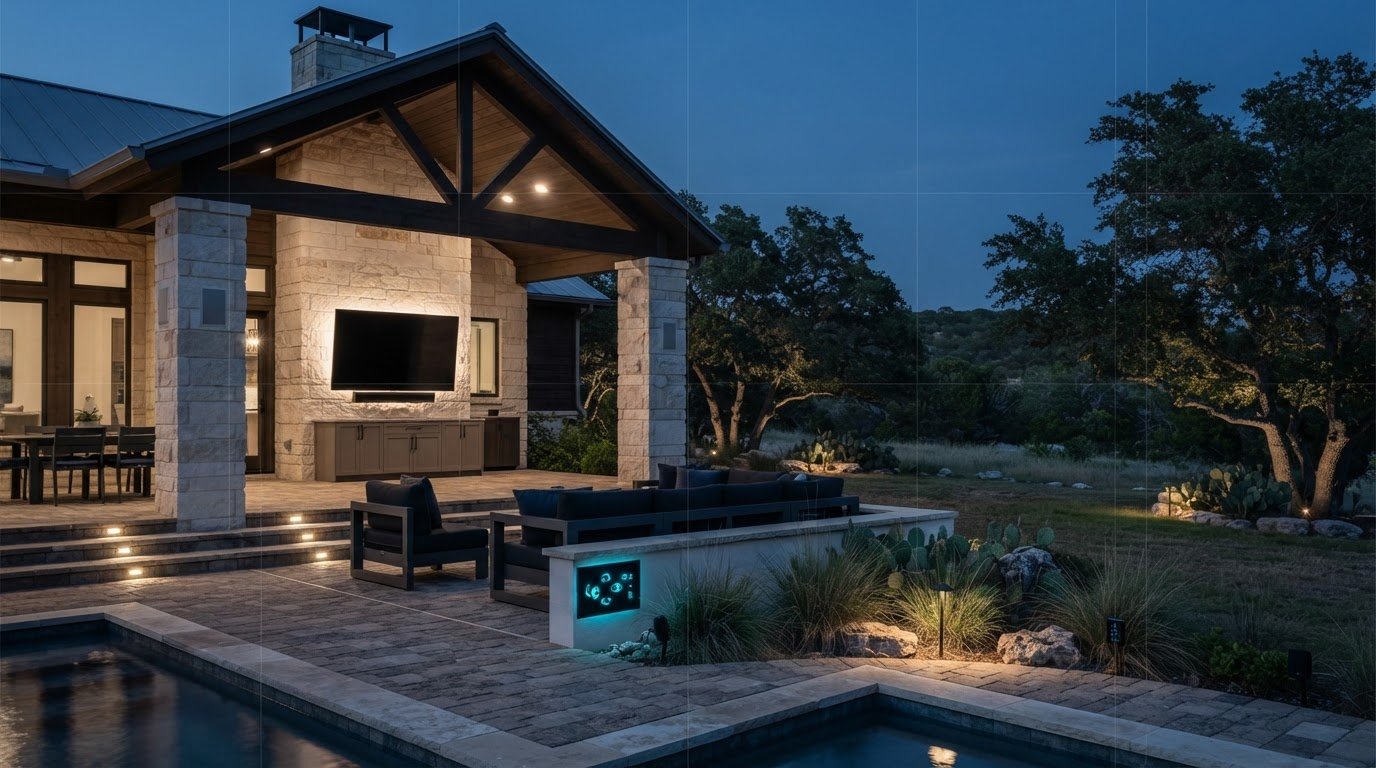
What if the right outdoor AV plan starts with where you want to listen and watch, not with a list of equipment? A successful outdoor audio and video installation is shaped by the property: open lawns, covered patios, poolside seating, and the way Texas sun, heat, and humidity reach each area. Choosing equipment before considering those conditions can leave sound uneven, screens difficult to view, or outdoor systems disconnected from the home.
It’s reasonable to want clear sound across an open-air space, dependable performance in a demanding climate, and simple control that works alongside indoor AV. Start by defining how you’ll use each area, then coordinate the components as one system. This guide covers audio coverage, video placement, weather exposure, and integration. J3 Automated Systems designs, installs, and commissions tailored AV systems for residential and commercial properties in San Antonio, New Braunfels, Seguin, Bandera, Boerne, Austin, and San Marcos.
Key Takeaways
- Start with how each outdoor area will be used, since a patio, poolside lounge, and outdoor kitchen can call for different AV priorities.
- Account for sun, shade, heat, and the way walls, roofs, and landscaping shape sound and viewing conditions.
- Compare setup options by listening coverage, viewing needs, and control rather than assuming one layout suits every property.
- Plan outdoor audio and video installation as a coordinated sequence, from site review and system engineering through installation and commissioning.
- Bring sound, video, networking, and system operation together through one accountable team for a more integrated residential or commercial project.
Outdoor Audio and Video Installation Starts with How You Use the Space
Outdoor AV installation is the design of sound and video around how people use a property’s open-air spaces. The same equipment plan won’t necessarily suit a quiet patio, a lively poolside lounge, and a customer-facing hospitality area. A thoughtful outdoor audio and video installation starts with the experience each space should support, then maps the system to the property and its routines.
In short, outdoor AV design connects each space’s purpose, audience, and hours of use to the sound and viewing experience it needs. A patio used for conversation may call for unobtrusive background music, while an outdoor kitchen might need sound that remains clear around cooking and serving activity. A poolside lounge may prioritize shared viewing, and a commercial hospitality setting may need distinct experiences for different guest areas. Establish those priorities before selecting equipment.
Consider the audience and schedule as well as the activity. A space used by a household on ordinary evenings has different needs from one that hosts occasional gatherings or serves customers throughout operating hours. When planning milestone celebrations or private gatherings that call for live hosting and tailored music programming, visit Easy Cee Entertainment to see how professional event DJs manage sound and entertainment. Define which areas need independent listening or viewing control and which can share a coordinated experience. This gives the design team a practical basis for planning coverage and operation.
Which outdoor spaces benefit from integrated audio and video?
Residential patios, covered entertaining areas, and landscaped gathering spaces can each become part of a connected AV plan. Outdoor living at home often calls for flexibility: one area may favor conversation, while another supports a film or game. Customer-facing commercial spaces have a different purpose, with sound and viewing planned around guest circulation, seating, and the atmosphere of each area. For general context, home theater systems bring together audio and video components; outdoor design extends that thinking to spaces without the boundaries of an indoor room.
What should the outdoor AV system help you do?
Describe the moments the system should support. Be specific about everyday use versus occasional events, and identify whether the priority is gentle music, focused listening, or shared viewing. A clear brief keeps decisions anchored to the experience instead of letting equipment choices dictate the project.
- Background music: Identify where music should be present without taking over conversation.
- Focused listening: Note spaces where people will intentionally gather around audio.
- Shared viewing: Define the audience, seating area, and occasions for watching together.
- Separate areas: Decide whether spaces should follow the same program or support distinct experiences.
These priorities form the foundation for site review and system planning. Once the intended experience is clear, design can account for the property’s layout and the relationship between outdoor zones and existing indoor AV, rather than treating each device as a separate decision.
Designing Outdoor AV for Texas Sun, Heat, and Property
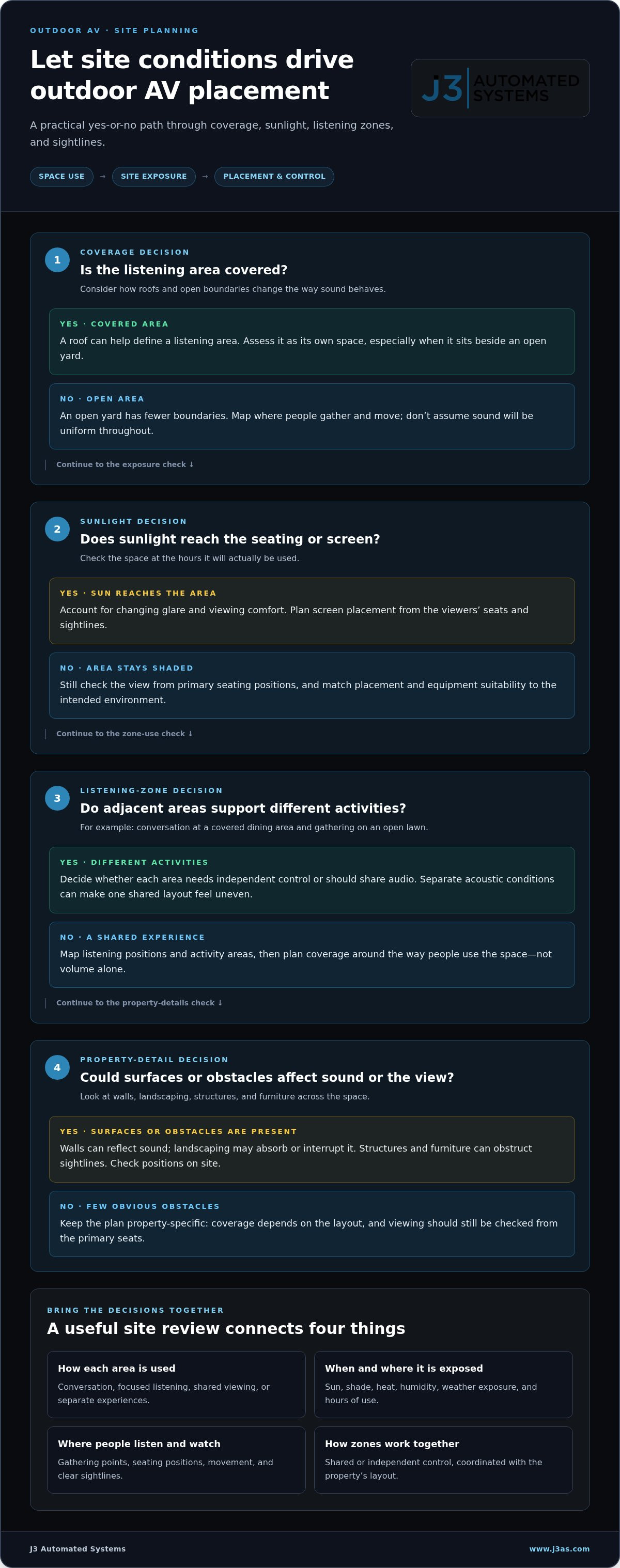
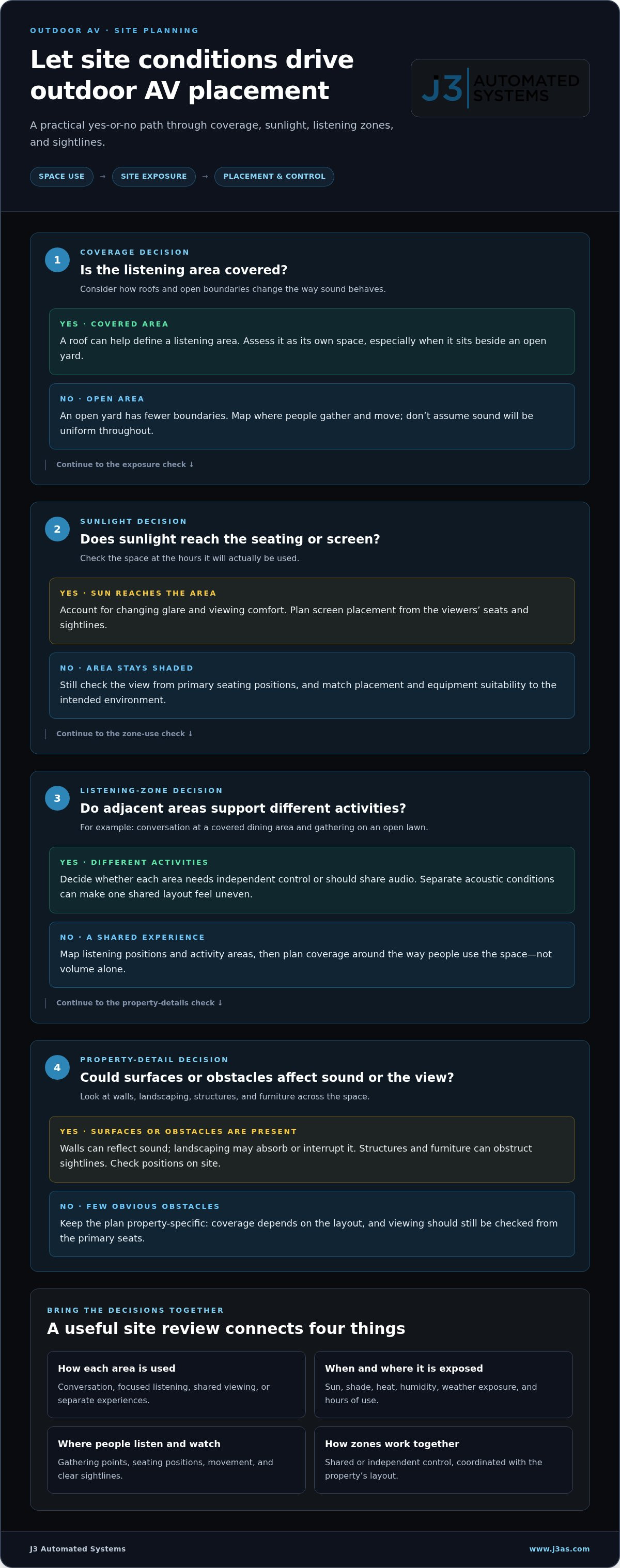
In Texas, an outdoor space can shift from deep shade to direct sun over the course of a day. Heat, humidity, and weather exposure also affect where equipment belongs and what environment it needs to suit. Site exposure should guide outdoor AV design because sunlight, shade, heat, weather, and the property’s physical boundaries influence equipment placement, viewing comfort, and how sound travels.
Observe the space at the hours it will be used. Note which areas stay covered, where sun reaches seating, and whether wind-driven rain or other exposure could affect a proposed location. A sheltered position and a fully exposed one aren’t interchangeable. Match placement and equipment suitability to actual conditions instead of assuming an outdoor label guarantees the same result in every setting.
Planning sound coverage across open and covered areas
Outdoor sound behaves differently from sound in a room. Walls and other firm surfaces can reflect it, while landscaping may absorb or interrupt it. A roof can help define a listening area, but sound in an open yard has fewer boundaries. Map listening positions and activity areas, then consider how nearby surfaces may affect what people hear. Coverage depends on the property, so evaluate the layout on site rather than assuming sound will be uniform everywhere.
For example, a covered dining area beside an open lawn has two distinct acoustic conditions. Treating them as one zone could make sound feel too prominent near the table and less present farther away. A property-specific plan considers where people gather, how they move between areas, and whether each space should share audio or have independent control. This aligns speaker placement with use instead of relying on volume alone.
Placing outdoor video around sunlight and sightlines
Plan the screen location from the viewer’s position outward. Consider where people sit, their viewing direction, the distance to the screen, and how glare changes as sunlight shifts. A covered viewing area offers different conditions from a more exposed position, so the display must suit its intended environment and placement. Check sightlines from the seats, too: structures, landscaping, and furniture can obstruct the view.
A practical site review considers the view from the primary seating positions, not only the wall or structure available for mounting. If the area serves both conversation and viewing, position the screen to support shared use without letting it dominate the space. For a more exposed location, assess direct sun and surrounding conditions before selecting a display. These decisions help the system fit the architecture and how people use the area.
J3 Automated Systems designs, installs, and commissions tailored AV around each property’s conditions. A coordinated outdoor AV design and installation connects site assessment with equipment placement and system operation, keeping environmental suitability central to the plan.
Comparing Outdoor Audio and Video Setups by Use, Coverage, and Control
Once the intended experience is clear, compare system approaches by what they need to cover and how people will use them. An audio-led plan may suit a landscape where music is the priority; a video-led setup may center on one defined viewing position. Coordinated audio and video makes sense when the space needs both, with sound, screen placement, and control designed to work together. The right configuration depends on the property.
| Use case | Coverage needs | Viewing needs | Integration |
|---|---|---|---|
| One outdoor listening area | Support the main seating or activity area without extending sound unnecessarily. | Video may not be a priority. | Keep operation straightforward; consider how this area relates to indoor audio. |
| Several distinct outdoor areas | Plan coverage and control around each area’s layout and use. | Identify whether any zone needs a dedicated viewing position. | Coordinate zones with the wider property system. |
| Focused outdoor viewing | Plan audio around the seats intended for viewing. | Prioritize sightlines, seating position, and screen orientation. | Link sound and video operation to the way people gather there. |
| Shared entertainment space | Consider sound across the shared area and how it relates to adjacent zones. | Plan for the intended audience and viewing positions. | Coordinate audio, video, and system control as one experience. |
One outdoor listening area or multiple audio zones?
A single listening area treats the outdoor space as one shared audio environment. Multiple zones let distinct areas be planned separately, which can suit a property where a dining terrace and a distant lounge serve different purposes. Make the choice based on layout and listening habits, not a standard number of speakers or zones. For a broader view of how outdoor sound can relate to indoor listening, explore J3’s whole-property audio systems.
A focused viewing area or coordinated outdoor AV?
A dedicated viewing position concentrates planning on a particular screen, seating arrangement, and listening area. A shared entertainment space calls for more coordination: consider sightlines, sound placement, and how people gather together. Indoor cinema planning offers useful context for this relationship; J3’s cinema-grade home theater design illustrates how viewing and audio are shaped as a connected experience.
Use the comparison to clarify the brief before selecting equipment. Mark the areas that should share sound, note where viewing will happen, and decide whether different spaces need separate operation. That gives an outdoor audio and video installation a clear design direction while keeping the final configuration responsive to the property.
Planning an Outdoor AV Installation in San Antonio and Central Texas
A well-planned project moves from how the space will be used to a coordinated system that fits the property. In San Antonio and across Central Texas, discovery should account for sun exposure at different times of day, available shade, property layout, and existing AV and network systems. Those details shape the project scope; equipment choices follow the site and the experience it needs to support.
What happens during outdoor AV discovery and design?
Discovery turns preferences into a design brief. The team maps activities, users, listening zones, viewing positions, and operating preferences alongside structures, seating, and landscaping. It also reviews existing AV and network systems so the outdoor system can be planned as part of the property, not as an isolated addition. For connected AV, the design can account for the property’s residential networking foundation.
A clear sequence helps carry that brief into implementation:
- Define the use. Identify everyday activities, occasional gatherings, likely users, and whether sound, viewing, or both are central.
- Review the site. Map sun exposure and shade in San Antonio, New Braunfels, Seguin, Bandera, Boerne, Austin, or San Marcos, along with structures, seating, landscaping, and the routes people take through the space.
- Document existing systems. Note indoor AV and network elements that may need to connect with or support the outdoor experience.
- Set coverage and control priorities. Establish listening areas, viewing positions, and how operation should relate across spaces.
- Engineer the design. Translate the brief and site conditions into a coordinated plan before installation begins.
- Install and commission. Implement the designed system, then assess its operation in the actual spaces it serves.
This sequence keeps project decisions connected. A shaded seating area and an exposed viewing position, for instance, present different placement considerations. Mapping them before installation helps the design reflect actual use and property conditions rather than assumptions about a typical layout.
How installation and commissioning complete the project
Installation puts the engineered plan into practice: hardware is placed and connected as part of the coordinated system. Commissioning then checks and tunes system operation in the space, including how sound and video work from the intended listening and viewing positions. This stage brings the design into contact with real site conditions and aligns system operation with the project brief.
J3 Automated Systems brings design, installation, and commissioning together for tailored residential and commercial AV projects across Texas. Plan an integrated AV project with J3 to connect site discovery, engineering, implementation, and system operation through one accountable team.
How J3 Delivers Outdoor Audio and Video as One Integrated Project
An outdoor system should feel like part of the property, not a collection of devices that happen to share a space. J3 Automated Systems designs, installs, and commissions tailored AV for residential and commercial properties across Texas, bringing projects from engineering through implementation with one accountable team. This approach connects the design intent to the installed system and its operation.
Audio, video, networking, and control influence one another. A viewing area depends on considered screen placement and sound; connected AV also relies on the network context and how people will operate the system. Coordinating these elements during design keeps decisions aligned with the property’s layout, intended use, and existing systems. Equipment and project scope follow those requirements rather than leading them.
What an integrated outdoor AV project brings together
Integration begins by translating the property and its intended activities into an engineered plan. The team considers where sound should be available, where viewing makes sense, how system connections fit with existing AV and networking, and how people should operate the system. These decisions shape a coherent installed system rather than a set of standalone components planned independently.
For example, a project might connect outdoor listening with indoor audio while keeping a separate viewing area’s sound and screen aligned to its seating. The arrangement depends on the site and project brief. J3 coordinates design, hardware installation, and commissioning so decisions remain connected from the initial system map through final operation.
Move from outdoor AV ideas to a considered project plan
Homeowners and commercial decision-makers can make an initial conversation more productive by outlining the spaces involved, how each will be used, and what matters most: listening, viewing, or both. Note existing audio, video, or networking systems and describe how people should operate the experience. These details give the project a useful starting point without requiring you to choose equipment in advance.
From there, the design takes shape around the property and project requirements. J3 brings engineering, installation, and commissioning together, creating a clear path from early priorities to an integrated AV system. The process is tailored to residential and commercial settings, with the site and intended use guiding each decision.
- Identify the spaces: Describe the outdoor areas included in the project.
- Clarify their use: Note typical activities, audiences, and viewing or listening priorities.
- Map existing systems: Include relevant indoor AV and networking.
- Share operating preferences: Explain how people should interact with the system.
With that foundation, an outdoor audio and video installation can be planned as one coordinated project, from design through commissioning. If you’re considering outdoor AV for a home or commercial property in Texas, discuss your outdoor audio and video installation with J3.
Shape an Outdoor AV Plan Around What Comes Next
Your outdoor spaces may serve new purposes over time. A patio used mainly for quiet evenings could become a gathering place, or a commercial terrace may evolve to support a different guest experience. Thinking about those possibilities helps keep an outdoor audio and video installation aligned with the property instead of limiting the plan to one moment or arrangement.
Before starting a project conversation, sketch the areas you’re considering and note what you want each space to make possible. Add details about how people use those spaces today, what you’d like to change, and any existing systems that matter. You don’t need to select equipment first. A clear picture of the experience you want is a more useful starting point.
That brief can turn a broad idea into a considered direction for your home or commercial property. From there, the project can take shape around your priorities and the environment itself. Discuss your outdoor audio and video installation with J3 and plan the next step for your outdoor spaces.
Frequently Asked Questions
Can outdoor audio and video be integrated with an existing home AV system?
Yes. An outdoor audio and video installation can be integrated with an existing home AV system as part of a coordinated project design. The integrator maps the current setup, including how its components connect and how you want the outdoor system to work. That review informs the integration plan, which can then be assessed during commissioning. The design depends on the systems involved, so compatibility is evaluated as part of project planning.
How do you plan outdoor speaker placement for a patio or yard?
Begin with the places people sit, gather, or move through, then consider the patio or yard’s boundaries and whether it’s open or covered. Mark the main seats and activity areas, then note nearby walls, landscaping, and hard surfaces that may change how sound is perceived. This creates a practical placement brief; the layout should respond to the property rather than follow a universal speaker pattern.
Will outdoor audio and video work in direct Texas sunlight?
It can be planned for a sun-exposed location, but performance depends on the display and its placement. Before choosing a position, observe when direct sunlight reaches the screen and where viewers will sit, since glare and viewing direction affect comfort. Consider how those conditions shift during the times you expect to watch. The design should match the display to the intended environment rather than assume every screen suits every Texas exposure.
Can outdoor audio be divided into separate listening zones?
Yes. A design can serve one shared listening area or account for multiple zones when different parts of the property have distinct uses. For example, people may want music near an outdoor dining area while keeping a neighboring quiet lounge separate. Zone planning establishes which spaces belong together and how they relate to the broader audio system. Define the layout and operation as part of the project instead of presuming them from the property’s size.
Does outdoor AV installation require network planning?
Connected outdoor AV may rely on how the property’s network and existing AV components relate, so network context belongs in project discovery. A review maps the intended connections and how the outdoor system fits into the home’s or business’s existing technology. The work varies by site and system; not every project needs the same network changes. Planning this relationship early aligns the AV design with the property’s current setup. For commercial facilities seeking comprehensive structural cabling and IT infrastructure support, read more about professional technology solutions.
How is outdoor AV commissioned after installation?
Commissioning follows installation and checks how the integrated system operates in the actual space. The team reviews planned functions from the relevant listening and viewing positions, then tunes and assesses the setup against the project’s intended uses. This goes beyond mounting equipment: it considers how the connected parts work together in context. Commissioning evaluates system operation in the installed environment.
Can outdoor AV be planned for a commercial property as well as a home?
Yes. A commercial project can be designed around its users, activities, and shared spaces, while a home project may focus on a household’s outdoor routines. Those differences affect how sound and viewing areas are organized and how the system is intended to operate. J3 Automated Systems designs and implements tailored residential and commercial AV projects in San Antonio, New Braunfels, Seguin, Bandera, Boerne, Austin, and San Marcos.