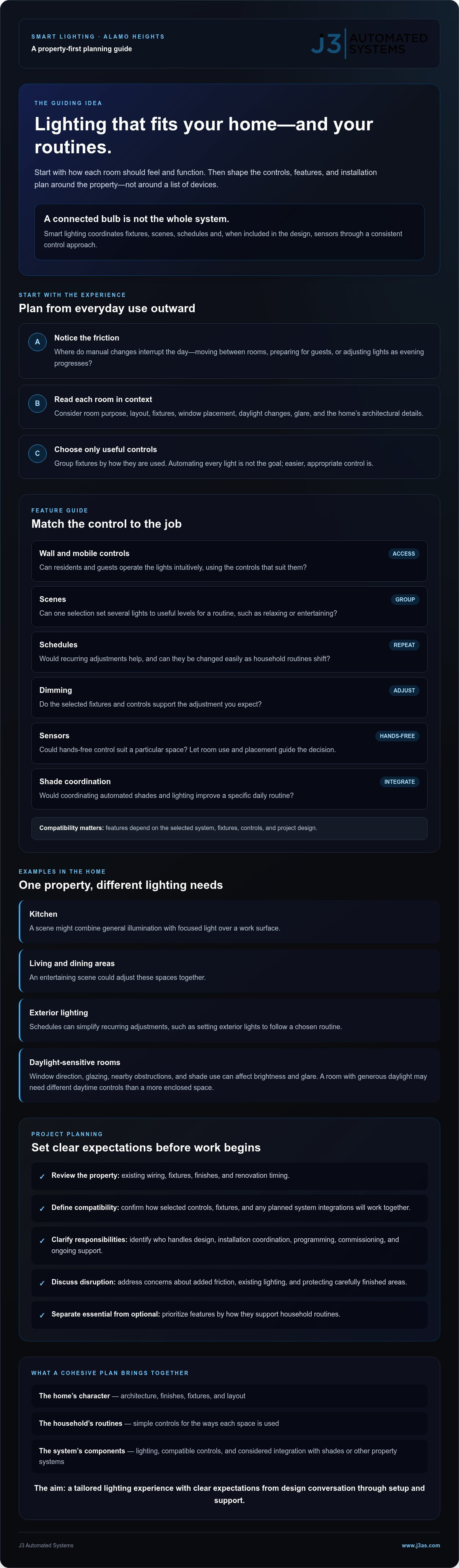
Smart Lighting Installation in Alamo Heights: A Buyer’s Guide
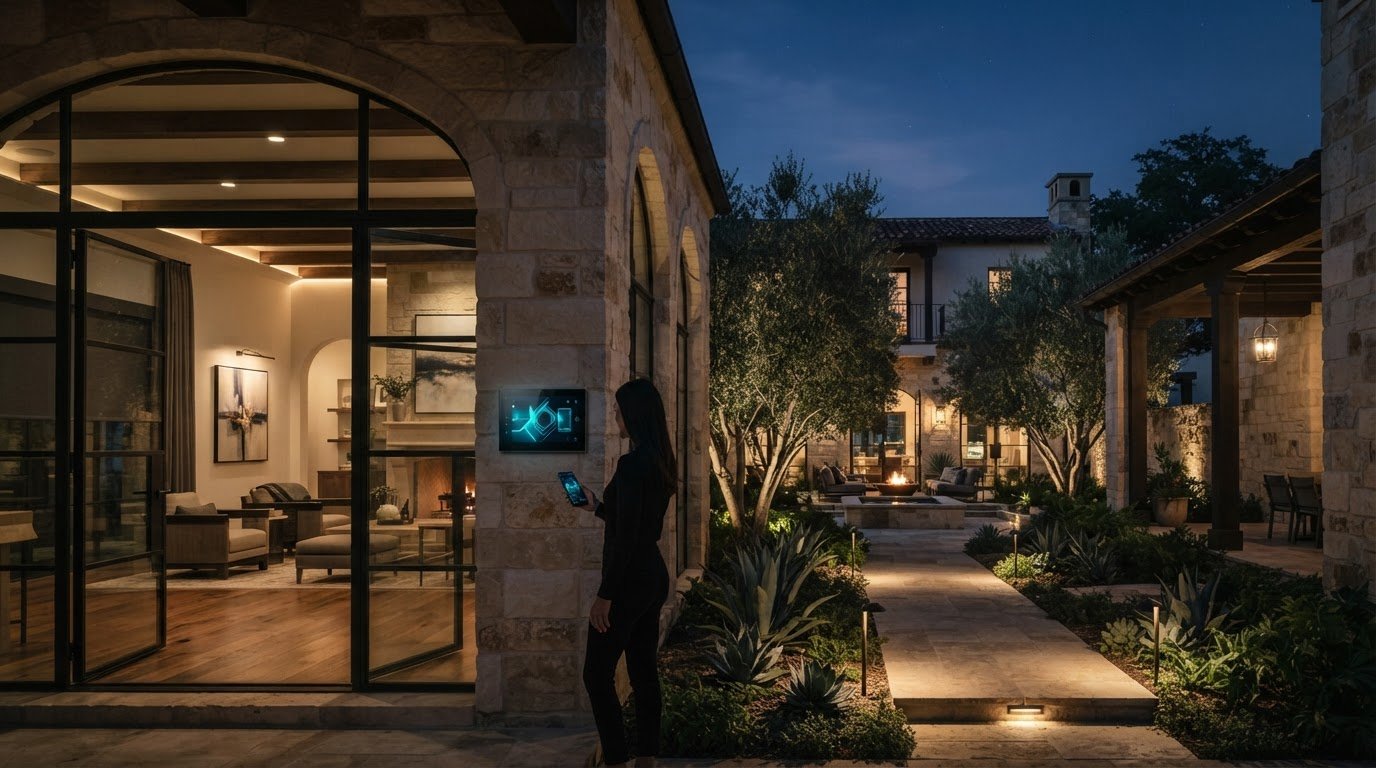
What if the best smart lighting system is the one you barely notice? If you’re researching smart lighting installation Alamo Heights, begin with how you want each room to feel and function, not with a list of devices. A well-planned system can support household routines and complement your home’s architecture while keeping everyday control simple. It’s reasonable to ask whether new technology will add friction, complicate existing lighting, or disrupt a carefully finished property.
This guide covers how to evaluate controls and features, plan an installation around your property, and choose an integration partner to coordinate design, hardware installation, programming, and commissioning. You’ll also learn what to check about wiring and compatibility, how to clarify project responsibilities before work begins, and when it makes sense to coordinate lighting with automated shades or other property systems. The goal is a cohesive plan with clear expectations from the first design conversation through setup and support.
Key Takeaways
- Shape lighting controls around how you use each room, rather than choosing features simply because they’re available.
- Compare control methods, scenes, schedules, dimming, and shade coordination against your household’s everyday routines.
- For smart lighting installation Alamo Heights, assess existing wiring, fixtures, finishes, and renovation timing before defining the project scope.
- Clarify who is responsible for design, installation coordination, programming, commissioning, and ongoing support.
- Review compatibility and integration goals early to help create a cohesive lighting experience across your property.
Smart Lighting Benefits for Your Alamo Heights Home
A connected bulb can be controlled from an app. A smart lighting system goes further by coordinating fixtures, scenes, schedules, and, when included in the design, sensors through a consistent control approach. In other words, smart lighting is coordinated control of a home’s lighting, not simply individual bulbs connected to a network. The everyday experience depends on how the components work together, not just on connectivity. For an overview of the underlying technology, see this explanation of lighting control systems.
Well-considered smart lighting installation Alamo Heights starts with the property itself. Architecture, room proportions, existing fixtures, window placement, and household routines all affect which controls will be useful. The goal isn’t to automate every light. It’s to make appropriate lighting easier to select and adjust while respecting the character of each space.
Which everyday lighting problems can a smart system address?
Scenes can set several lights to useful levels with one control. For example, a kitchen scene might combine general illumination with focused light over a work surface. An entertaining scene could adjust the living and dining areas together. Schedules can simplify recurring adjustments, such as setting exterior lights to follow a chosen routine. Sensors can provide hands-free control in selected spaces when appropriate. Exact functions depend on the system and project design.
Start by identifying where manual changes create friction: moving between rooms, preparing for guests, or adjusting lights as the evening progresses. A tailored control plan can group fixtures by use instead of leaving each adjustment to a separate switch. Dimming and shade coordination are also worth considering when the selected system and household goals support them.
How do daylight and room layout shape a local lighting plan?
Natural light changes how a room feels throughout the day. Window direction, glazing, nearby obstructions, and shade use can affect perceived brightness and glare. A room with generous daylight may need different daytime controls than a more enclosed space. Bedrooms, kitchens, and living areas also serve distinct purposes, so one setting across the home may be convenient on paper but poorly suited to actual use.
Evaluate each room in context, including how daylight shifts and which fixtures serve different activities. Alamo Heights homes have varied layouts and architectural details, making a site-specific review more useful than assuming a standard floor plan or control strategy will fit. J3 Automated Systems designs, installs, and commissions tailored automation systems, including automated lighting and shades, with plans shaped around the property and the desired experience.
How to Evaluate Smart Lighting Features Before Choosing an Installer
Start with the routines you want to simplify, then compare how each feature supports them. For smart lighting installation Alamo Heights, controls should be straightforward for household members and guests while fitting the home’s fixtures and any planned integration with shades or other property systems. CNET’s practical tips for buying smart lights can help you evaluate individual lighting components. A whole-property plan also needs to account for how the controls work together.
Which controls and automation features fit your routines?
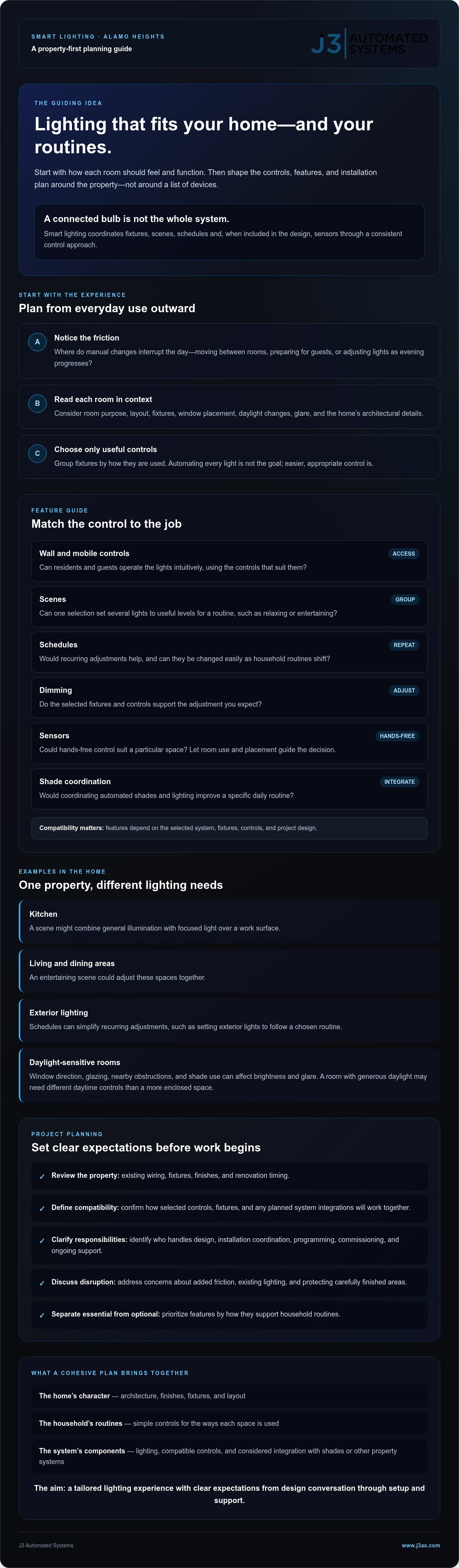
Compare options by the job they need to do. A wall control provides a familiar point of access, mobile control can help adjust lighting remotely, and schedules can handle recurring changes. Scenes group selected lights into a preset state for a routine, while dimming gives finer adjustment when compatible fixtures and controls support it. Sensors may suit particular rooms, but placement and room use should determine whether they belong in the design.
| Feature | What to evaluate |
|---|---|
| Wall and mobile controls | Can residents and guests operate lights intuitively, using the controls that suit them? |
| Scenes | Can one selection coordinate the fixtures needed for a routine, such as relaxing or entertaining? |
| Schedules | Are recurring adjustments useful, and can they be changed easily as routines shift? |
| Dimming | Do the selected fixtures and controls support the adjustment you expect? |
| Shade coordination | Would coordinating automated shades and lighting improve a specific daily routine? |
Separate essential functions from optional features. If simple wall operation and a few useful scenes meet the household’s needs, extra automation may add complexity without enough value. Ask how visitors can use the system without an app and how household members can override a schedule or scene when plans change.
How should lighting integrate with shades and other systems?
Confirm compatibility before selecting components. Ask how the proposed controls work with existing fixtures, dimming requirements, automated shades, and any property systems you want to coordinate. Clarify network and control-system dependencies during design, rather than discovering limitations after installation. For context on the connected infrastructure that supports integrated systems, see J3’s guide to high-performance residential networking.
Before choosing an installer, request a clear explanation of the proposed features, system dependencies, and commissioning process. For a tailored evaluation, discuss your lighting goals with J3.
What Happens During Smart Lighting Installation in Alamo Heights?
A well-coordinated project moves from understanding how you use the property to verifying that the finished controls work as intended. For smart lighting installation Alamo Heights, the process usually includes discovery, site assessment, system design, installation, programming, and commissioning. These are project stages, not a promise of a fixed timeline. The actual scope depends on the home and the responsibilities agreed for the project.
Discovery defines the goals; site assessment documents the conditions; design specifies the system; installation puts the approved plan in place; programming configures controls; commissioning tests operation. Connecting these stages helps clarify decisions before work begins and reduces surprises as the project progresses.
What should a site assessment and lighting plan cover?
Start with a room-by-room inventory of existing fixtures and controls, windows and shades, how each space is used, and where people expect to access lighting. Record desired scenes, schedules, dimming needs, shade coordination, and priorities for integrating lighting with other property systems. The assessment should also identify existing wiring and conditions that may affect fixture or control compatibility.
Finishes and renovation timing matter. Work planned before painting or other finish work may allow different coordination than a retrofit in a completed room. Before defining the final scope, confirm site-specific wiring, permitting, electrical-work responsibilities, and applicable code questions with qualified local professionals.
How are installation, programming, and commissioning coordinated?
Installation should follow the agreed design and a clear division of responsibilities. Automation integration is not the same as general electrical contracting. Confirm who is responsible for electrical work, permits, and any required qualified trade work, as well as who installs and configures the automation components. This helps prevent gaps between teams.
After installation, programming turns household preferences into scenes and schedules. Commissioning checks that controls behave as intended in the finished spaces. Test wall controls and other agreed access methods, review scenes with the people who will use them, and note any adjustments needed before handover. J3 Automated Systems provides design, hardware installation, system tuning, and commissioning for tailored automation systems, with project responsibilities established for the specific site.
How to Reduce Disruption and Choose the Right Alamo Heights Lighting Partner
Project complexity doesn’t have to mean an unpredictable experience. For smart lighting installation Alamo Heights, disruption is easier to manage when the scope, responsibilities, and work sequence are clear before installation begins. An integration partner should explain how design decisions connect to installation, programming, commissioning, and handover, and identify work outside the agreed scope.
What questions should you ask before approving a proposal?
Look beyond the equipment list. Ask what discovery and design include, who coordinates installation, how scenes and schedules will be programmed, and what testing and support are part of the engagement. Clarify which lighting components and systems are expected to integrate, where the limits are, and whether any work depends on third parties.
- Who owns the lighting design and confirms it matches the rooms and routines we discussed?
- Who handles hardware installation, and who is responsible for electrical work, permits, or other qualified trade work?
- How will changes to the plan be documented and approved?
- What will be tested during commissioning, and how will the household learn to use the system?
- What support is available after handover, and who should we contact with questions?
Specific answers help show whether one team is coordinating the automation work or responsibilities are divided among multiple parties. If lighting is part of a private cinema project, consider how control choices relate to cinema-grade home theater design rather than treating each system as an isolated decision. Likewise, if your project involves coordinating illumination with property surveillance and access control, security specialists such as AlphaLVC provide comprehensive solutions that can integrate into a broader automation strategy.
In an occupied home, discuss access, room sequencing, protection of finished surfaces, and household scheduling before work is planned. Ask which spaces may be affected and how the team will coordinate access with residents and other project participants. The right sequence depends on the property and scope, so avoid relying on a generic retrofit plan or an assumed completion date.
Renovations can create opportunities to coordinate lighting decisions with other work, especially when wiring or fixtures are changing. Confirm who is responsible for each task and when decisions need to be made. Existing wiring, fixtures, and finishes can influence the approach, so the plan should follow an assessment of the property rather than a one-size-fits-all method.
For coordinated design, installation, and commissioning, discuss your lighting project with J3.
Plan an Integrated Smart Lighting Project with J3 Automated Systems
A successful project brings together household routines, property conditions, system compatibility, clear responsibilities, and commissioning. For smart lighting installation Alamo Heights, this framework keeps technology decisions grounded in how you want the home to function. It also makes room for details that shape a tailored result, from existing fixtures and controls to renovation plans and desired coordination with shades.
J3 Automated Systems designs, installs, and commissions tailored automation systems, including automated lighting and shades. Where it supports your goals, lighting can be considered alongside other property systems instead of specified in isolation. The right scope depends on your priorities and the site conditions, so an initial discussion should clarify what matters before settling on a solution.
What information should you prepare for an initial project discussion?
Start with a concise picture of everyday life in the home. Note which rooms matter most, what currently feels inconvenient, and which routines you’d like lighting to support. Include renovation plans and any property constraints that may affect installation. You don’t need a product list or a preferred system. Practical goals give the design conversation a stronger foundation.
- Priority rooms and current lighting frustrations
- Preferred routines, scenes, and control methods
- Existing fixtures, switches or other controls, and automated shades
- Connected property systems you may want reviewed for compatibility
- Renovation timing, finish considerations, and site-specific constraints
These notes help an integration partner assess the project as a whole. They also make it easier to separate essential functions from features that may not serve your household.
What should a well-defined project handover include?
Before handover, review the installed system against the agreed scope. Confirm which fixtures and controls are included, which scenes have been programmed, and how household members should use the selected controls. Ask for relevant system documentation and an explanation of everyday operation, including how to make routine adjustments when those functions are available.
Clarify the appropriate contact and process for future questions or requested changes, and confirm any limits on integration or third-party responsibilities. Commissioning provides an opportunity to test the system in the finished spaces and identify operation issues for resolution. Clear documentation and a practical walkthrough can help prepare you to use the system with confidence.
To discuss your goals, property conditions, and potential system scope, discuss a smart lighting project with J3.
Bring Your Lighting Plan Together
A considered lighting system starts with your routines and the character of your property, then aligns controls, fixtures, and optional shade coordination with those priorities. As you compare smart lighting installation Alamo Heights options, look for a partner who can explain system compatibility, define project responsibilities, and test the finished controls in the spaces where you’ll use them.
J3 Automated Systems serves residential and commercial clients throughout Texas, designing, installing, tuning, and commissioning tailored automation systems. Its offerings include automated lighting and shades, with integration planned in line with your project goals. A clear process can help turn separate controls into a cohesive experience that feels natural in everyday use.
Ready to explore a plan shaped around your property? Discuss your smart lighting project with J3 Automated Systems. Thoughtful planning and coordinated execution can help make your lighting system intuitive to use.
Frequently Asked Questions
What does smart lighting installation include?
A project can include discovery, lighting and control planning, hardware installation, programming, and commissioning, depending on the property and agreed scope. Ask the installer to distinguish automation work from electrical work and identify who is responsible for each task. A clear proposal should outline system functions, integration boundaries, testing, handover, and site-specific items that still need verification. J3 Automated Systems serves clients in San Antonio, New Braunfels, Seguin, Bandera, Boerne, Austin, and San Marcos.
How much does smart lighting installation cost in Alamo Heights?
There’s no reliable project price without assessing the property and defining the design. Cost depends on factors such as the number of rooms, existing wiring and fixtures, control requirements, shade integration, and installation scope. Request an itemized proposal that identifies included equipment, labor, programming, commissioning, exclusions, and any electrical work that may require a separate qualified professional. This makes it easier to compare proposals based on the same scope rather than a headline figure alone.
Can smart lighting be installed in an existing Alamo Heights home?
Smart lighting may be suitable for an existing home, but the approach depends on its wiring, fixtures, finishes, and selected controls. A site assessment can identify which elements may be retained and whether adjustments are needed. Before work begins, discuss access, room sequencing, and how the project may affect occupied spaces. Have site-specific electrical requirements reviewed by qualified local professionals so the proposed scope reflects the property’s actual conditions.
Do smart lighting systems work with automated shades?
Some systems can coordinate lighting and automated shades, but compatibility depends on the selected equipment and overall design. Tell the installer which rooms matter most and how you want daylight, privacy, and lighting to work together. Confirm which functions are included, how household members will control them, and whether additional components or integration work are needed. Defining expectations early helps keep the shade and lighting plan aligned with your routines.
Will smart lighting installation work with my existing fixtures?
It depends on the fixtures, lamps, dimming requirements, wiring, and selected controls. Share available fixture details and identify which lights you want to operate together. Ask for a compatibility review before equipment is specified, including confirmation that existing dimmers and fixtures will work as intended with the proposed controls. A property assessment can help establish what may stay in place and what, if anything, needs to be addressed in the project scope.
How long does smart lighting installation take?
There’s no single duration that applies to every property. Project length can depend on the number of spaces, existing infrastructure, access, renovation coordination, equipment availability, and programming requirements. Ask for an outline of project phases and dependencies after the site has been assessed. Treat any schedule as specific to your property and agreed scope, not as a standard promise for every Alamo Heights home. Clarify how changes could affect the schedule.
Can smart lighting reduce energy use in my home?
Schedules, dimming, and occupancy-based operation may help align lighting use with household needs, but results depend on system design and how you use it. Avoid relying on generic savings claims. Ask which controls suit your rooms and routines, what assumptions support any estimate, and whether the proposal distinguishes potential operational benefits from guaranteed outcomes. The most useful evaluation starts with the intended lighting behavior, not an assumed level of energy reduction.