Structured Wiring for New Austin Homes: Buyer's Guide
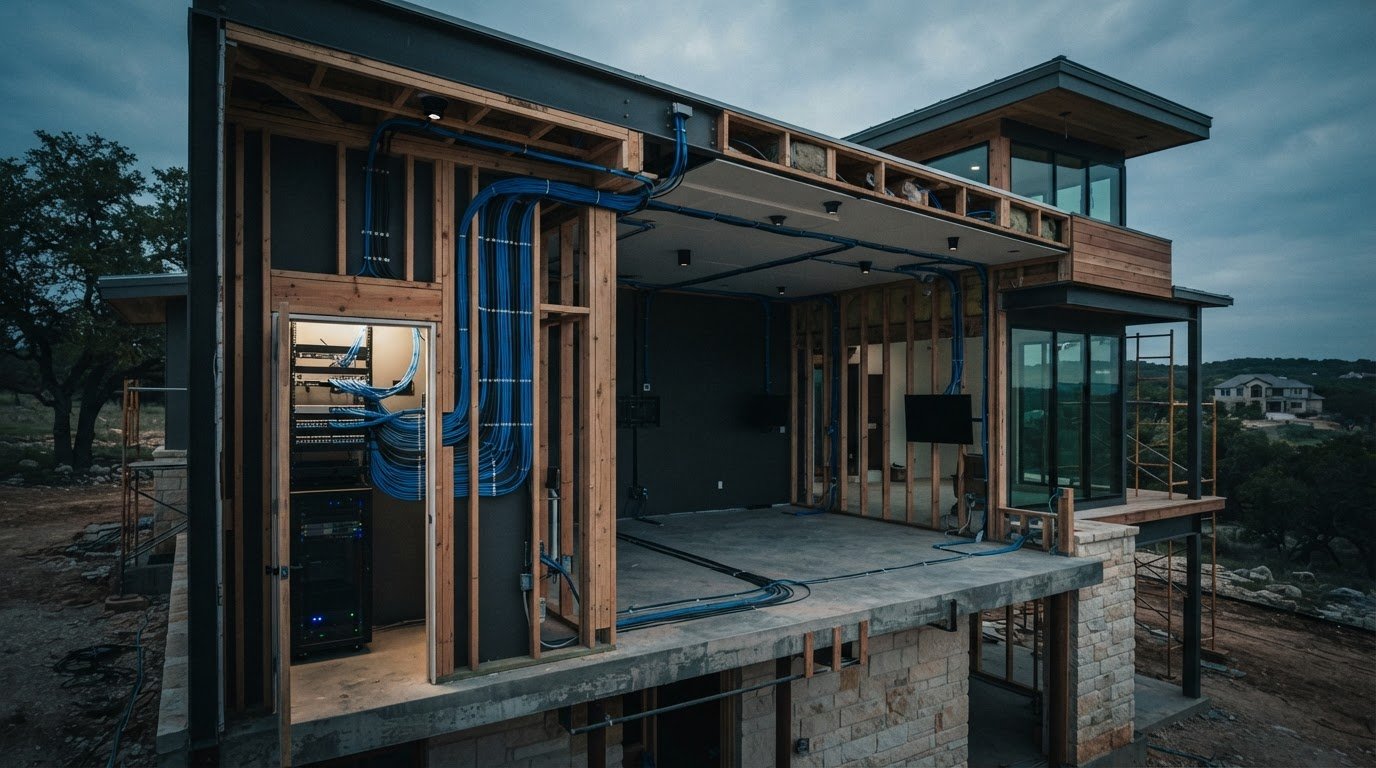
Once the walls are closed, adding a cable or changing its route can mean reopening finished spaces. That is why structured wiring for new homes Austin projects should be planned around how the home will be used, not only around the devices selected today.
If you are unsure which rooms need wired connections, what to rough in, or who should coordinate the work, those are the right questions to ask before construction advances. A thoughtful plan can help you avoid missed connection points and cabling that serves no clear purpose.
This guide covers what to consider for networking, home theater, lighting, and security, where flexibility may matter as technology changes, and when to coordinate with your builder, electrician, and technology integrator. You will find practical construction coordination points and a clearer basis for deciding what belongs in your home’s wiring plan.
Key Takeaways
- Plan structured wiring for new homes Austin around the systems and activities each room is intended to support.
- Mark possible connection points for offices, televisions, ceiling access points, cameras, and equipment areas before construction progresses.
- Compare proposals by how clearly they document cable locations, pathways, terminations, and coordination with other trades.
- Use a construction-stage sequence to confirm decisions, review the rough-in, and prepare for system commissioning.
- Look for an integration partner who can align the wiring plan with networking, media, lighting, and security needs.
Why Structured Wiring Matters in a New Austin Home
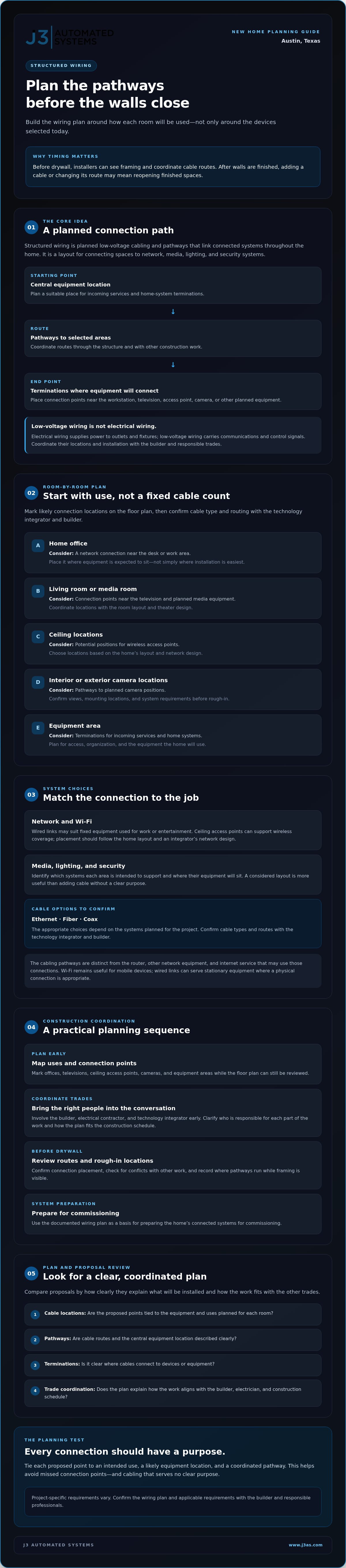
A new home’s technology works best when its physical pathways are planned alongside the rooms and systems they will support. Structured wiring for new homes Austin projects is not simply a matter of adding cable. It is a plan for connecting spaces to the network, media, lighting, and security systems the homeowner intends to use.
Structured wiring is planned low-voltage cabling and pathways that link connected systems throughout a home. Electrical wiring supplies power to outlets and fixtures, while low-voltage wiring carries communications and control signals. The two have different functions, so their locations and installation should be coordinated rather than treated as interchangeable. Confirm project-specific requirements with the builder and responsible trades.
What does structured wiring include in a new home?
A plan typically identifies a central equipment location, routes from that point to selected areas, and termination points where cables connect to devices or equipment. Connections might support a television, an office workstation, or a ceiling-mounted wireless access point. Ethernet, fiber, and coax are possible cable options. The right choices depend on the intended systems and should be confirmed for the project. A structured cabling system provides the foundational pathways. It is distinct from the router, other network equipment, and internet service that may use those connections.
Planning around specific uses helps avoid treating every room identically. A home office may benefit from a wired network connection, while a media area may need connection points near the planned equipment. The goal is a considered layout, not cable for its own sake. For each proposed connection, identify the equipment it will serve and where that equipment is likely to sit.
Why plan wiring before drywall in Austin?
Before drywall, installers can see the framing and coordinate cable routes through the structure. This makes it easier to place connections where they are useful, avoid conflicts with other work, and record where pathways run. Changes after walls are finished may require more invasive work, so confirm priorities while the plans can still be reviewed.
Structured wiring gives a new home planned pathways for connected systems and preserves options as technology and household needs change. It also means the home does not have to rely on wireless connections alone. Wi-Fi remains useful for mobile devices, while wired links can serve stationary equipment where a physical connection is appropriate.
Bring the builder and electrical contractor into the conversation early, and clarify who is responsible for each part of the work. A technology integrator can help map network, media, lighting, and security needs to the home’s layout. The builder can coordinate that plan with the construction schedule. For Austin-area new builds, verify applicable project requirements with the appropriate professionals rather than assuming one wiring plan fits every home.
Which Structured Wiring Should an Austin New Home Include?
Start with intended use, not a fixed number of cables per room. A workstation, television, ceiling access point, and camera each have different connection needs. For structured wiring for new homes Austin, mark likely connection locations on the floor plan, then confirm cable type and routing with the technology integrator and builder.
| Area | Possible wired connection points | Planning consideration |
|---|---|---|
| Home office | Network connection near the desk or work area | Place it where equipment will sit, not simply where it is easiest to install. |
| Living room or media room | Connections near the television and planned media equipment | Coordinate locations with the room layout and theater design. |
| Ceiling locations | Potential access-point positions | Choose locations based on the home’s layout and network design. |
| Exterior or interior camera locations | Pathways to planned camera positions | Confirm views, mounting locations, and system requirements before rough-in. |
| Equipment area | Terminations for incoming services and home systems | Plan for access, organization, and the equipment the home will use. |
How should you plan network and Wi-Fi wiring?
Wired connections may suit fixed equipment used for work or entertainment, while ceiling access points can support wireless coverage. Their placement should follow the home’s layout and an integrator’s network design, rather than guesswork. For a closer look at planning the network backbone, see high-performance residential networking.
Ethernet is commonly considered for network connections at fixed endpoints. Fiber may suit particular pathways or system designs, and coax can serve equipment that uses coaxial connections. These are options, not a universal specification. Ask the project team to explain why each cable type fits its intended use. The Telecommunications Industry Association provides information on industry standards for structured wiring, which can inform that discussion.
How should wiring support media, lighting, and security?
For each television or theater location, identify where the screen and associated equipment will sit, then plan connection points accordingly. A considered media layout helps align room design with system needs. Explore cinema-grade home theater design for more on that planning.
Likewise, map intended camera and sensor locations, and discuss how automated lighting or shades fit the overall system design. Separate immediate requirements from optional pathways that could make later changes easier. If you are still defining the scope, discuss your home’s technology integration needs with J3 Automated Systems.
How to Compare Structured Wiring Plans and Integrators in Austin
Two proposals can describe similar technology goals while providing very different levels of detail. For structured wiring for new homes Austin, compare what each plan documents, how it connects to the intended systems, and who is responsible for coordinating the work before the walls close. A polished presentation matters less than a clear scope the builder and project trades can act on.
A complete wiring proposal should show what will connect, where each connection will go, how pathways and terminations are handled, and how the work fits the construction schedule.
What should a structured wiring proposal specify?
Look for a plan that identifies intended systems and connection locations, along with proposed cable routes and termination points. It should also explain how cables will be labeled and what documentation will be provided at handoff. Ask what testing or commissioning is included and what information you will receive to show that the installed system has been checked.
Before comparing scope, clarify what remains undecided. Ask each provider to identify:
- Included work and explicit exclusions
- Any allowances, assumptions, or selections still needed
- Who supplies, installs, terminates, labels, and verifies each part
- How changes to the home plan may affect the wiring scope
These questions help distinguish a defined plan from a general estimate without assuming every home needs the same connections or commissioning steps.
Who should coordinate wiring during an Austin new build?
Responsibilities can be shared. The homeowner communicates intended uses and priorities, the builder manages the overall construction schedule, the electrical contractor coordinates power-related work, and the technology integrator maps connected systems to the home. Ask each party to confirm their scope and handoffs rather than assuming another trade will resolve overlaps.
Set review points with the builder before relevant construction milestones, and confirm who approves route or location changes. Verify applicable local requirements and trade responsibilities with qualified project professionals. Do not rely on a generic proposal to answer project-specific questions.
For integrated security, the wiring discussion should follow the planned system and its intended locations. J3 Automated Systems’ overview of commercial security system design in Texas offers a related perspective on coordinating security with a broader system design.
Finally, compare the handoff. Will you receive updated location records, labeling details, and a clear account of what was tested or commissioned? Those records make the finished infrastructure easier to understand and give future changes a more useful starting point.
When to Plan and Install Structured Wiring in a New Austin Home
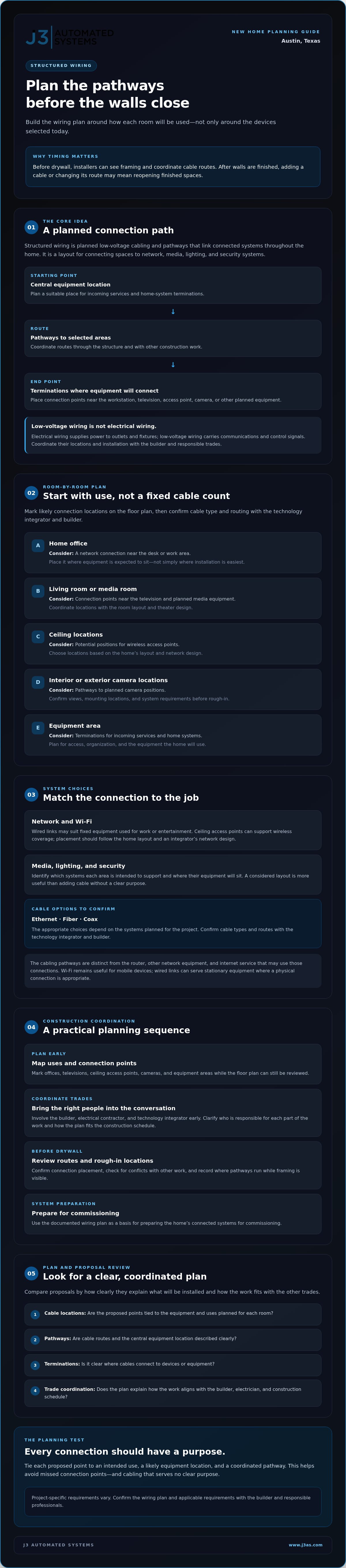
Bring structured wiring into the conversation while the home’s plans are still being reviewed, not after technology locations have been left to chance. For structured wiring for new homes Austin, coordinate decisions with the builder before construction milestones that affect access to framing and pathways. The sequence matters more than a fixed calendar because each project’s scope and build schedule differ.
What should happen before the low-voltage rough-in?
Start by identifying the rooms, systems, and equipment locations that will shape the plan. Note current priorities as well as possible future uses, then review the architectural plans with the builder and relevant technology professionals. Before work is scheduled, establish who approves cable pathways and how revisions will be communicated if room layouts or construction details change.
A practical sequence can keep decisions visible:
- Discover needs: List intended uses, rooms, and equipment areas.
- Review plans: Mark proposed connection locations and discuss pathways with the project team.
- Coordinate rough-in: Confirm responsibilities and timing with the builder and trades involved.
- Verify and document: Review installed locations while they remain visible, then retain records for handoff.
- Commission systems: Confirm the agreed checks and commissioning steps with the responsible technology team.
What should homeowners verify before walls close?
Use the approved room and system plan as your reference. Check that visible connection points match the agreed locations, and ask the responsible installation team to confirm that planned pathways and labels are recorded. If something has shifted, raise it promptly through the project’s agreed coordination process so the builder can determine the appropriate next step.
Documentation is part of the installation’s long-term usefulness. Ask how the final records will identify connection locations, cable labels, and routes. A clear handoff helps homeowners and future project professionals understand what is already in place, without relying on memory or assumptions after the walls are finished.
Keep the sequence flexible. A home with a focused network plan may need different coordination from one integrating media, lighting, and security. The builder’s schedule, project scope, and trade responsibilities determine the relevant review points. Confirm them directly rather than expecting every build to follow identical dates or steps.
If you are aligning technology decisions with an active build, discuss your project scope and integration needs with J3 Automated Systems.
Choose an Austin Structured Wiring Partner for the Whole Home
The right partner looks beyond individual cable runs to understand how the home’s technology should work together. For structured wiring for new homes Austin, compare integrators by their design process, coordination with the builder and other project professionals, documentation, and approach to installation and commissioning. A clear process helps you understand what the proposed work covers and how decisions move from plans to a functioning system.
What should an Austin homeowner ask a technology integrator?
Ask how the team turns your priorities into a documented plan for your home. Clarify how it coordinates with the builder and other professionals, which work it performs directly, and where responsibilities transfer between trades. Before proceeding, understand what installation, system commissioning, and project handoff include, along with what records you will receive. These questions help you compare process and accountability, not just a list of proposed connections.
How can structured wiring support an integrated home?
Planned connections can support resilient networking, home theater, automated lighting, and security as parts of a considered home technology design. The specific pathways and equipment depend on the project. No wiring plan should be assumed to guarantee future compatibility. Ask the integrator to explain how each proposed connection serves an intended system and how the systems are expected to interact.
J3 Automated Systems serves Austin and designs, installs, and commissions integrated technology for residential and commercial properties. Its capabilities include networking, home theater, lighting, and security. If you are comparing partners, ask how those systems can be considered together during planning and clarify the scope of any wiring work directly with the project team.
Discuss your Austin home’s technology plan with J3 Automated Systems to explore your project’s intended systems and integration needs.
Set Your New Home Up for What Comes Next
The strongest structured wiring for new homes Austin plan begins with how you want the home to function, then connects those priorities to clear decisions, trade coordination, and useful project documentation. Treat the wiring plan as part of the home’s overall technology design, not a collection of isolated cable choices.
Keep the central priorities in view: plan around intended systems, confirm decisions with the builder before relevant construction milestones, and choose a partner who can explain the design, installation, and commissioning process. That approach helps you plan with purpose while keeping future changes in mind, without assuming every system or connection will suit every home.
J3 Automated Systems serves Austin and provides end-to-end design, installation, and commissioning. Its residential capabilities include resilient networking, home theater, lighting, and security. To discuss how your plans and intended systems could come together, discuss your Austin new-home wiring plan.
With thoughtful coordination, you can move into a home whose technology has a considered foundation from the start.
Frequently Asked Questions
What is structured wiring in a new home?
Structured wiring is planned low-voltage cabling and pathways that connect designated areas of a home to communications and technology systems. The plan may show a central equipment location, cable routes, termination points, and room connections. It provides the physical infrastructure, not the internet service or network equipment itself. Its scope depends on the systems planned for the home and should be coordinated with the builder and relevant technology professionals.
Is structured wiring worth including when building a new home in Austin?
It can be worthwhile if you want wired connections for systems or equipment that wireless alone may not serve as intended. Planning structured wiring for new homes Austin builds before drywall can preserve options for room connections and cable pathways. Whether a particular connection is worth including depends on your household’s needs, intended technology, and project scope. Review priorities with the builder and a technology integrator before relevant construction milestones.
Which cables should a new home have installed?
Choose cables according to the systems and connection points in the home, rather than following a universal package. Ethernet may be considered for network connections, fiber for specific pathways or system designs, and coax for equipment that uses coaxial connections. Ask the technology professional to explain the purpose and suitability of each type in your plan. Confirm cable selection and installation details for the specific project with the responsible professionals.
When should structured wiring be installed during new-home construction?
Plan it during design and plans review, then coordinate installation with the builder before the relevant rough-in and wall-closing milestones. The exact sequence depends on the home’s scope and construction schedule. Before walls close, review connection locations and confirm that labels and pathway records are being documented. System checks or commissioning can follow as appropriate to the agreed project scope and the systems being installed.
Can structured wiring support Wi-Fi, cameras, lighting, and home theater?
Yes, planned connections and pathways can support systems such as wireless access points, cameras, automated lighting, and home theater. The precise wiring depends on system design, equipment requirements, and intended locations, so do not assume every device uses the same connection or that all components will be compatible. Ask the integrator to map proposed connections to the specific systems and coordinate the plan with the builder and other project professionals.
How much structured wiring does a new home need?
There is no one appropriate quantity for every home. Base the plan on intended uses and locations, such as a home office, television area, ceiling access point, camera position, or equipment area. Separate connections needed at move-in from optional pathways you may want to consider for later changes. A room-by-room plan clarifies the scope and gives the project team a shared reference without specifying unnecessary cabling.
Who installs structured wiring in an Austin new build?
A low-voltage installation professional or technology integrator can help define the system plan and coordinate the work with the builder and electrical contractor. Clarify who handles design, cable installation, terminations, documentation, and commissioning, and ask whether structured cabling itself is included in the proposed scope. J3 Automated Systems serves Austin and nearby Texas communities, including San Antonio, New Braunfels, Seguin, Bandera, Boerne, and San Marcos, and provides integrated technology design, installation, and commissioning.