Upgrading Legacy Building Management Systems: An Engineering Roadmap for 2026
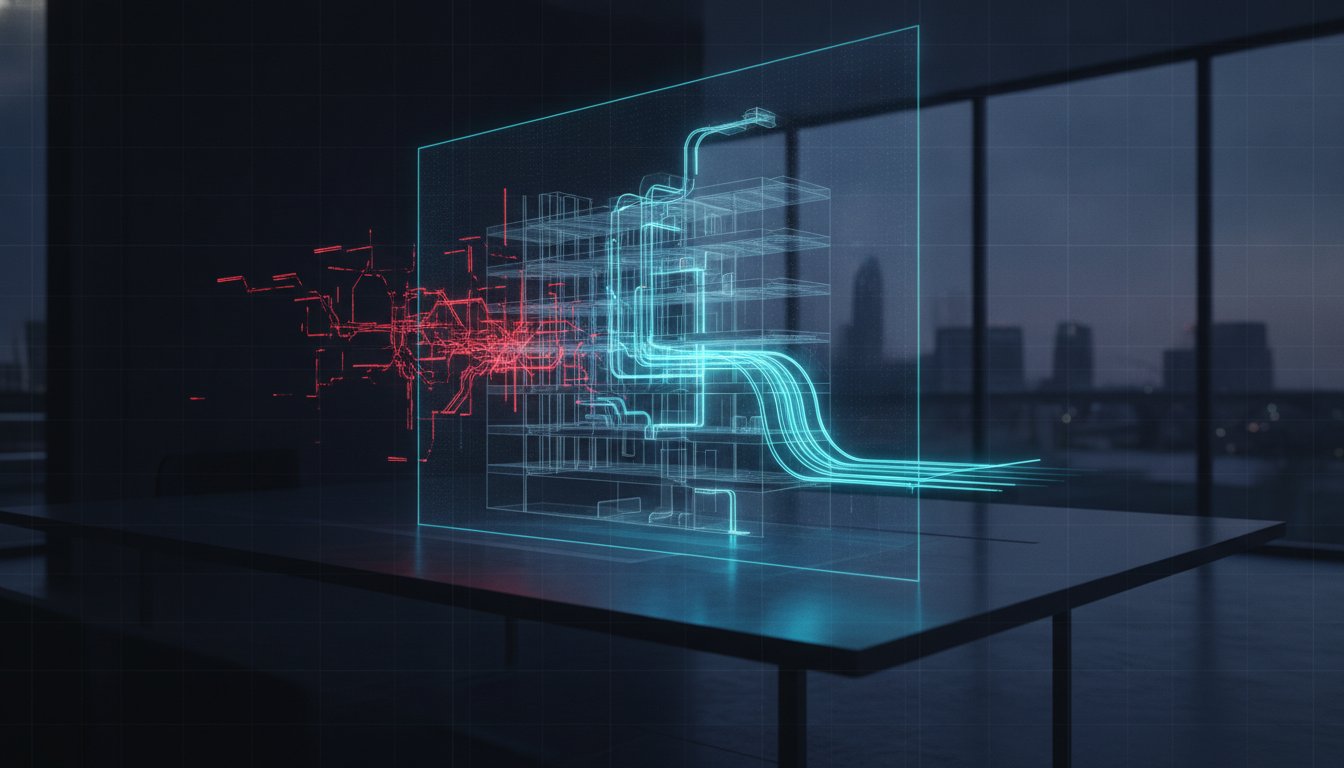
What if the greatest threat to your facility's profitability isn't the cost of energy, but the silent friction of a system that cannot talk to itself? You likely recognize the burden of skyrocketing maintenance costs for obsolete hardware and the persistent anxiety of cybersecurity vulnerabilities in unpatched, legacy controllers. It's a common frustration for Texas facility managers who find themselves trapped between rising operational demands and the rigid limitations of fragmented, siloed systems. The path forward requires more than a simple hardware swap. Instead, upgrading legacy building management systems has become a strategic architectural evolution toward autonomous orchestration.
Discover how to transform those disjointed HVAC, lighting, and security controls into a unified, AI-ready ecosystem that slashes operational costs while ensuring compliance with the 2026 Texas building codes. We'll provide a methodical engineering roadmap that bridges the gap between aging physical assets and the intelligent, secure digital workflows required for modern commercial excellence. This guide explores how to move beyond reactive repairs to a state of calm, reliable, and effortless operation. By integrating these systems, you can turn a fragmented liability into a streamlined asset that supports long-term growth and technical resilience.
Key Takeaways
- Identify the hidden financial risks of maintaining proprietary, non-interoperable hardware and how technical debt impacts your long-term operational budget.
- Master the process of auditing your existing infrastructure to ensure that upgrading legacy building management systems targets the specific components that offer the highest ROI.
- Learn why a phased engineering roadmap protects your facility from the disruption of a total replacement while building a secure, enterprise-grade network backbone.
- Understand how open protocol standards like BACnet/SC and AI integration transform your facility from a scheduled environment into a predictive, autonomous ecosystem.
- Discover the advantage of a single accountable partner who can navigate complex Texas energy codes and unify your fragmented controls into one intelligent dashboard.
The Risks of Inertia: Defining Legacy Building Management Systems
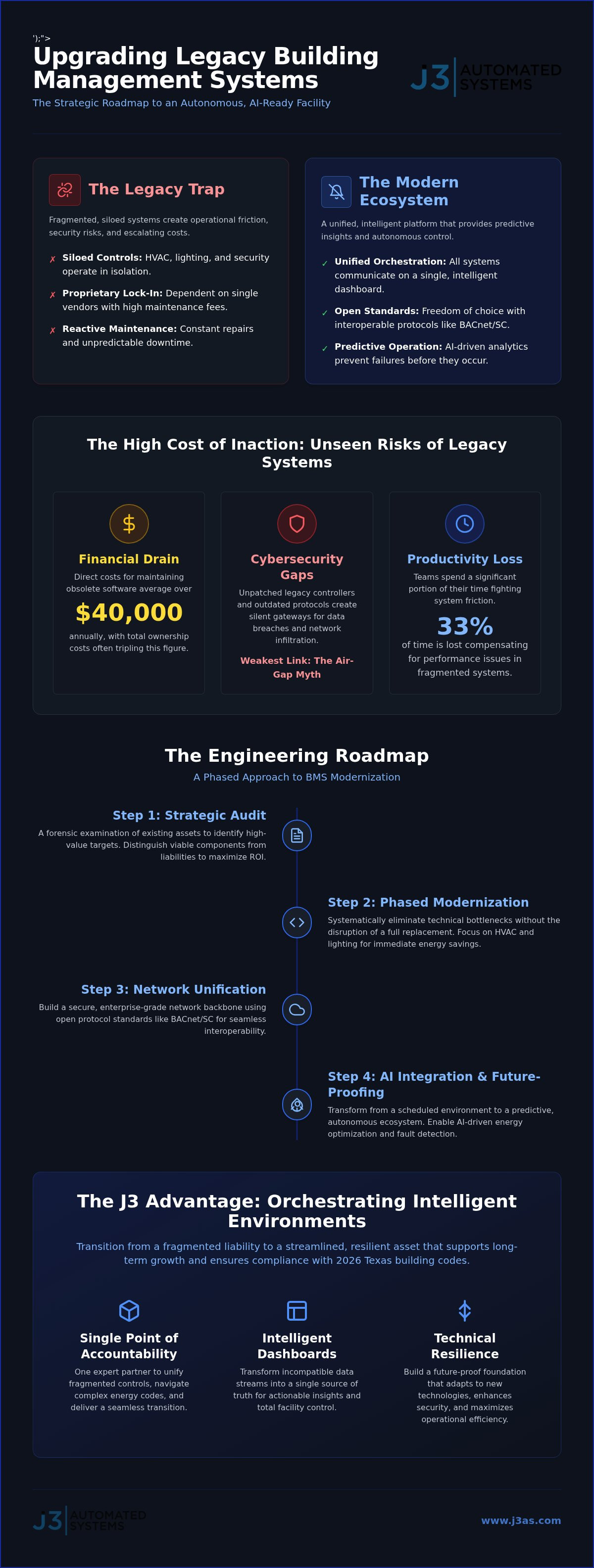
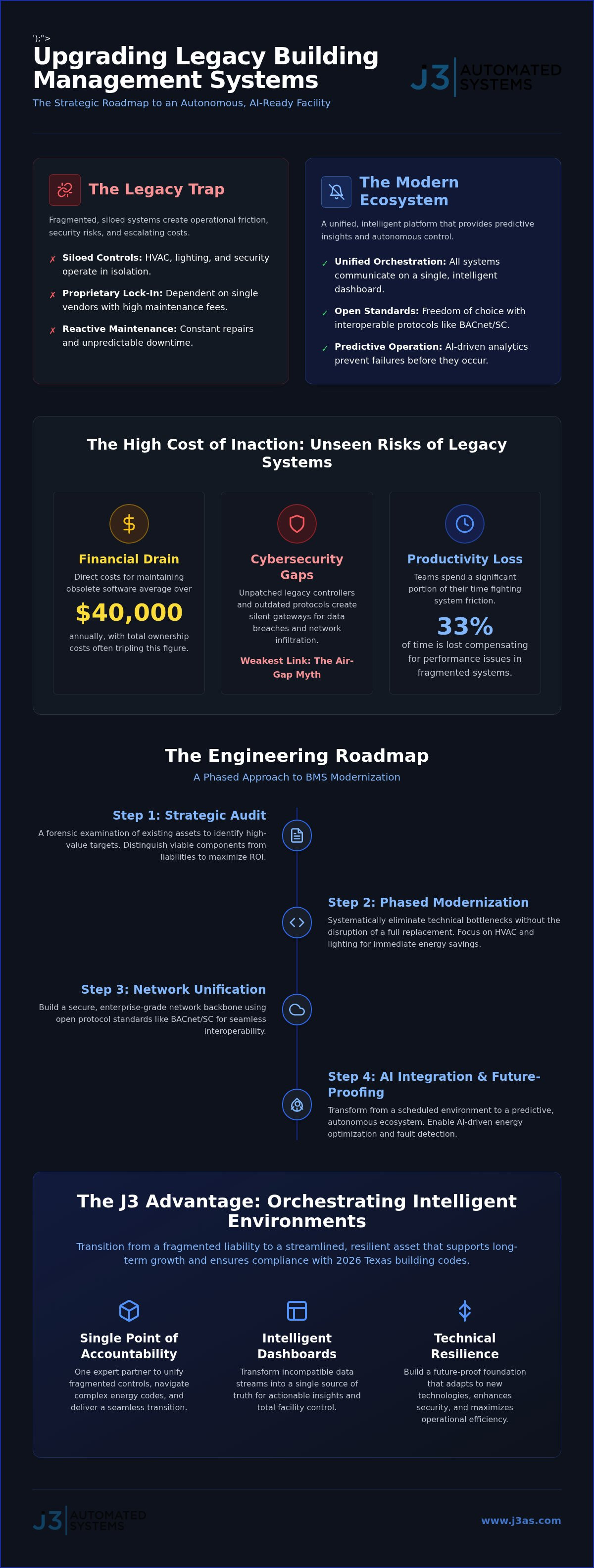
A legacy system is often defined by more than just its age; it's defined by its limitations. In the context of modern facility management, legacy Building automation systems (BAS) are characterized by proprietary, non-interoperable protocols that prevent different components from communicating. While a contemporary system acts as a unified nervous system, legacy controls operate as isolated islands. This creates a state of siloed control where HVAC, lighting, and security systems exist in vacuums, forcing facility managers to act as manual translators between incompatible dashboards. Transitioning to a model of intelligent orchestration is the primary driver for upgrading legacy building management systems in 2026.
Maintaining these aging structures incurs significant technical debt. Research indicates that maintaining legacy software costs an average of $40,000 annually in direct costs, a figure that often triples when accounting for total ownership expenses. This financial burden is compounded by three primary risks that threaten operational stability. First, cybersecurity gaps leave unpatched controllers exposed to modern threats. Second, energy waste becomes inevitable as buildings account for nearly 40% of total energy usage in Texas, yet legacy systems lack the precision to optimize consumption. Finally, a lack of manufacturer support means that a single hardware failure can lead to prolonged, expensive downtime. You don't just pay for the repairs; you pay for the missed opportunity to innovate.
Cybersecurity Vulnerabilities in Aging Infrastructure
Unpatched legacy controllers represent the weakest link in your corporate network. These devices were often designed in an era before sophisticated cyber-warfare, meaning they lack the encrypted communication standards required today. Relying on security through obscurity is no longer a viable strategy in 2026. The air-gap myth is the dangerous assumption that physical isolation from the public internet guarantees security, failing to account for the myriad of digital and physical entry points present in modern facility operations. Without upgrading legacy building management systems to support protocols like BACnet Secure Connect, your infrastructure remains a quiet gateway for data breaches.
The Hidden Cost of Proprietary Lock-in
Proprietary lock-in creates a restrictive ecosystem where vendor choice is non-existent and maintenance fees are dictated by the manufacturer. These "Black Box" systems make extracting actionable data nearly impossible, burying insights under layers of incompatible code. This fragmentation severely hampers productivity; developers and facility teams spend approximately 33% of their time simply compensating for performance issues. When your systems don't talk to each other, your team spends their day fighting friction instead of refining the occupant experience. True efficiency requires a shift toward open standards that return control to the building owner.
Strategic Modernization: Auditing Your Existing Building Infrastructure
Strategic modernization begins with a forensic examination of your current assets. Before a single wire is pulled, a rigorous evaluation of your environment is essential to distinguish between components that remain viable and those that have become liabilities. Many facility managers assume a total replacement is the only option, but a deep-dive audit often reveals a more nuanced path. This involves a comprehensive review of hardware longevity, wiring integrity, and software architecture. By modernizing legacy control systems through a structured, phased approach, you preserve existing value while systematically eliminating technical bottlenecks.
Identifying "High-Value Targets" is the next logical step in your modernization journey. Not every system requires an immediate overhaul to deliver results. Focus on components that offer the fastest ROI, such as HVAC and lighting controls, which directly impact the 70% of electricity usage attributed to buildings in Texas. Evaluating your low-voltage backbone and network resilience ensures your infrastructure can support the data-heavy demands of 2026. For a deeper look at how these requirements manifest in local markets, review our guide on Commercial Building Management Systems in Texas. A resilient network is the foundation upon which all future intelligence is built.
Mapping the Physical and Digital Layers
Start with the physical reality of your facility. Assess the condition of existing sensors, actuators, and terminal unit controllers to determine their remaining life cycle. Are these devices compatible with modern protocols like BACnet or Modbus, or are they trapped in proprietary silos? This mapping phase defines the "Single Pane of Glass" vision, where all disparate data streams converge into a unified interface. Upgrading legacy building management systems starts by understanding these hidden connections between physical assets and digital commands, ensuring that every sensor contributes to a holistic operational picture.
Analyzing Operational Friction
Look beyond the hardware to the human element of your facility. Interviewing stakeholders helps uncover workflow bottlenecks that data alone might miss. Are your teams spending 33% of their time manually compensating for performance issues? Identify manual processes that AI could automate, such as predictive load shedding or automated fault detection. Compare your current energy consumption patterns against 2026 benchmarks, such as the 2021 IECC standards enforced in Houston and Dallas. If you find the complexity of these layers overwhelming, partnering with a visionary integrator can simplify the path to a unified ecosystem.
The Engineering Roadmap: A Phased Approach to BMS Modernization
While a total "rip-and-replace" strategy promises a fresh start, it often introduces unacceptable levels of disruption and capital strain for large-scale Texas facilities. A phased rollout provides a more manageable financial path and ensures that critical building functions remain online throughout the transition. This methodical progression allows you to address the most urgent vulnerabilities first while building toward the future of building automation. By breaking the project into logical milestones, you maintain control over the environment and the budget simultaneously.
The roadmap begins with establishing a secure, enterprise-grade network backbone. This foundation supports the data-heavy traffic required for modern analytics and AI. Next, we integrate an open-protocol supervisor layer that acts as a universal translator, allowing legacy devices to communicate with modern software. The third step involves the systematic replacement of end-of-life controllers, prioritized by their impact on performance. Finally, we layer AI and custom software to move the facility from simple schedules to predictive optimization. This structured evolution is the most reliable method for upgrading legacy building management systems without compromising stability.
Ensuring Operational Continuity During Upgrades
Upgrading systems in occupied commercial spaces requires meticulous planning to avoid tenant friction. We utilize parallel systems during the transition phase, keeping the old controls active until the new architecture is fully commissioned and verified. Our J3 commission process ensures zero-downtime handovers by utilizing rigorous testing protocols and redundant communication paths before the final cutover. This approach maintains a polished experience for occupants who remain entirely unaware of the complex engineering happening behind the walls. It's about removing the burden of change while delivering the benefits of modernization.
Prioritizing Systems for Maximum ROI
HVAC and lighting controls are typically the first priority when upgrading legacy building management systems because they represent the largest portion of a building's energy footprint. By modernizing these high-impact areas first, you generate immediate operational savings that can help fund subsequent phases of the project. Once the environmental controls are optimized, the focus shifts to integrating Commercial Security System Design in Texas. Unifying access control and surveillance with your BMS creates a truly intelligent protection layer, where lighting and HVAC respond dynamically to security events or occupancy triggers, creating a seamless harmony between safety and efficiency.
Future-Proofing: AI Integration and Open Protocol Standards
The evolution of building controls is no longer limited to hardware connectivity. It has shifted toward a robust, secure framework defined by BACnet/SC (Secure Connect). While traditional protocols offered basic interoperability, they often lacked the encryption necessary to protect against modern cyber threats. Upgrading legacy building management systems in 2026 requires a transition to these secure, open-source communication standards. This shift ensures your infrastructure is not only communicative but also resilient against the evolving landscape of digital vulnerabilities, moving you away from the vulnerabilities of unpatched, older controllers.
Artificial Intelligence elevates this connectivity from simple automation to autonomous orchestration. In the past, systems operated on rigid, static schedules. Today, AI transforms the BMS into a predictive engine that anticipates environmental changes before they occur. This is particularly vital for Texas facilities, where extreme summer heat puts unprecedented strain on the energy grid. AI-driven load shedding and peak-demand response allow your facility to communicate dynamically with the grid, reducing consumption during critical periods without compromising occupant comfort. By integrating AI Business Process Automation, you align your physical environment with your strategic business goals.
Predictive Maintenance and Energy Analytics
Machine learning identifies equipment failure before a critical breakdown occurs. By analyzing vibration, temperature, and current draw, the system detects anomalies that human operators might overlook. This proactive stance eliminates the burden of emergency repairs and extends the life of your mechanical assets. Real-time energy dashboards provide the precise data needed for ESG reporting and compliance, translating complex sensor data into clear insights. We customize these visualizations to ensure that every stakeholder, from the facility technician to the CFO, has a clear view of the building's performance. Upgrading legacy building management systems allows you to turn raw data into a narrative of efficiency.
The Role of Custom Software in Building Intelligence
Off-the-shelf SaaS products often fail to address the unique complexities of a large-scale commercial facility. These generic tools lack the flexibility to bridge fragmented legacy systems or integrate bespoke business workflows. Developing custom internal tools allows for a seamless flow of data between physical automation and digital decision-making. Intelligent Orchestration is the union of high-performance hardware and custom code, creating a system that thinks as well as it acts. If you are ready to remove the friction from your facility operations, partner with our engineering team to design a custom building intelligence solution.
The J3 Advantage: Orchestrating Intelligent Environments in Texas
Successful modernization requires more than a technical upgrade; it demands a single point of accountability. While many vendors treat building controls as a collection of isolated hardware sales, J3 Automated Systems serves as a visionary integrator. We manage the entire lifecycle of upgrading legacy building management systems, assuming responsibility for both the physical automation and the custom software layers. This holistic perspective removes the burden from facility owners, replacing fragmented tools with a unified, intelligent dashboard that simplifies complex operations. Our approach ensures that every integration serves a specific strategic purpose, moving your facility from a state of manual friction to one of effortless, automated harmony.
Our methodology follows a deliberate "Broad-to-Narrow" progression. We begin by defining a comprehensive, visionary roadmap that aligns with your long-term business goals before moving into the precise engineering and execution of the project. This methodical pace mirrors a well-planned project lifecycle, providing clarity and reassurance at every milestone. Based in the heart of Texas, we serve the critical commercial corridors of San Antonio, Austin, and New Braunfels. By positioning ourselves as deep-thinking partners rather than mere equipment providers, we help Texas businesses navigate the technical debt of the past to embrace the autonomous possibilities of the future.
Engineering Excellence for Texas Facilities
Operating in Texas presents unique challenges that require local expertise. From the extreme heat that strains HVAC systems to the specific requirements of the 2024 International Mechanical Code, our team understands the regional demands of the built environment. We prioritize resilient networking as the essential foundation for any automation project. A building's intelligence is only as reliable as the infrastructure supporting it. Our deep expertise in creating robust digital environments extends across our service lines, including our work in High-Performance Residential Networking. This focus on the invisible backbone of a property ensures that your systems remain responsive and secure regardless of the load.
Your Roadmap to Modernization
The journey toward a unified facility begins with a discovery session. During this phase, we analyze your current infrastructure to identify the hidden connections and bottlenecks that define your daily operations. Once the audit is complete, our team moves into the engineering and tuning phase, where we precisely calibrate your new systems for maximum efficiency. We provide a white-glove commissioning experience, ensuring that the final handover is seamless and that your team is fully equipped to manage the new ecosystem. If you are ready to transform your facility into a predictive, AI-ready asset, schedule your building modernization audit with J3 today.
Building the Autonomous Facility of Tomorrow
The transition from fragmented, proprietary silos to a unified digital architecture is no longer a luxury; it's a strategic necessity for Texas commercial leaders. By methodically upgrading legacy building management systems, you eliminate the persistent friction of technical debt and replace it with a state of calm, reliable intelligence. This evolution allows your facility to respond dynamically to energy demands while providing a secure, unburdened experience for every occupant. True building intelligence requires a bridge between aging physical assets and modern digital workflows, turning reactive maintenance into predictive orchestration.
As a single accountable team with deep expertise in Texas commercial infrastructure, J3 Automated Systems unifies physical automation with custom AI integration to drive unprecedented operational efficiency. We simplify the most complex integrations to ensure your facility remains a high-performance asset for years to come. We invite you to Partner with J3 for your Building Modernization Roadmap and begin the journey toward effortless operation. Your building's potential is waiting to be unlocked. Let's design a future that works for you.
Frequently Asked Questions
What are the signs that my building management system is considered 'legacy'?
Proprietary protocols, lack of encryption, and siloed systems are the primary indicators. If your system cannot communicate with modern cloud platforms or requires manual data extraction from black box hardware, it is legacy. These systems often incur higher maintenance costs, with direct annual software fees averaging $40,000. It's a state of technical debt that limits your ability to innovate or scale.
Can I upgrade my BMS without replacing all my existing HVAC hardware?
Yes, a phased approach allows you to upgrade the supervisor layer and network backbone without a total hardware replacement. By installing an open-protocol gateway, legacy sensors can communicate with a modern, AI-ready interface. This strategy preserves your existing mechanical investment while systematically upgrading legacy building management systems to support predictive orchestration. It's a methodical way to build a future-proof foundation.
How long does a typical legacy BMS upgrade take for a commercial facility?
The timeline varies based on facility complexity, but a phased modernization typically spans three to nine months. Initial infrastructure auditing and network backbone establishment occur in the first few weeks. Systematic controller replacement and software tuning follow, ensuring that operational continuity is maintained. A single accountable team streamlines this lifecycle, avoiding the delays common when managing multiple, fragmented vendor groups.
What is the expected ROI for upgrading to an AI-driven building management system?
The ROI is realized through a 33% reduction in maintenance time and significant energy savings. Buildings account for 70% of electricity usage in Texas, and AI-driven optimization slashes these costs via predictive load shedding. By moving from reactive repairs to predictive maintenance, you extend equipment life cycles and avoid the average $4.88 million cost associated with data breaches in unpatched systems.
Is it possible to integrate my security and lighting into a legacy HVAC system?
Integration is possible through the implementation of an enterprise-grade supervisor layer using open standards like BACnet/SC. This universal translator allows lighting, access control, and HVAC systems to exist under a single pane of glass. Creating these hidden connections removes the friction of siloed control. It ensures that your lighting and security respond dynamically to occupancy patterns or environmental triggers.
What local Texas regulations should I be aware of when upgrading my BMS in 2026?
Texas has adopted the 2024 International Mechanical Code (IMC) and Fuel Gas Code (IFGC), effective September 1, 2026. Additionally, the Texas Responsible AI Governance Act (HB149) becomes effective January 1, 2026, regulating how AI systems are deployed. Modernizing your BMS ensures compliance with these updated standards and the more stringent energy codes adopted by municipalities like Houston and Dallas.
How does J3 Automated Systems ensure my building stays operational during an upgrade?
We utilize parallel systems during the transition to ensure zero-downtime handovers for occupied commercial spaces. Our J3 commission process keeps legacy controls active until the new architecture is fully verified and redundant communication paths are established. This white-glove approach removes the burden from facility managers, maintaining a seamless environment for tenants while upgrading legacy building management systems behind the scenes.