Whole House Audio Installation: A Guide to Design, Wiring, and Seamless Sound
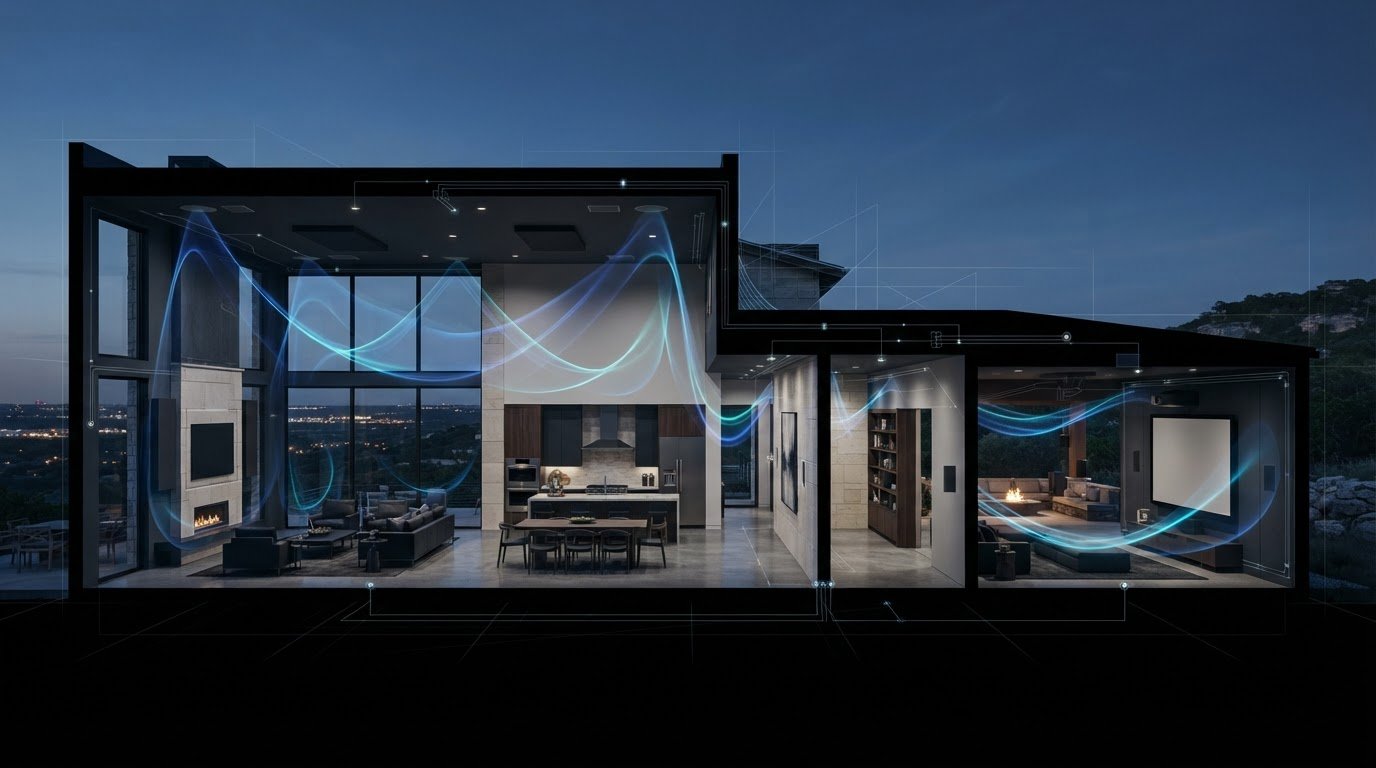
What if the best whole-house audio system is the one you barely have to think about? Music follows you naturally from room to room, while each space sounds balanced and the controls feel familiar. Achieving that ease takes more than choosing speakers. A successful whole house audio installation begins with thoughtful acoustic planning, coordinated wiring, and careful commissioning.
If you’re unsure where speakers belong, when wiring needs to be planned, or how to avoid noticeable differences in sound between rooms, start by considering how you use each space and whether rooms should share audio or operate independently. Separate controls or apps can make a capable system feel unnecessarily complicated. A design that considers the home as a connected whole helps align speaker placement, zones, and controls from the start.
This guide explains how whole-house audio is planned, installed, and commissioned, from defining listening zones and placing speakers to coordinating infrastructure and setting up intuitive control. J3 Automated Systems brings those stages together through end-to-end engineering and installation, so the finished system fits your home’s construction, the spaces you use, and the way you live.
Key Takeaways
- A well-planned whole house audio installation coordinates listening zones, wiring, and control as one system.
- Room dimensions, finishes, furnishings, and listening habits all shape speaker placement and sound design.
- Distributed speakers, portable audio, and home theater serve different listening needs, from background music to focused cinema sound.
- Planning across discovery, room design, infrastructure, installation, configuration, and commissioning helps align the system with new construction or a retrofit.
- J3 connects audio engineering, installation, and commissioning, coordinating with networking or AV systems when they support your goals.
What Does Whole House Audio Installation Include?
Whole-house audio connects speakers in planned listening zones to shared sources and controls, allowing sound to move through the home as one coordinated system. Unlike separate portable speakers, which are managed individually, integrated zones are designed to work together while still giving each space appropriate control. That’s the distinction at the heart of a well-planned whole house audio installation.
A system can send the same music to several rooms for entertaining or let household members choose different sources in different areas. Its purpose may be understated background listening, more focused listening in a particular room, everyday entertainment, or audio that extends to outdoor spaces. For example, a kitchen and living area might share a source during a gathering, while a bedroom remains independent. The design determines how those experiences are balanced and controlled.
How do listening zones work in a whole-home audio system?
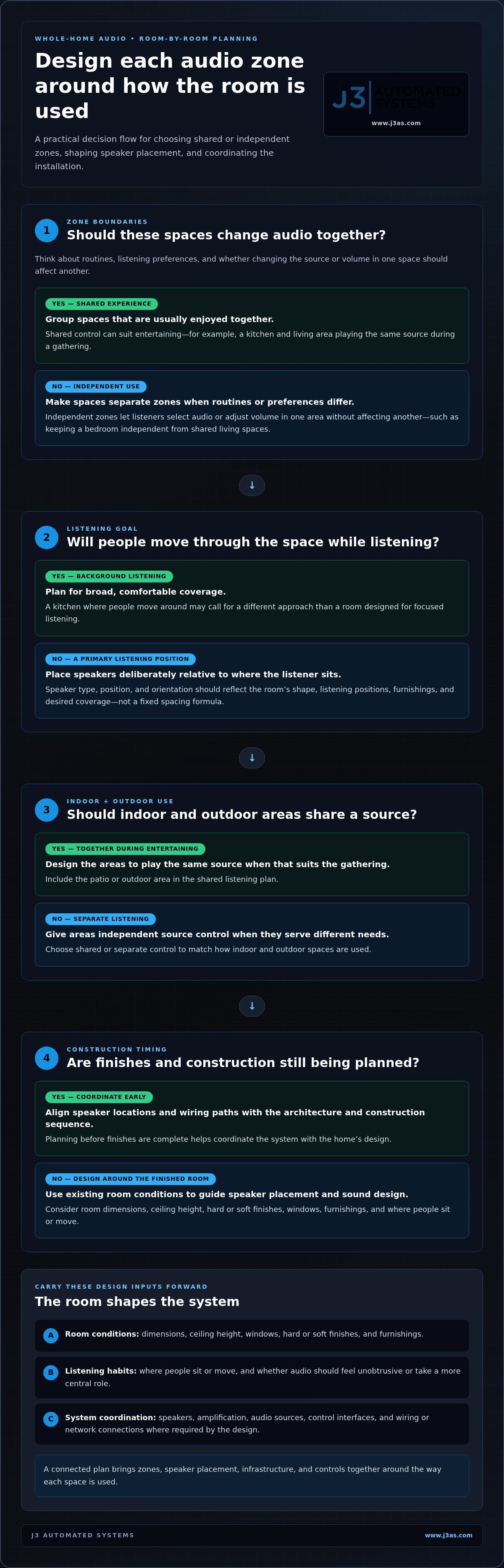
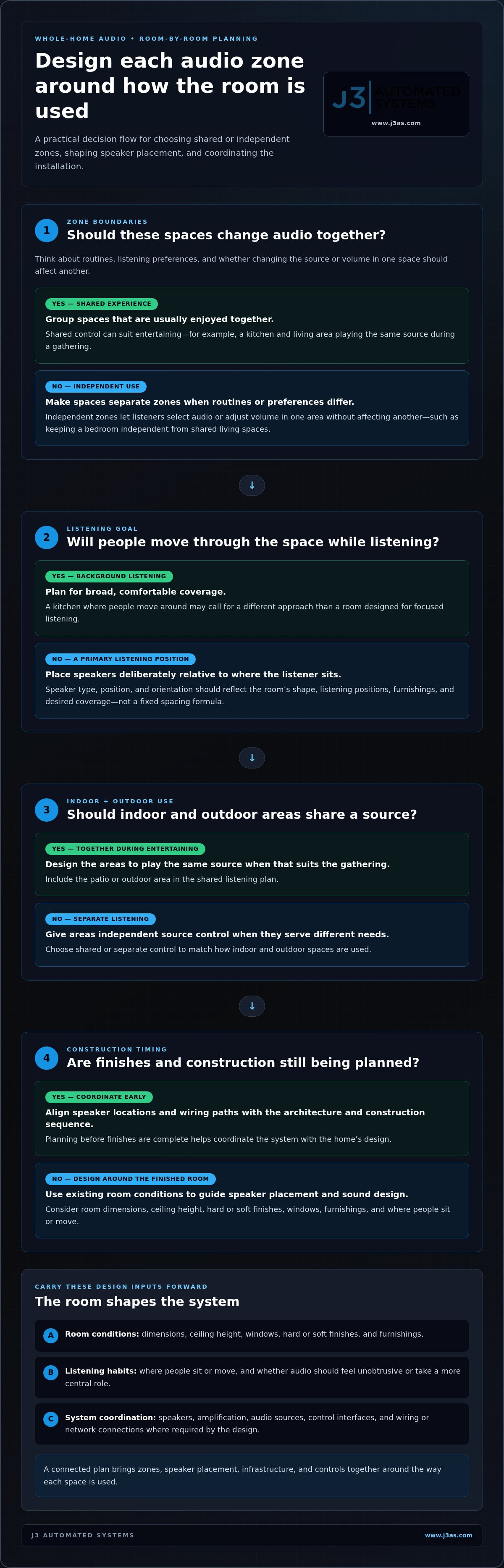
A zone is a space, or group of spaces, where listeners can select audio or adjust volume independently. Common zones include a kitchen, living area, bedroom, or patio. The right boundaries depend on how the household uses each room: spaces that are usually enjoyed together may share control, while rooms with different schedules or listening preferences may work better as separate zones. Think about whether you want to change the source or volume in one room without affecting another. This makes the system responsive to routines rather than simply dividing the floor plan.
What components make up a professionally installed system?
A professionally installed system brings together speakers, amplification, audio sources, control interfaces, and the infrastructure that connects them. Speakers deliver sound in each zone; amplification powers them; sources provide the music or other audio; and interfaces let people choose what to hear and manage playback. Wiring and network connections, where required by the design, support communication between system components.
The equipment isn’t chosen in isolation. Room layout, listening goals, desired speaker visibility, and how zones need to operate all inform the system architecture. A living space designed for relaxed background music may call for a different approach from a room intended for more focused listening. For a broader look at the principles behind home audio systems, including familiar components such as amplifiers and receivers, see the linked overview.
J3 Automated Systems plans, installs, and commissions whole-property audio as a connected experience, with system choices shaped around the home and its everyday use. For more on designing integrated audio across a property, explore the luxury home audio solutions guide.
How Acoustic Planning and System Design Shape Whole House Audio
Consistent sound starts with the room, not a speaker specification. Room dimensions, ceiling height, hard or soft finishes, windows, and furnishings all influence how sound travels and where it may feel strongest or less present. A whole house audio installation should account for these conditions alongside the way each space is used. Note where people usually sit or move, and consider whether hard surfaces or open layouts could affect how sound carries. Architectural choices also affect acoustic comfort, as explored in this guide to Acoustic Planning.
Distributed background audio has a different purpose from focused listening. A kitchen may need broad, comfortable coverage while people move around; a dedicated listening space may call for more deliberate placement relative to the primary seat. Neither approach is a universal solution. Speaker type, position, and orientation should be selected for the room’s shape, listening positions, furnishings, and desired coverage, rather than copied from a fixed spacing formula.
How should you plan audio for different rooms?
Start with the room’s purpose and typical routine. Consider where people spend time, whether they move through the space, and whether the audio should remain unobtrusive or take a more central role. Decide whether indoor and outdoor areas should share a source during entertaining or operate as independent zones. Planning before finishes are complete can also coordinate speaker locations and wiring paths with the architecture and construction sequence. A simple room-by-room list of desired sources, control needs, and listening habits gives the system design a practical starting point.
| Space and use | Listening goal | Control needs | Design considerations |
|---|---|---|---|
| Kitchen and living area | Comfortable background listening or shared entertainment | Shared control may suit gatherings; separate control supports different routines | Account for open-plan layout, hard surfaces, and where people gather or move. |
| Bedroom | Personal, lower-key listening | Independent source and volume control may suit individual schedules | Consider bed position, soft furnishings, and neighboring rooms. |
| Patio or outdoor area | Coverage for relaxing or entertaining | Choose shared or separate source control to match indoor-outdoor use | Plan for the shape of the area, seating, and exposure to the elements. |
Wired or wireless audio: what should homeowners consider?
Wired infrastructure can be planned into a build and routed through the home as part of the installation. In an existing property, access and finished surfaces can shape which wiring approaches are practical. Wireless components may offer placement flexibility, but they still depend on a suitable system design and reliable network coordination. Neither architecture is automatically best; the choice depends on the home, construction stage, and intended experience. Where audio relies on network connectivity, the residential networking infrastructure guide explains how that foundation supports connected systems.
J3 Automated Systems brings audio design, installation, and commissioning together for a project-specific plan. Explore J3’s whole-property audio approach as you consider how sound should work across your home.
Whole House Audio Options: Distributed Speakers, Portable Systems, and Home Theater
Different audio approaches solve different problems. A system designed for music across the home prioritizes convenient room-to-room coverage, while portable speakers offer flexibility and a dedicated theater focuses on an immersive experience in one viewing space. A thoughtful whole house audio installation considers how each option fits the property, the household’s routines, and the desired balance between sound, control, and visual presence.
| Approach | Best suited to | Key considerations |
|---|---|---|
| Distributed in-ceiling or architectural speakers | Convenient listening across planned rooms | Permanent placement can support coordinated coverage and discreet integration, but positions and wiring are best considered alongside design and construction. |
| Portable speakers | Flexible listening in selected spaces | They can be moved as needs change, though each unit may need separate placement and control, and room-to-room coverage depends on where speakers are used. |
| Dedicated theater audio | Focused movie and entertainment playback | Designed around a specific viewing room and listening experience, with planning shaped by the room and seating arrangement. |
When does distributed whole-home audio make sense?
Distributed audio is a strong fit when the goal is convenient listening in several parts of the home, such as music in a kitchen, living area, or patio. Planned zones let the system support different routines: a room can stay quiet while another plays music, or selected spaces can share a source when people gather. Not every room needs a speaker. Prioritize areas where audio adds value, then align speaker visibility and placement with the home’s aesthetic and construction.
Architectural speakers can create a built-in appearance, while portable units offer greater freedom to reposition sound. That flexibility may come with a more room-by-room experience rather than the consistent, integrated control of a system planned across the property. For luxury environments where entertainment technology must integrate seamlessly into architectural finishes and decor, learn more about Beverly Hills Luxury Interiors to see how high-end design elevates living spaces. The appropriate choice depends on whether permanence, adaptable placement, discreet appearance, or broader coordinated coverage matters most.
How does whole-house audio differ from home theater sound?
Whole-home audio distributes listening across everyday spaces; a theater system concentrates on the sound experience in a dedicated viewing room. These roles can complement each other. Distributed speakers can serve daily listening throughout the home, while a separate cinema-grade system is designed for movies and entertainment in the theater. One doesn’t need to replace the other.
For a deeper look at the planning involved in a dedicated screening space, read the cinema-grade home theater design guide. Treating whole-property audio and theater as distinct but coordinated experiences helps each system serve its intended purpose without forcing one design approach into every room.
What Happens During Whole House Audio Installation in San Antonio and Central Texas?
A well-managed project moves from listening goals to a system that’s tested in the rooms where it will be used. For new construction, early coordination can help align speaker locations and wiring routes with architectural plans before walls and ceilings are closed. In an existing home, the installation approach is tailored to the property’s layout, access, and finished surfaces.
What should be planned before installation begins?
Planning starts with the homeowner’s priorities: which rooms need audio, how each space will be used, preferred sources, and how people expect to control the system. Proposed speaker locations and infrastructure can then be coordinated with the home’s design and construction sequence. This turns the room plan into a practical installation roadmap, while existing homes are planned around their layout, access, and finished surfaces.
How does the installation progress?
- Discovery: Establish the rooms, listening goals, sources, and control expectations.
- Room planning: Map zones and speaker positions around the layout, intended use, and design plans.
- Infrastructure: Plan and install the connections needed for the selected system. In new construction, access during the build can inform wiring routes; retrofit work must account for the completed home.
- Hardware installation: Install the system components in their planned locations and connect them into the designed architecture.
- Configuration: Set up sources, zone assignments, and control interfaces so operation reflects the household’s needs.
- Commissioning: Test system behavior across zones and make final adjustments for the installed equipment and intended room use.
Commissioning turns installed components into a dependable system, confirming that zones respond as intended and controls make everyday use straightforward. Testing includes selecting audio sources, choosing zones, adjusting volume, and operating the control interfaces. Final tuning considers how the system performs in the actual rooms, rather than relying only on plans or assumptions made before installation.
J3 Automated Systems designs, installs, and commissions whole-property audio for residential and commercial properties across Texas, including San Antonio and Central Texas. Its accountable approach brings planning and implementation together, with AV or networking coordination incorporated when it supports the project’s goals. Plan your whole-home audio project with J3.
Designing a Whole House Audio System with J3 in Texas
A successful whole house audio installation brings the home’s listening goals, system engineering, hardware, and final commissioning into one coordinated project. J3 Automated Systems starts by understanding the property and how its residents want to use audio, then engineers a design around those priorities. The team installs the system and commissions it so the completed experience reflects the plan.
This approach serves residential projects across Texas, including San Antonio, New Braunfels, Seguin, Bandera, Boerne, Austin, and San Marcos. The specific design depends on the home, the listening areas that matter, and whether the project is part of new construction or a renovation. A home with open living spaces and a patio, for example, may need a different zone plan from one where bedrooms and shared areas have distinct listening needs.
How does integrated project delivery reduce complexity?
Audio projects involve connected decisions: where speakers belong, how infrastructure reaches each area, how zones are controlled, and how the finished system will be tested. With one accountable team coordinating design, hardware installation, and commissioning, those decisions can follow a consistent plan instead of becoming disconnected tasks.
Early coordination also helps align audio with relevant AV and networking plans. Networking is considered when it supports the system’s operation; AV coordination matters when the homeowner wants audio to work alongside other entertainment systems. This keeps integration purposeful and the project focused on the experience the homeowner actually wants, rather than adding complexity for its own sake. For property owners also looking to coordinate dedicated voice and entry audio systems, visit Unlimited Applications Security Company to explore professional intercom installation and repair services.What is the next step for a Texas whole-house audio project?
Start with a clear picture of the home and how you want sound to fit into daily life. Note the rooms or outdoor areas you want to include, whether spaces should share or separate control, and what sources you expect to use. It’s also useful to identify whether the home is under construction, being renovated, or already finished, since project stage informs planning and installation.
J3 tailors system design to the property and the homeowner’s priorities, then carries that plan through installation and commissioning. The result is an audio experience shaped around the home, not a standard layout imposed on it. Plan your whole-house audio installation with J3.
Bring Every Listening Space Into the Plan
Great whole-home sound isn’t defined by how many speakers a system includes. It comes from matching listening zones, speaker placement, wiring, and controls to the rooms and routines that matter. A well-planned whole house audio installation also distinguishes everyday background listening from the focused experience of a dedicated theater.
That result depends on a connected process: understand the home, engineer the system, install its components, then commission the finished setup. J3 Automated Systems brings these stages together through one accountable team, serving residential and commercial technology projects throughout Texas.
Whether you’re planning during construction or adapting an existing home, a clear picture of your preferred listening areas and project stage is a strong place to begin. Plan your whole-house audio installation with J3 and take the next step toward sound and control designed around your property.
Frequently Asked Questions
How much does whole-house audio installation cost?
The cost depends on the scope and design of the system, including the number of listening zones, the rooms involved, speaker placement, infrastructure, and control requirements. A project with several planned zones has different engineering and installation needs from a more focused setup. J3 tailors whole house audio installation to the property and its goals, with design, hardware installation, and commissioning considered as parts of the project.
Can whole-house audio be installed in an existing home?
Yes, whole-house audio can be designed for an existing home. The installation plan accounts for the property’s layout, finished surfaces, and practical access for infrastructure and speaker placement. The result may differ from a new-construction plan, where wiring routes and speaker positions can be coordinated earlier with the build. J3 tailors the approach to the home’s conditions and the listening areas you want to include.
How many zones does a whole-house audio system need?
There’s no fixed number of zones that suits every home. A zone is an area where audio or volume can be selected independently, so the right plan depends on which rooms should share control and which need to operate separately. For example, an open living area may work as one zone, while bedrooms with different routines may benefit from separate control. Plan around household use, not room count alone.
Is wired or wireless audio better for whole-house installation?
Neither wired nor wireless audio is universally better; the right architecture depends on the property, project stage, and system goals. Planned wiring can be coordinated with new construction, while an existing home’s access and finished surfaces influence infrastructure choices. Wireless components can offer placement flexibility, but the overall system still needs to be designed around its connections and controls. J3 engineers the approach to fit the home and intended use.
Can whole-house audio work with a home theater system?
Yes. Whole-house audio can complement a home theater by serving everyday listening in shared rooms, bedrooms, or outdoor areas while the theater focuses on the dedicated viewing space. These systems have different roles and can be planned to work alongside one another. The design can account for how you want to use audio across the property and how the theater should function within the wider AV experience.
How long does whole-house audio installation take?
Installation timing depends on the project scope, the number of spaces, the system design, and whether the home is under construction or already finished. Planning and infrastructure coordination may happen at different stages from hardware installation and commissioning. Build-stage access can shape wiring work, while retrofit projects must account for existing conditions. J3 plans the sequence around the property and the work required rather than applying a fixed timeline.
Does J3 install whole-house audio in San Antonio and nearby Texas cities?
Yes. J3 Automated Systems designs, installs, and commissions whole-property audio for residential and commercial projects throughout Texas. Service areas include San Antonio, New Braunfels, Seguin, Bandera, Boerne, Austin, and San Marcos. Projects bring engineering, hardware installation, and system commissioning together through one accountable team, with audio coordinated with networking or AV when it supports the project’s goals.